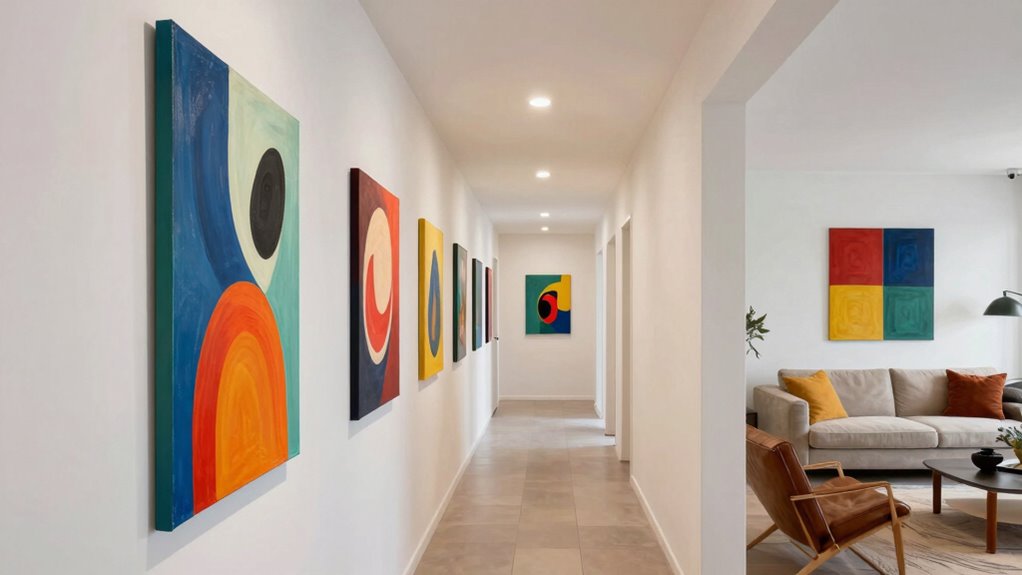
Hallway art needs a stronger sense of rhythm than living room art because it guides your movement through a passage space. You want each piece to create a visual flow that encourages exploration while maintaining harmony. Thoughtful arrangement, color coordination, and lighting are essential to keep the pace smooth and intentional. If you focus on crafting this rhythm, your hallway will feel inviting and cohesive—so keep exploring to discover how to master this sequence.
Key Takeaways
- Hallway art guides movement, requiring a rhythmic flow to create a seamless visual pathway.
- Consistent color schemes and arrangements establish a cohesive visual beat along the corridor.
- Proper lighting accentuates artworks, emphasizing rhythm and enhancing the sense of flow.
- Rhythm in hallway art encourages exploration and connection between spaces.
- Unlike living rooms, hallways need deliberate visual pacing to maintain balance and harmony.

When it comes to decorating your home, hallway art often demands a more rhythmic approach than what works in the living room. Unlike the relaxed, conversational vibe of a living room, hallways serve as connectors—passageways that guide visitors and residents alike. Because of this, the art you choose needs to create a sense of flow and movement, which is where rhythm becomes essential. You want your hallway art to feel intentional, guiding the eye smoothly from one end to the other without jarring interruptions. Achieving this involves carefully considering color coordination and lighting effects to establish a cohesive visual rhythm that energizes the space. Additionally, understanding the importance of visual harmony can help you select pieces that contribute to a seamless flow. Color coordination plays a crucial role in creating rhythm in hallway art. You want your artwork to complement the existing wall colors, flooring, and architectural features. Think of colors that harmonize rather than clash—maybe shades of blue and gray for a calming effect, or warm tones like gold and rust for a cozy feel. Repeating these colors across different pieces helps establish a visual beat, leading the eye seamlessly down the corridor. Avoid cluttering the space with too many contrasting hues; instead, opt for a palette that ties everything together, making the transition from one artwork to the next feel natural and fluid. This consistent color scheme lends rhythm to the corridor, preventing visual discord and ensuring each piece contributes to the overall flow. Incorporating visual rhythm techniques can also help in creating a more dynamic and engaging hallway display. Additionally, paying attention to spatial arrangement can further enhance the sense of movement and balance within the corridor. Thoughtful composition can emphasize key elements and create a more harmonious visual experience. Lighting effects further enhance this rhythm by emphasizing the artwork and shaping the atmosphere. Proper lighting can highlight key pieces, create shadows that add depth, or wash the entire hallway in a gentle glow. Use adjustable fixtures or wall sconces to direct light precisely where you want it, guiding the viewer’s gaze along the corridor. Consistent lighting across artworks maintains a rhythm that feels deliberate, not chaotic. If you vary the lighting, do so intentionally—perhaps accenting a large statement piece or creating a pattern with smaller lights. The careful placement of lighting is also crucial for maintaining visual balance and ensuring the rhythm remains harmonious. The goal is to craft a visual pathway that invites exploration, where each light and shadow plays a part in the overall rhythm of the hallway.
As an affiliate, we earn on qualifying purchases.
Frequently Asked Questions
How Can I Create Rhythm With Hallway Art?
To create rhythm with hallway art, you should focus on visual balance and lighting effects. Use a consistent theme or color palette to establish harmony, guiding the eye smoothly along the corridor. Incorporate varying sizes and shapes to generate movement, and consider strategic lighting to highlight key pieces. This combination of visual balance and lighting effects will establish an engaging rhythm, making your hallway feel dynamic and cohesive.
What Makes Hallway Art Different From Living Room Art?
Hallway art differs from living room art because it often features abstract patterns and minimalist designs that create a sense of movement and rhythm. You want to engage viewers as they walk through, so your pieces should have a dynamic flow. Unlike a cozy living room, hallways benefit from rhythmic, eye-catching art that guides the eye along the corridor, making the space feel lively and cohesive.
Are There Specific Colors Suited for Hallway Art?
Bright, bold hues work best for hallway art, catching your eye amid constant movement. You should consider colors rooted in color psychology; warm tones like reds and oranges energize, while cooler shades like blues and greens promote calm. Remember, hallway lighting can enhance or hinder these hues, so choose colors that complement your lighting conditions. Vibrant, vivid colors create visual importance, making your hallway a harmonious, eye-catching hub of artful appeal.
How Often Should Hallway Art Be Rotated or Changed?
You should rotate or change your hallway art every 6 to 12 months to keep your space fresh. Use gallery lighting to highlight new pieces and create a dynamic atmosphere. Switch frame styles to complement different artworks and maintain visual interest. Regular updates prevent the space from feeling stagnant, ensuring your hallway remains engaging and vibrant. This approach keeps your art collection lively and your hallway inviting.
What Are Common Mistakes in Hallway Art Placement?
A common mistake in hallway art placement is ignoring gallery symmetry, which can make the space feel unbalanced. You might also neglect lighting focus, causing artwork to lack prominence or clarity. Instead, align pieces for visual harmony and use targeted lighting to highlight key pieces. Avoid overcrowding or uneven spacing, as these disrupt the rhythm and flow, making the hallway feel cluttered rather than curated.
artwork lighting fixtures for hallway
As an affiliate, we earn on qualifying purchases.
As an affiliate, we earn on qualifying purchases.
Conclusion
In your hallway, every piece of art must sing in perfect rhythm, guiding visitors effortlessly through your home. When you embrace this beat, your space transforms into a visual symphony that’s impossible to ignore—like a masterpiece that could stop time itself. Don’t settle for dull, static walls; let your hallway’s art pulse with life and energy. Remember, your hallway isn’t just a passage—it’s the heartbeat of your entire home’s style.
As an affiliate, we earn on qualifying purchases.
color coordinated hallway wall decor
As an affiliate, we earn on qualifying purchases.
As an affiliate, we earn on qualifying purchases.