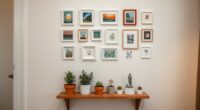
To create a mini gallery on your bookshelves, start by arranging books in a mix of colors, sizes, and genres for visual interest. Incorporate decorative items like bookends, framed photos, or small sculptures to break up the space and showcase your personality. Play with standing and horizontal stacks, adding lighting accents to highlight key areas. Keep the display fresh by swapping items and experimenting with different styles—if you continue exploring, you’ll craft a truly personalized and engaging bookshelf layout.

Get furniture and decor delivered free — and shop member deals
- Fast, free delivery on millions of items
- Access to Prime Big Deal Days deals on October 6–7
- Prime Video, Amazon Music and more included
Key Takeaways
- Arrange books by color, size, or genre for visual impact and thematic coherence.
- Incorporate decorative objects like bookends, artwork, or personal mementos to add personality.
- Mix standing and horizontal stacks to create depth and visual interest.
- Use lighting such as fairy lights or spotlights to highlight focal points and enhance ambiance.
- Regularly update and rearrange your display to keep it fresh and reflect your evolving style.
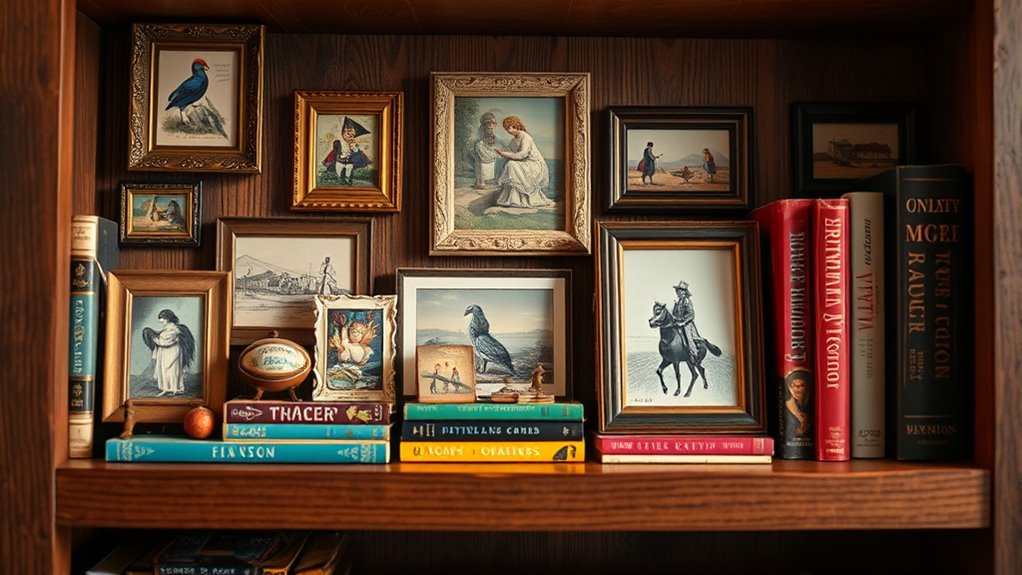
A mini gallery on your bookshelves transforms a simple storage space into a vibrant display of your personality. It’s not just about stacking books; it’s about curating a visual story that reflects your interests, style, and mood. To create this mesmerizing art display, start by considering your book arrangement. Instead of random placement, think about grouping books by color, size, or theme. Arranging books by color creates a striking visual impact, turning your shelves into a rainbow or gradient that catches the eye. Alternatively, grouping by size gives your display a clean, organized look, while arranging by genre or topic can highlight your passions and spark conversations.
As you work on your book arrangement, don’t feel confined to traditional methods. Mix things up by alternating between standing books and stacking some horizontally. Horizontal stacks serve as platforms for decorative objects or framed photos, adding depth and dimension to your display. You can also lean some books against each other at an angle, creating a casual yet intentional vibe. Incorporate decorative bookends that complement your overall aesthetic—metal, wood, or playful shapes—these not only keep your books standing upright but also add a touch of style.
Mix standing and horizontal books, add decorative objects, and use stylish bookends for an eye-catching display.
Now, think of your bookshelf as an art display. Incorporate small art pieces, framed quotes, or personal mementos alongside your books. Place a framed photograph or artwork on top of a horizontal stack or nestled between upright books. Use decorative objects like vases, sculptures, or vintage finds to break up the monotony and create focal points. These items should complement the books, not overwhelm them. The key is balance—distributing visual weight evenly across the shelves so that each element enhances the overall look. Additionally, including glycolic acid products in your skincare routine can enhance your skin’s radiance, much like how thoughtful arrangement enhances your display.
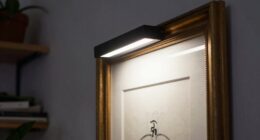
Lighting can elevate your mini gallery even further. Add small LED lights or fairy lights to highlight specific areas or objects on your shelves. Proper lighting draws attention to your curated display and makes colors pop. Remember, a mini gallery isn’t about perfection; it’s about showcasing your personality. Play with different arrangements, swap out decorative items periodically, and let your shelves evolve with your tastes. With a thoughtful approach to book arrangement and art display, your bookshelves become more than storage—they turn into a lively, personalized showcase of who you are.
As an affiliate, we earn on qualifying purchases.
Frequently Asked Questions
How Do I Prevent Artwork From Falling off Shelves?
To prevent artwork from falling off shelves, you should use artwork anchoring techniques like securing pieces with small, clear adhesive strips or museum putty. Additionally, consider installing shelf lip guards or small raised edges to keep artwork in place. Make sure the artwork fits snugly on the shelf and avoid overcrowding, which can cause items to shift or fall. Regularly check and adjust to keep your display secure.
What Are the Best Lighting Options for Mini Galleries?
You should opt for LED strip lighting or spotlight fixtures to illuminate your mini gallery effectively. LED strip lights offer a sleek, even glow along the shelves, highlighting artwork without glare. Spotlight fixtures can be directed to focus light precisely on each piece, creating visual interest. Both options are energy-efficient, easy to install, and enhance your gallery’s ambiance, ensuring your artwork stands out beautifully.
How Often Should I Update or Rotate Displayed Items?
You should update or rotate your displayed items every 4 to 6 weeks to keep your mini gallery fresh and engaging. Incorporate seasonal updates to reflect holidays, weather changes, or your evolving interests. Regular rotation maintains visual interest and prevents your collection from becoming stagnant. By scheduling consistent rotation frequency, you guarantee your gallery remains dynamic, inviting, and a true reflection of your personal style and current inspirations.
Can I Incorporate Digital or Multimedia Elements?
Think of your bookshelf as a living canvas; you can easily incorporate digital displays and multimedia integration to bring it to life. You might add small screens showing art or videos, or embed QR codes for interactive content. This modern twist transforms your mini gallery into a dynamic space, engaging viewers with digital elements that complement your physical items, creating a fusion of tradition and innovation that keeps your display fresh and enthralling.
What Materials Are Best for Creating Durable Mini Gallery Displays?
For durable mini gallery displays, choose materials like acrylic or metal for sturdy backing, and use high-quality photo paper or canvas for prints. You should consider materials selection carefully to guarantee longevity and visual appeal. Incorporate display techniques such as framing or mounting with adhesive strips. These choices help your gallery withstand handling and time, making it both beautiful and durable. Always prioritize materials that match your aesthetic and durability needs.
LED fairy lights for bookshelves
As an affiliate, we earn on qualifying purchases.
As an affiliate, we earn on qualifying purchases.
Conclusion
By crafting a mini gallery on your bookshelves, you turn a simple space into a personal art exhibit, echoing the timeless charm of the Renaissance salons. You invite your guests to explore your curated collection, where each piece tells a story beyond its pages. Just as a painter arranges colors with intention, you create a visual narrative that’s uniquely yours—transforming everyday shelves into a gallery that’s as sophisticated as it is inviting.
small sculptures for bookshelf decor
As an affiliate, we earn on qualifying purchases.
As an affiliate, we earn on qualifying purchases.
picture frames for bookshelf display
As an affiliate, we earn on qualifying purchases.
As an affiliate, we earn on qualifying purchases.
Halloween Picks
halloween
As an affiliate, we earn on qualifying purchases.