
TL;DR
Luxury velvet throw pillows add soft texture and shifting color because short, dense fibers rise from a woven backing and catch light differently as the nap moves. Choose by fiber, pile, seams, insert, and care label, then pair velvet with matte fabrics such as linen or wool for a layered look that suits your room.
Velvet’s short, dense pile shifts in appearance as its nap and room lighting change.
Judge quality by fiber details, an even pile, secure seams, closure, and cover fit—not by price alone.
Match the insert’s firmness and size to the cover and the way you’ll use the pillow.
Pair velvet with matte fabrics such as linen, wool, or cotton, and repeat a color elsewhere in the room.
Follow the maker’s care label; washing or spot-cleaning the wrong velvet can damage its sheen or pile.

Get furniture and decor delivered free with Prime
- Fast, free delivery on millions of items
- Prime Video, Amazon Music and more included
- Member-only deals all year
What gives velvet pillows their rich, shifting look?
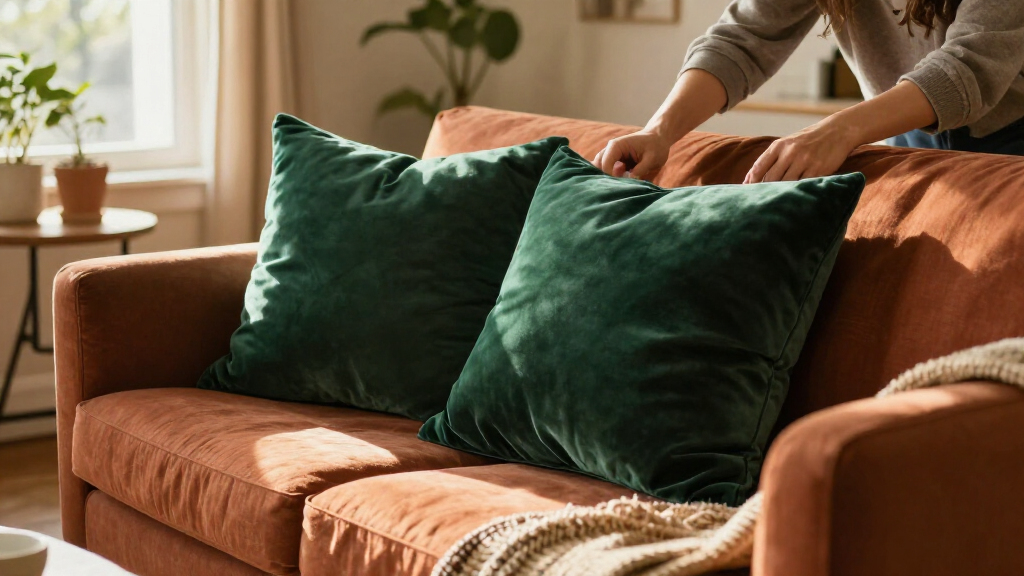
A velvet pillow feels luxurious when its short, dense fibers rise from a woven backing to create a soft surface that changes with touch and light. That raised surface is called the pile; as you brush it one way or another, the nap reflects light differently. A blue cover might look vivid beside a window and turn deep ink under a warm reading lamp. The phrase “what makes velvet” comes down to this pile, but luxury depends on more than appearance. Velvet is a fabric category, not a promise about fiber or quality. It can use cotton, silk, viscose, polyester, or a blend, and each choice changes the hand, drape, care needs, and everyday practicality. For example, imagine two emerald pillows on the same sofa. One has an even, dense pile and a smooth, well-fitted cover; the other has thin patches and loose seams. Both may photograph as “velvet,” but the first looks richer in person because its surface and construction hold together. Run your hand over a sample in different directions and watch how the shade shifts. That simple check reveals more than a product name alone.Products Worth Considering

Ring Wired Doorbell Plus – Nickel Silver with Floodlight Cam Plus – Black

Bose Portable Smart Speaker with Alexa and Google Assistant, Black

Ring Wired Doorbell Plus (2nd Gen) & Chime Plus Bundle – Nickel Silver
As an affiliate, we earn on qualifying purchases.
How can you tell if a velvet pillow is worth the price?
A well-made velvet pillow earns its price through clear fiber information, an even pile, secure seams, a finished closure, and a cover that fits its insert without strain. Check those details together; a high price or the word “luxury” cannot tell you how the pillow will behave after months on a sofa. First, read the fiber content. Polyester velvet often suits busy rooms because it can offer consistent color and easier care, while cotton, silk, and viscose may have a different texture or drape and can need gentler cleaning. Neither natural nor synthetic fibers automatically make a pillow better. The right choice depends on what you value and how much handling the pillow will get. Next, inspect the pile and construction. Look for a surface that feels even rather than thin or patchy, seams that lie flat, and a closure that does not gape. If the seller provides dimensions, compare them with your existing cushions. A cover stretched tightly over an oversized insert can pull at the seams; a cover with a small, floppy insert can look tired even when the velvet itself feels lovely. Ask for a swatch when available, especially for a bold color that needs to work with your room’s lighting.Which insert makes a pillow feel plush instead of limp?
The insert shapes how a velvet pillow looks and feels: feather-and-down options tend to be soft and moldable, while polyester inserts are usually lighter and easier to maintain. Your best fit depends on the cover’s dimensions, your preferred firmness, and whether you want a relaxed pillow you can casually reshape or a more structured cushion. A slightly larger insert can fill out a cover and give it a full, plump shape, but too much stuffing can distort the cover and strain its seams. Check the maker’s sizing recommendation before ordering, and do not assume every cover uses the same fit. For a common sofa setup, you might pair a 20-inch square velvet cover with an insert the seller recommends for that size; the goal is fullness without stretched corners or a zipper under pressure. Think about how you use the pillow, too. If you like to lean into it while reading, a softer, moldable insert may feel welcoming. If the pillow mainly sits on a neatly made guest bed, a firmer shape may keep its tailored look for longer. A quick test at home helps: give the pillow a squeeze, then see whether it springs back, stays softly indented, or needs frequent fluffing. Choose the feel you’ll enjoy, not just the silhouette in a product photo.How do you style velvet without making a room feel too formal?
Velvet looks inviting when you balance its soft sheen with matte materials such as linen, wool, and cotton. The contrast gives your eye different textures to rest on: a smooth, jewel-toned pillow beside a nubby wool throw feels layered, while velvet piled against more shiny surfaces can make a room feel dressed for an occasion. Start with one or two velvet pillows, then repeat a color somewhere else in the room so the choice looks intentional. A rust velvet pillow can echo the warm stripe in a rug; a muted green cover might pick up a plant’s leaves or a painted cabinet. Mix shapes and sizes if you want a relaxed sofa. For a more formal bed, a restrained palette and balanced arrangement can keep the look tidy without crowding the headboard. For example, on a pale linen sofa, try a pair of deep blue velvet squares and one smaller patterned cushion. Add a soft cotton throw at the other end. The velvet brings a shaded glow, the linen keeps the scene casual, and the pattern adds movement. You do not need a full set. A few thoughtfully placed pillows can give the room a tactile focal point without turning every seat into a display.What care keeps velvet soft and its color looking even?
Care depends on the fiber and finish, so follow the maker’s label before washing or treating a velvet cover. Some removable covers are washable; others need professional cleaning. The wrong wash can shrink the fabric, change its sheen, or damage the pile, and an untested spot cleaner can leave a ring that catches the light. For a light crush mark or surface disturbance, check the care instructions and try gentle brushing in the direction of the pile. Avoid hard rubbing, untested cleaners, and heat, which can make a mark worse. If a spill happens, take a breath and read the label before reaching for a damp cloth; the safest method varies by fabric. A cover that needs a delicate cleaning routine may be a better match for a formal bedroom than for the family sofa where juice, pets, and frequent naps are part of daily life. Pet hair can cling to velvet, though the effect varies with the fabric and the type of hair. Keep a lint roller or soft upholstery brush nearby, and check the maker’s guidance before using a vacuum attachment. If you share a couch with a shedding dog, choose a practical fabric and a color that makes routine cleanup manageable. A dark cover may hide some marks but show pale fur; a lighter shade can do the opposite.How can you choose a velvet pillow that suits your room?
Choose velvet pillows by matching their fiber, feel, color, and care needs to the room where you’ll use them. A decorative cushion in a quiet guest room can tolerate more delicate care; the pillow your family grabs every evening needs a tougher routine and a cover you can maintain comfortably. Color needs a real-world check because velvet changes appearance with its angle and surroundings. Order a swatch if you can, then view it in daylight and again under the room’s lamps. A soft olive sample might look calm by the window but turn brownish beside a warm bulb. Product photos can help you narrow choices, but they cannot reproduce every room’s light. Broad decor trends often include saturated greens and blues, warm rust and ochre, earthy neutrals, and mixes of tactile materials. Performance and recycled polyester velvets are also widely marketed, but those labels vary by maker. Check the fiber content, any treatment details, and care instructions instead of relying on a broad claim. For instance, if you want a low-fuss accent for a busy living room, a clearly labeled polyester blend with straightforward care directions may suit you better than a delicate cover chosen only for its beautiful drape.What should you check before you click buy?
A quick pre-purchase check helps you avoid a cover that looks right online but feels wrong on your sofa. Match the pillow’s fabric and construction to its job, confirm the insert size, and read the cleaning directions before you place the order. These details matter most when you plan to use the pillow every day. Use this short sequence when you compare options:- Read the fiber content and decide whether everyday practicality or a particular natural-fiber texture matters more to you.
- Check the pile and finish in person or through a swatch, looking for an even surface and a shade that works in your room’s light.
- Inspect the seams and closure for tidy finishing and a cover that will not pull when filled.
- Confirm the insert recommendation and select a firmness you will enjoy using, not just displaying.
- Read the care label and decide whether that routine fits the pillow’s intended room.