
TL;DR
Soho House lead designer Domhnall Nolan says the clubs mostly use 2400K light bulbs, a warmer colour temperature than the 2700K–3000K range often recommended by interior experts. Warm bulbs and several low-level light sources can create a softer, cosier living room; the effect will depend on the lamps and shades used.
Soho House lead designer Domhnall Nolan says the clubs mostly use 2400K light bulbs, a notably warm colour temperature that homeowners can try to create a softer living-room atmosphere. He said the precise effect varies with the lampshade, while interior designer Gemma Samuels also recommends layering several low-level lights rather than relying on a room’s brightest overhead source.

Get furniture and decor delivered free with Prime
- Fast, free delivery on millions of items
- Prime Video, Amazon Music and more included
- Member-only deals all year
Nolan’s recommendation focuses on colour temperature, measured in kelvins (K). He said bulbs in Soho House locations are generally set at 2400K, with some variation depending on the shade. At this temperature, light appears warm and amber-toned, closer to candlelight than the cooler white produced by higher-Kelvin bulbs.
The article says many interior experts recommend a range of 2700K to 3000K for homes. A 2400K bulb is warmer than that commonly cited range, but Nolan’s account does not establish that every Soho House uses identical bulbs or that one colour temperature will suit every living room. Shade material, bulb brightness and the room’s other light sources also affect the result.
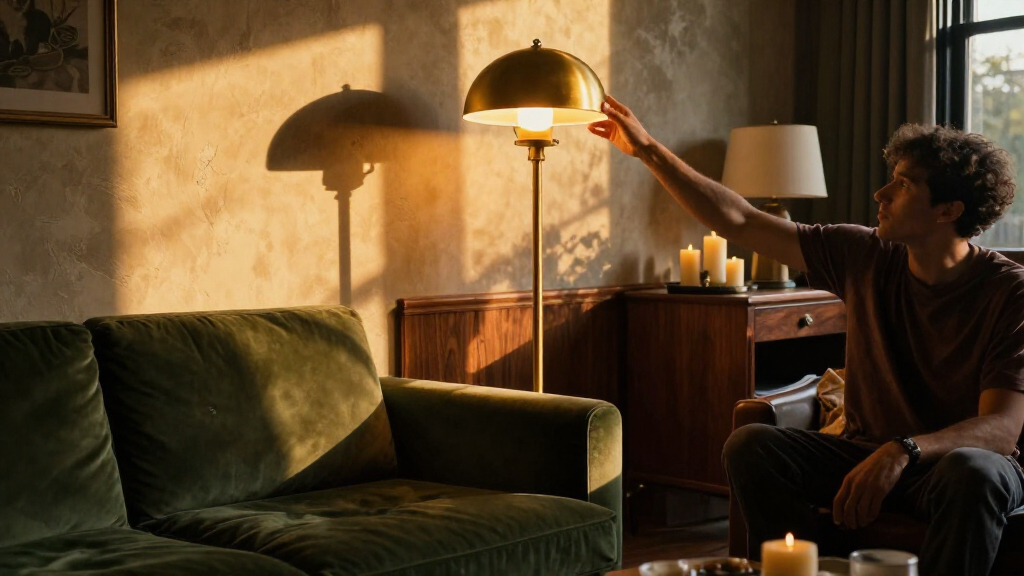
Samuels, founder and creative director of interior design studio Ankka, said warm light changes how materials appear, particularly in the evening. She described using table lamps, floor lamps and wall lights at lower levels so a room glows rather than shines. The practical advice is to combine a few sources of light around the room instead of expecting one central fixture to create a relaxed mood.
Bring Soho House warmth home with layered light
Warm bulbs and several low-level lamps can create a softer evening atmosphere. The result depends on the shade, brightness and room.
Choose a warmer bulb
Lower Kelvin values generally look warmer; 2400K gives an amber-toned light.
- Warmer, softer evening feel
- Try it in one lamp first
- Range often recommended for homes
- May look less amber than 2400K
Layer light around the room
Several lower-level sources create pools of light instead of relying on one bright ceiling fixture.
Add a low glow
Place a table lamp where you want a softer pool of light.
Bring light lower
Use a floor lamp to spread light at another height.
Soften the corners
A wall light adds another source beyond the central fixture.
Test the effect at home
See how the bulb and shade work with your materials after dark.
Put it in a table or floor lamp and compare it with your existing light.
Notice how the shade, fabrics, wood and paint look in the evening.
See whether a second low-level light balances the room without making it too dim.
How Warm Light Changes a Living Room
Lighting can alter the perceived feel of a room without changing its furniture or layout. A warmer bulb can make an evening space feel softer, while lamps placed at different heights can reduce the contrast between a bright ceiling fixture and dim corners. This is the design logic behind the advice: colour temperature and placement work together, rather than a single expensive object defining the look.
The approach also gives homeowners a relatively straightforward way to experiment. They can test a warm bulb in one lamp, observe how it renders fabrics, wood and paint after dark, and then decide whether to use the same temperature elsewhere. The result is not guaranteed to reproduce a members’ club interior, which also reflects its furnishings, architecture and individual location, but the lighting method is adaptable to an ordinary living room.
There is a trade-off: very warm light may not be ideal for every task or every person. Reading, detailed work and cleaning may call for brighter or cooler light, while a room used for relaxing in the evening may benefit from a warmer setting. Flexible lamps and dimmers can help a room serve more than one purpose, though the article does not specify a particular brightness or dimmer setup.
Products Worth Considering

Roborock Qrevo S Pro Robot Vacuum and Mop, 18,500 Pa Suction

Shark AI Ultra Robot Vacuum with Matrix Clean and Self-Empty Base

TCL 55-Inch F7D Series QLED 4K UHD Smart Fire TV (2026)
As an affiliate, we earn on qualifying purchases.
Soho House began in London’s Soho and has expanded into a global private members’ club business. The article describes 40 locations across 19 countries and says individual houses have styles influenced by their locations and cultures. It identifies a comfortable, elevated atmosphere as a common thread, with lighting contributing to that impression.
The article’s writer says they visited the original 40 Greek Street and White City House in London. Those visits provide personal context for the design discussion, but they are not evidence that every location uses precisely the same lighting. Nolan’s wording is more qualified: bulbs are mostly 2400K, with variation linked to lampshades.
The advice sits alongside a wider interior-design convention: lower Kelvin values produce warmer-looking light, while higher values tend to appear cooler and brighter. The supplied article places 2400K below the 2700K–3000K range it says experts commonly recommend. It also mentions Soho Home lamps inspired by club interiors, but buying branded furniture is not necessary to apply Nolan’s bulb-temperature and layered-lighting suggestions.
“Warm light changes how every material in the room is perceived, especially in the evenings when cosiness really matters.”
— Gemma Samuels, founder and creative director of Ankka
What the 2400K Advice Does Not Establish
The article does not provide a technical inventory of Soho House lighting or identify which locations, rooms or bulb types use 2400K. Nolan says the practice is mostly consistent but varies with lampshades; the extent of that variation is not specified. The article also does not give bulb brightness, measured in lumens, or details about dimming, fixture placement or the colour of the walls and furnishings.
It is also not clear that 2400K is suitable as the sole lighting temperature in every home. The recommendation is presented as a way to create warmth and ambience, not as a universal standard for reading, work or other tasks. The expected effect will depend on the room and how it is used. No controlled comparison or measured outcome is provided, so the advice should be treated as a design suggestion rather than a guarantee of a particular result.
Testing the Lighting at Home
The article does not announce a product launch, new Soho House policy or future design project. For homeowners following the advice, a practical next step is to try one 2400K bulb in a table or floor lamp and compare its appearance with the existing lighting in the evening. Adding a second low-level source can help reveal whether the room feels more balanced without making the whole space too dim.
Readers can also check the bulb packaging for its Kelvin rating and consider whether the lamp’s shade alters the light’s appearance. The supplied article points to Soho Home lamps as one way to draw on the clubs’ style, but its central recommendation is about warm light and layering, not a specific purchase. Any wider guidance from Soho House about differences among locations or lighting specifications is not provided.
Key Questions
What colour temperature does Soho House mostly use?
Lead designer Domhnall Nolan says Soho House mostly uses 2400K bulbs, with some variation depending on the lampshade.
Is 2400K warmer than 2700K?
Yes. Lower Kelvin values generally appear warmer. The article describes 2400K as extra warm and amber-toned, compared with the 2700K–3000K range it says many experts recommend for homes.
How can I layer lighting in a living room?
Interior designer Gemma Samuels recommends combining table lamps, floor lamps and wall lights, often at lower levels. This creates several pools of light rather than relying only on a bright central fixture.
Will 2400K bulbs make every living room look like Soho House?
No such result is guaranteed. The article says lighting is one part of the clubs’ atmosphere, which also varies by location. Shades, furnishings, room use and other light sources can all affect how a bulb looks at home.
Source: idealhome.co.uk