
TL;DR

Get furniture and decor delivered free with Prime
- Fast, free delivery on millions of items
- Prime Video, Amazon Music and more included
- Member-only deals all year
A Livingetc interiors report describes renewed interest among UK designers in Swedish ceramic stoves, known as kakelugnar, and related European tiled-heater traditions. Experts quoted in the report say a single hot burn can provide heat for 12 to 24 hours, but costs start at several thousand pounds and installation may require a reinforced base and careful scheduling.
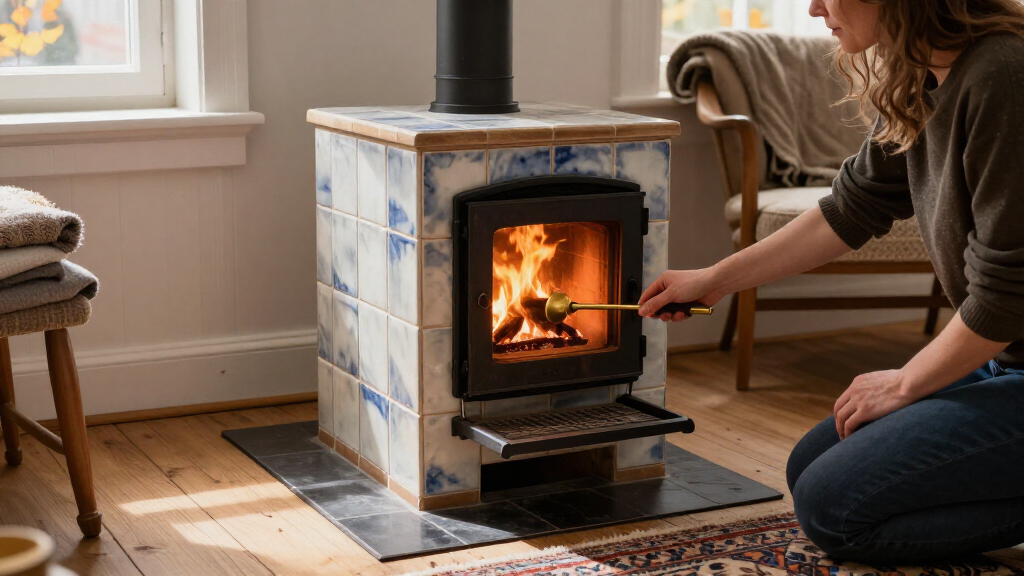
Centuries-old Swedish ceramic stoves are attracting fresh attention in British interior design, according to a Livingetc report that describes designers using the tiled heaters as room focal points as well as sources of warmth. Experts quoted in the article say these stoves can release heat for 12 to 24 hours after one hot burn, though installation costs start at several thousand pounds and can involve building work.
The stoves are known as kakelugnar in Swedish and kachelofen in German. Rather than relying on a continuously burning fire, the traditional design stores heat in its ceramic structure and releases it gradually. Alan Hills, director of The Ceramic Stove Company, told Livingetc that one hot burn can provide warmth for 12 to 24 hours and use fewer logs than a conventional wood burner. Those figures are the source’s account; it does not provide test conditions or a direct comparison with specific appliances.
Hills also said the fire burns hotter, allowing particulates to be combusted in the firebox and resulting in fewer emissions. The report does not cite independent emissions testing or quantify the difference. The UK installations described include a gas-fitted stove in an east London home, chosen by designer Olivia Outred in response to local air-quality rules. The article does not establish that every ceramic stove or fuel type is suitable for every location.
Installation can be more involved than placing a freestanding heater. Hills advised scheduling work after wet trades such as plastering have finished and said some models may need a reinforced base. He told Livingetc that many stoves are modular and can be assembled in a couple of days. The report puts starting prices at several thousand pounds, without a full price range, running-cost estimate or payback calculation.
Heat Storage Meets Interior Design
The renewed interest matters to homeowners weighing heating performance, fuel use and indoor design at the same time. A stove that stores heat and releases it after the fire has gone out may suit people who want longer-lasting warmth from a single firing, while its size and tiled surface can make it a prominent architectural feature. The report presents these as potential advantages, not as a verified guarantee of lower household bills.
For designers, the examples show the heater being treated as a permanent part of a room rather than a standard appliance. Henri Fitzwilliam-Lay, an interior designer quoted in the report, described ceramic stoves as beautiful objects that can become focal points. That aesthetic appeal comes with trade-offs: the units can be costly, heavy, and dependent on suitable placement and installation. A stove’s emissions, fuel requirements and regulatory suitability also depend on its configuration and local rules.
As an affiliate, we earn on qualifying purchases.
A Northern European Heating Tradition
Ceramic stoves have a long history in northern Europe, but the Livingetc report characterizes them as a newer design choice in Britain. Hills said British households are more familiar with open fires, which he described as less efficient than ceramic stoves. The report offers that as an industry expert’s assessment, rather than a comparison supported by figures or a cited study.
Its examples range from a custom pink stove in a Finnish home designed by AOR Architects to Outred’s gas-fitted installation in an east London terrace. Other projects use patterned tiles or terracotta finishes to make the stove part of a room’s visual scheme. Together, they show varied design applications, but do not establish how widespread adoption is across the UK or how the installations perform over time.
“They are much more efficient.”
— Alan Hills, director of The Ceramic Stove Company, speaking to Livingetc
European tiled heater traditional design
As an affiliate, we earn on qualifying purchases.
As an affiliate, we earn on qualifying purchases.
Performance and Costs Need Case-by-Case Checks
The report does not provide independent efficiency or emissions measurements, nor does it specify the conditions behind the 12-to-24-hour heat estimate. It also does not give enough information to compare total installation and operating costs with a conventional wood burner, gas heating or other alternatives. Its assertion that a stove can help protect a household from rising fuel bills is not supported by a bill analysis or projected savings.
Practical suitability remains specific to each home. The source notes that some installations may need a reinforced base and describes one gas-fitted example, but gives no general technical guidance on ventilation, chimney requirements, building approvals or permitted fuels. The appropriate model and installation requirements for a particular property, along with any local clean-air restrictions, are not established in the report.
As an affiliate, we earn on qualifying purchases.
Homeowners Must Check Their Installation
Anyone considering a ceramic stove will need to confirm the unit’s fuel, weight, installation method and local regulatory requirements with qualified suppliers and installers before committing. The Livingetc report advises planning installation around the building schedule, particularly after plastering and other wet trades, and says a reinforced base may be needed. It does not announce a new product launch, policy change or industry-wide rollout.
Further evidence that would help buyers assess the claims includes independently measured emissions and heat output, itemized installation prices, and comparable running-cost data. Until those details are available for a specific model and home, the report supports describing ceramic stoves as an established heating tradition receiving renewed design interest—not as a proven cost-saving choice for every household.
modular ceramic stove installation
As an affiliate, we earn on qualifying purchases.
As an affiliate, we earn on qualifying purchases.
Key Questions
What is a Swedish ceramic stove?
A kakelugn is a traditional Swedish tiled stove designed to store heat in its ceramic structure and release it gradually. The Livingetc report discusses it alongside the related German term kachelofen.
How long can one firing provide heat?
Alan Hills of The Ceramic Stove Company told Livingetc that a hot burn can produce heat for 12 to 24 hours. The report does not give test conditions or independent measurements, so the figure should not be treated as a guarantee for every stove or home.
Are ceramic stoves cheaper to run than wood burners?
The article says they use fewer logs than a conventional wood burner, but gives no comparative fuel-use data or household cost calculations. Specific savings are not established by the source.
How much does a ceramic stove cost?
The report says prices start at several thousand pounds. It does not provide a full price range or say whether that starting figure includes installation and any required building work.
What should buyers check before installation?
Buyers should ask qualified suppliers and installers about the stove’s weight, base requirements, fuel type, ventilation and chimney needs, installation schedule, and applicable local air-quality and building rules. Hills told Livingetc that a reinforced base may be needed and recommended installing after wet trades have finished.
Source: rss
Halloween Picks
halloween
As an affiliate, we earn on qualifying purchases.