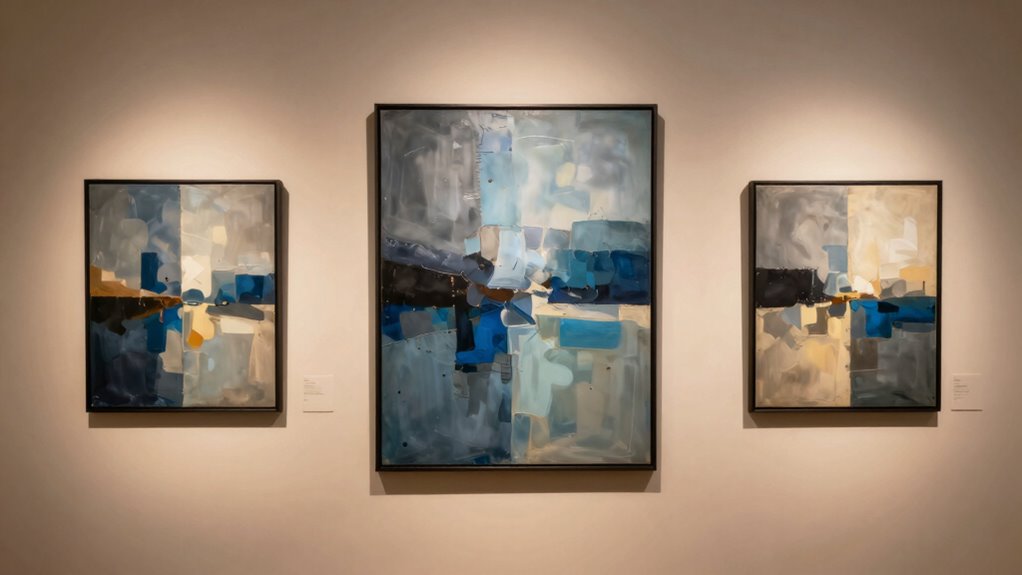
To use warm lighting to rescue cool-toned art, start by selecting adjustable LED fixtures or warm bulbs in the 2700K–3000K range. Position these lights strategically to cast a gentle, inviting glow that counters the cool, flat appearance of blues, greens, and purples. Focus on creating an even, soft illumination that enhances vibrancy and depth without overpowering the artwork. By fine-tuning your lighting, you’ll reveal richer colors and improved visual impact—discover how to perfect this balance with simple adjustments.

Get furniture and decor delivered free with Prime
- Fast, free delivery on millions of items
- Prime Video, Amazon Music and more included
- Member-only deals all year
Key Takeaways
- Adjust lighting temperature to 2700K–3000K to introduce warm, yellowish hues that enhance cool-toned artwork’s vibrancy.
- Use adjustable LED fixtures to fine-tune warmth without distorting original colors.
- Position warm-colored wall-mounted or ceiling lights to create an inviting glow around the artwork.
- Combine diffuse warm ambient lighting with subtle direct lighting to balance cool tones and prevent dullness.
- Avoid harsh shadows and overly cool lighting that diminish the artwork’s visual depth and emotional impact.
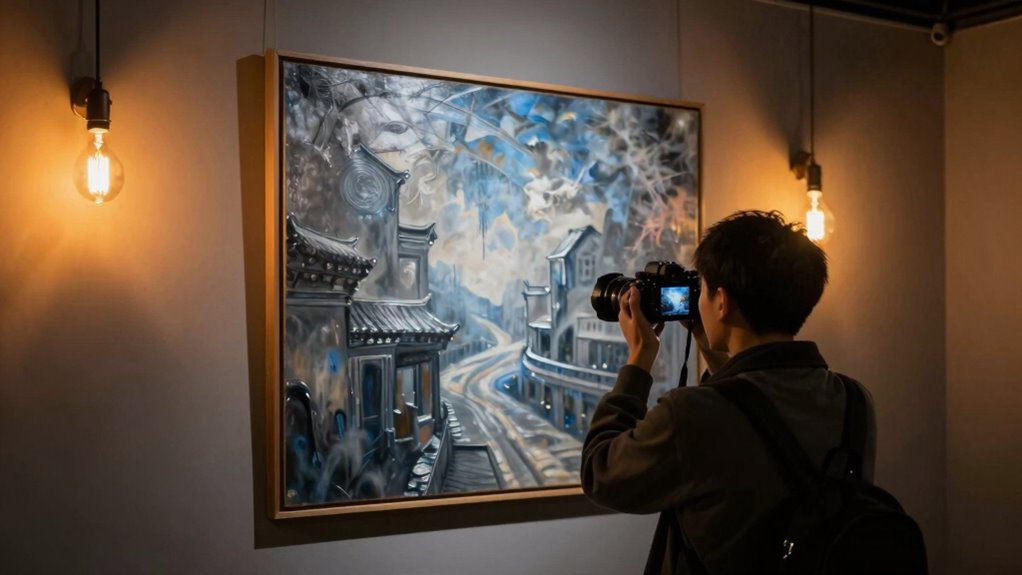
When displaying cool-toned art, choosing the right lighting can make all the difference in how the colors are perceived. Cool tones, like blues, greens, and purples, often feel calm and soothing, but they can sometimes appear flat or washed out under certain lighting conditions. To truly make these pieces pop and convey their intended mood, you need to consider ambient enhancement through warm lighting. By carefully adjusting the lighting environment, you bring warmth that complements the cool tones, creating a balanced and visually appealing display.
One effective way to achieve this is through color temperature adjustment. Warm lighting, typically in the range of 2700K to 3000K, introduces a gentle amber or yellow hue that counteracts the coolness of the artwork. This adjustment doesn’t mean overpowering or distorting the original colors but rather enhancing their vibrancy and depth. When you select warm bulbs or LED fixtures with adjustable color temperatures, you gain the flexibility to fine-tune the lighting until it perfectly harmonizes with the art. This process enhances the ambient environment, making the art look more inviting and lively.
Adjusting color temperature with warm lighting enhances vibrancy and creates a welcoming, lively atmosphere for cool-toned artwork.
Ambient enhancement plays a crucial role here. Instead of relying solely on direct spotlights that can create harsh shadows or dull colors, you want to create a warm, inviting glow that envelops the artwork. This can be achieved by placing warm light sources strategically around the piece, such as wall-mounted fixtures, track lighting, or diffused ceiling lights. The goal is to flood the room with a soft, warm light that melds with the cool tones, making the colors appear richer and more dynamic. When the surrounding ambient light supports this warmth, your artwork will seem more vibrant and true to its intended aesthetic. Incorporating lighting design principles can further optimize how the art is experienced in its space.
Adjusting the color temperature isn’t just about choosing the right bulbs; it’s about creating a cohesive lighting environment that complements the artwork’s cool hues. By shifting the overall light spectrum to warmer tones, you reduce the bluish or cold cast that often diminishes the visual impact of cool-toned art. This subtle change helps prevent the artwork from looking dull or distant and instead invites viewers to engage more deeply with the piece. Remember, effective lighting isn’t just about visibility—it’s about enhancing the emotional and visual quality of the art, and warm lighting with thoughtful ambient enhancement and color temperature adjustment is your best tool for that. Considering lighting environment and how it interacts with the artwork can further enhance the overall viewing experience.
adjustable LED warm light bulbs 2700K 3000K
As an affiliate, we earn on qualifying purchases.
As an affiliate, we earn on qualifying purchases.
Frequently Asked Questions
Can Warm Lighting Damage or Alter the Colors of Cool-Toned Artwork?
Warm lighting can potentially alter the colors of your cool-toned artwork, impacting color fidelity. This happens because the light spectrum from warm bulbs skews colors towards yellows and reds, which may distort the original hues. To preserve your art’s true colors, choose lighting with a balanced spectrum and high color rendering index (CRI). Proper warm lighting enhances your artwork without damaging or markedly changing its authentic appearance.
What Are the Best Warm Lighting Options for Preserving Artwork Quality?
You should opt for LED warm white lighting, around 2700K to 3000K, to create an artistic ambiance while preserving your artwork’s integrity. These lights emit minimal UV rays and heat, reducing damage risk. When planning your lighting installation, position fixtures to evenly illuminate the art without glare. This setup enhances the artwork’s cool tones, making your space inviting yet safe, ensuring your pieces stay vibrant for years to come.
How Does Warm Lighting Affect the Overall Viewing Experience of Art?
Warm lighting enriches your viewing experience by subtly enhancing color contrast, making details pop without overpowering the artwork. Proper lighting placement guarantees the glow accentuates cool-toned art’s nuances, inviting you to see beyond the surface. It creates a cozy, inviting ambiance that draws you in, encouraging deeper appreciation. This thoughtful approach transforms how you engage with art, making each piece feel alive and more vivid under the gentle embrace of warm illumination.
Are There Specific Color Temperatures Recommended for Warm Lighting?
For warm lighting, aim for a color temperature range between 2700K to 3000K, which provides a cozy, inviting glow. To guarantee the art’s colors appear consistent and true to life, use lighting with stable color temperature and avoid flickering or fluctuations. This range enhances cool-toned art without overpowering it, creating a balanced viewing experience. Always check the lighting’s color temperature and maintain lighting color consistency for the best display.
How Can I Prevent Glare When Using Warm Lighting on Cool-Toned Art?
Did you know that improper lighting causes 60% of art damage over time? To prevent glare when using warm lighting on cool-toned art, focus on light diffusion and maintaining color consistency. Use fixtures with diffusers or shades to soften the light, and position your lights at an angle to avoid direct reflections. This approach guarantees the artwork’s true colors shine without unwanted glare, preserving its visual integrity.
As an affiliate, we earn on qualifying purchases.
Conclusion
Now that you know how warm lighting can transform your cool-toned art, imagine the possibilities waiting to be uncovered. As you experiment with different hues and intensities, subtle surprises may emerge—hidden details, new moods, or unexpected harmony. Will this tweak finally release the true essence of your piece? The answer lies just beyond your current understanding, inviting you to explore further. Dare to take that step, and watch your art reveal its full, enthralling story.
As an affiliate, we earn on qualifying purchases.
diffused ambient warm lighting for art
As an affiliate, we earn on qualifying purchases.
As an affiliate, we earn on qualifying purchases.
Fall Picks
fall essentials
As an affiliate, we earn on qualifying purchases.