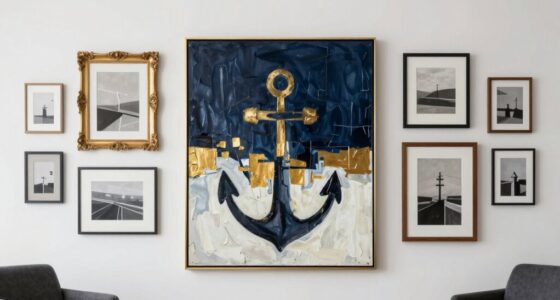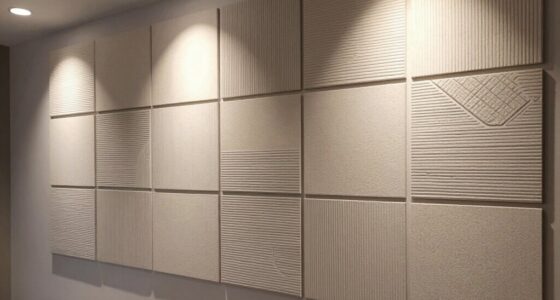
Picture lights need more room than most people leave because placing them too close creates uneven glare, harsh shadows, and bright spots that distract from your artwork. When lights are too close, they can obscure fine details and cause reflections on glossy surfaces. Maintaining proper distance allows for even illumination, enhances colors, and highlights textures without overwhelming the piece. To perfect your display and avoid common mistakes, understanding the right spacing is key—there’s more to discover for beautiful results.

Get furniture and decor delivered free with Prime
- Fast, free delivery on millions of items
- Prime Video, Amazon Music and more included
- Member-only deals all year
Key Takeaways
- Proper distance prevents uneven glare and hotspots that distract from the artwork’s details.
- Adequate space ensures even, flattering illumination that enhances colors and textures.
- Leaving enough room avoids reflections and glare on glossy or glass-covered pieces.
- Correct spacing allows the light to create subtle shadows, emphasizing depth and dimension.
- Ensuring sufficient distance maintains a balanced, professional visual impact without overpowering the artwork.

If your picture lights are too close to the artwork, they can cast uneven glare or fail to highlight the piece effectively. Proper placement of picture lights is essential for achieving ideal artistic illumination, especially when it comes to showcasing your wall decor. When lights are positioned too near, they often create bright hotspots or harsh shadows that distract from the artwork’s details. Instead, you want the lighting to gently and evenly illuminate the piece, allowing its colors and textures to come alive. To do this, you need to give your picture lights more room to breathe, ensuring they’re not so close that they overpower or distort the visual impact.
Many people underestimate how much space is necessary behind their wall decor for optimal lighting. The goal is to create a balanced glow that enhances the artwork without overwhelming it. If you leave the lights too close, the glare can obscure fine details or cause discomfort when viewing the piece. Conversely, if you position them too far away, the illumination becomes diffuse and less effective at drawing attention to the artwork. Striking the right balance involves understanding the size of the wall decor, the type of lighting used, and how the light interacts with the surface. Typically, positioning the light about 6 to 12 inches away from the artwork allows for a more natural and flattering highlight.
Another reason to give picture lights more room is to prevent unwanted reflections. Glass-covered artwork or glossy finishes are especially prone to reflections if the light is too close. Moving the light back reduces these reflections and improves the overall aesthetic. Proper lighting placement also helps to accentuate the three-dimensional qualities of textured art by creating subtle shadows that add depth. Recognizing how light interacts with surfaces can significantly enhance the visual appeal of your artwork. Additionally, understanding the lighting distance can help you avoid uneven illumination and hot spots, leading to a more cohesive display. Being mindful of lighting techniques can make a substantial difference in achieving a professional-looking presentation.
picture light with adjustable distance
As an affiliate, we earn on qualifying purchases.
As an affiliate, we earn on qualifying purchases.
Frequently Asked Questions
How Do I Measure the Ideal Space for My Picture Light?
To measure the ideal space for your picture light, start by checking the picture light dimensions and guarantee it’s proportional to your artwork. Consider wall space considerations, leaving at least 4-6 inches of clearance above and below the frame for balanced lighting. Measure the width of your artwork and add extra room for the light’s arms or fixtures. Proper spacing ensures your picture is well-lit without overwhelming the wall.
What Are Common Mistakes When Installing Picture Lights?
A common mistake when installing picture lights is not considering your gallery wall’s layout and frame styles. You might place the light too high or too low, causing uneven illumination or glare on certain frames. Make certain the light is centered and proportionate to your artwork, especially with diverse frame styles. Ignoring the room for proper spacing can lead to shadows or uneven lighting, diminishing your gallery wall’s visual impact.
Can Picture Lights Be Adjusted After Installation?
Like a vintage radio, picture lights can be adjusted after installation. You should carefully tweak the picture light positioning to optimize illumination without causing glare. Keep wall mount considerations in mind—most fixtures allow for some degree of adjustment, but check the mounting mechanism first. Gently loosen or tighten the fixture’s screws to fine-tune the angle, ensuring your artwork is beautifully highlighted without overexposing the room.
Which Lighting Types Are Best for Different Artwork Sizes?
For different artwork sizes, choose lighting that enhances art preservation and complements lighting aesthetics. Small pieces benefit from focused, adjustable picture lights to highlight details without causing damage. Larger artworks need broader, diffused lighting like track lights or wall washers to evenly illuminate the piece. Proper lighting not only protects the art from UV damage but also enhances its visual appeal, making sure each piece is showcased beautifully and safely.
How Does Room Lighting Affect Picture Light Placement?
Room lighting profoundly impacts picture light placement by creating an ambient glow that complements or competes with the artwork. You should position picture lights to provide accent highlighting without causing glare or shadows, ensuring the artwork stands out. Proper spacing allows the light to enhance details without overwhelming the scene. By balancing ambient glow with targeted illumination, you’ll achieve a harmonious display that draws attention and preserves the artwork’s vibrancy.
artwork picture light for proper spacing
As an affiliate, we earn on qualifying purchases.
As an affiliate, we earn on qualifying purchases.
Conclusion
You might hang your picture light close to the frame, but imagine a gentle breeze pushing the light away, giving it room to breathe. Without space, shadows clash and the glow becomes cramped, like trying to fit a tall tree into a tiny pot. Giving your picture light more room isn’t just about aesthetics; it’s about creating a balanced, inviting display. Sometimes, a little extra space makes all the difference between a wall that’s okay and one that’s stunning.
glare-free picture lighting fixtures
As an affiliate, we earn on qualifying purchases.
As an affiliate, we earn on qualifying purchases.
As an affiliate, we earn on qualifying purchases.
Halloween Picks
halloween
As an affiliate, we earn on qualifying purchases.