
TL;DR

Get furniture and decor delivered free — and shop member deals
- Fast, free delivery on millions of items
- Access to Prime Big Deal Days deals on October 6–7
- Prime Video, Amazon Music and more included
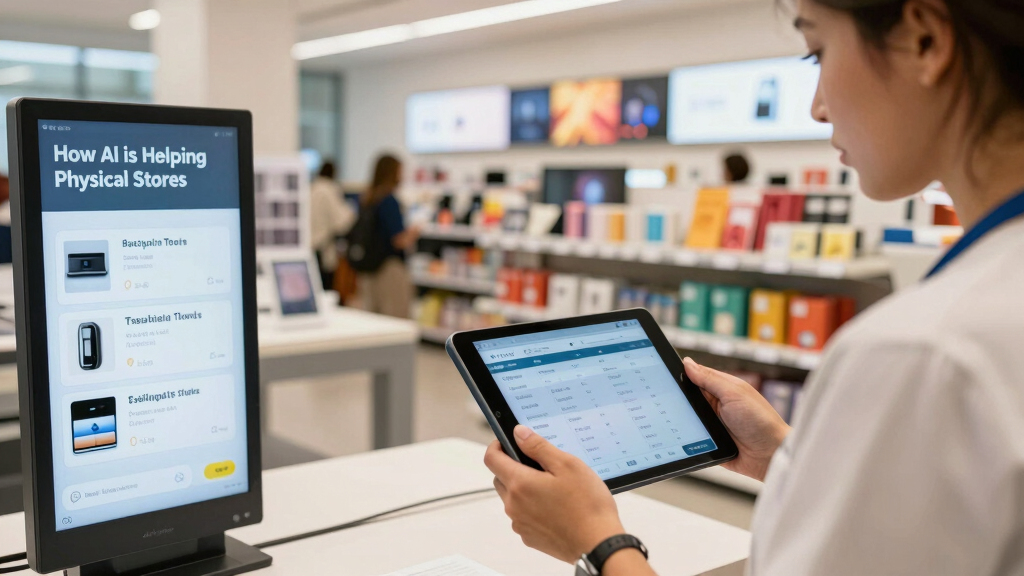
In 2026, AI is transforming retail by enabling physical stores to serve as fulfillment hubs and personalized experience centers. Retailers investing in AI-driven infrastructure are seeing significant growth. This shift is reshaping the retail landscape and creating new opportunities and challenges.
In 2026, a report from Colliers confirms that artificial intelligence is significantly influencing retail expansion, with 71% of U.S. retailers increasing their physical store footprints to support AI-enabled logistics and customer experiences. This marks a shift from the notion of a retail apocalypse to a high-tech retail renaissance, where physical stores are becoming essential components of omnichannel strategies.
The Colliers report, titled “How AI Is Redefining Retail Real Estate in 2026,” states that despite the growth of digital commerce, 85.1% of U.S. retail sales still flow through physical stores. Retailers are increasingly transforming their stores into fulfillment centers, with one in four online orders now fulfilled through physical locations—a figure projected to rise to over 35% by 2030.
Retailers investing heavily in AI are seeing tangible benefits. Companies prioritizing IT spending, which has increased by 52% over the last five years, are forecasted to see nearly threefold profit growth in 2026. AI tools like product recommendations influence nearly half of shoppers, with 75% admitting these tools impact their purchasing decisions. Adoption of AI assistants is expected to more than double this year, from 19% to 46%, with early adopters reporting 79% higher store sales growth. Macy’s, for example, reports that customers using AI shopping assistants spend approximately 400% more than average shoppers.
Why It Matters
This development signals a critical transformation in retail, where physical stores are no longer just showrooms but vital hubs for fulfillment and personalized shopping. The integration of AI allows retailers to optimize store layouts, improve last-mile delivery, and create seamless digital-physical experiences, ultimately driving higher sales and customer satisfaction. For consumers, this means more efficient, personalized shopping experiences. For retailers, it presents a competitive advantage, but also demands significant infrastructure investment.
AI-powered retail inventory management system
As an affiliate, we earn on qualifying purchases.
As an affiliate, we earn on qualifying purchases.
Background
The report builds on prior trends where retailers began to view physical stores as strategic assets rather than overhead costs. The COVID-19 pandemic accelerated digital adoption, but now AI is enabling physical stores to adapt further by supporting complex logistics and real-time data processing. This shift is part of a broader move toward “phygital” retail environments, blending physical and digital experiences to meet evolving consumer expectations.
“The infrastructure required for modern AI, such as real-time inventory tracking and integrated data systems, cannot be easily retrofitted.”
— Anjee Solanki, Colliers national director
“Stores are becoming high-yield engines for both online and offline growth, thanks to AI-driven logistics and personalization.”
— Industry analyst
retail store fulfillment center equipment
As an affiliate, we earn on qualifying purchases.
As an affiliate, we earn on qualifying purchases.
What Remains Unclear
It is still unclear how quickly all retailers will fully implement the necessary infrastructure, or how long the transition will take for smaller chains versus large corporations. The long-term ROI of these investments remains to be fully proven, and some retailers may face challenges in retrofitting older stores.
personalized shopping assistant devices
As an affiliate, we earn on qualifying purchases.
As an affiliate, we earn on qualifying purchases.
What’s Next
Next steps include retailers continuing to invest in AI-enabled infrastructure, with an emphasis on real-time inventory systems and integrated data platforms. Monitoring the performance of AI-driven initiatives and expanding successful models like BOPIS will be key. Industry analysts expect further technological innovations to shape store design and logistics in the coming years.
AI-driven store layout optimization tools
As an affiliate, we earn on qualifying purchases.
As an affiliate, we earn on qualifying purchases.
Key Questions
How exactly is AI helping physical stores expand?
AI enhances store operations by improving inventory management, streamlining fulfillment, personalizing customer experiences, and optimizing store layouts for both browsing and fulfillment functions.
What are the main benefits for retailers adopting AI in stores?
Benefits include increased sales, higher customer engagement, improved logistics efficiency, and the ability to offer seamless omnichannel experiences that combine online and offline shopping.
Are smaller retailers able to implement these AI technologies?
Implementation may be more challenging for smaller retailers due to cost and infrastructure requirements, but scalable solutions are emerging. Larger chains are leading the way in AI adoption.
What is the impact on customer experience?
Customers benefit from personalized recommendations, faster fulfillment, and more integrated shopping journeys, which increase satisfaction and loyalty.
Fall Picks
fall essentials
As an affiliate, we earn on qualifying purchases.