
Mixing frame finishes intentionally adds visual interest and depth to your displays. To do this successfully, choose a cohesive color palette, balancing shared hues or complementary tones, and incorporate varied textures like wood, metal, or acrylic. Pay attention to lighting, as it influences how finishes interact and appear. Striking the right balance ensures your gallery wall feels unified yet dynamic. Keep exploring these tips to discover how to create an enthralling, well-balanced arrangement.
Key Takeaways
- Use a cohesive color palette or shared hues to unify mixed frame finishes.
- Combine contrasting textures like wood and metal to add tactile interest and depth.
- Balance bold and subtle finishes deliberately to create visual harmony in your display.
- Consider lighting conditions to enhance the interaction and perception of different finishes.
- Select frames that share a common element, such as color or material, to maintain overall cohesion.

Mixing frame finishes can add depth and visual interest to your space, but it requires careful planning to achieve a cohesive look. When you’re considering different finishes, think about how color coordination plays a crucial role. Opt for a palette that ties the various frames together, whether through shared hues or complementary tones. For instance, if you’re mixing black and gold frames, ensure they both align with the room’s overall color scheme. This creates harmony, preventing the finishes from clashing or seeming out of place. You can also use neutral tones, like white or wood finishes, as a unifying element that balances bold accents. The key is to keep the color palette intentional, so each frame contributes to a unified aesthetic rather than creating chaos.
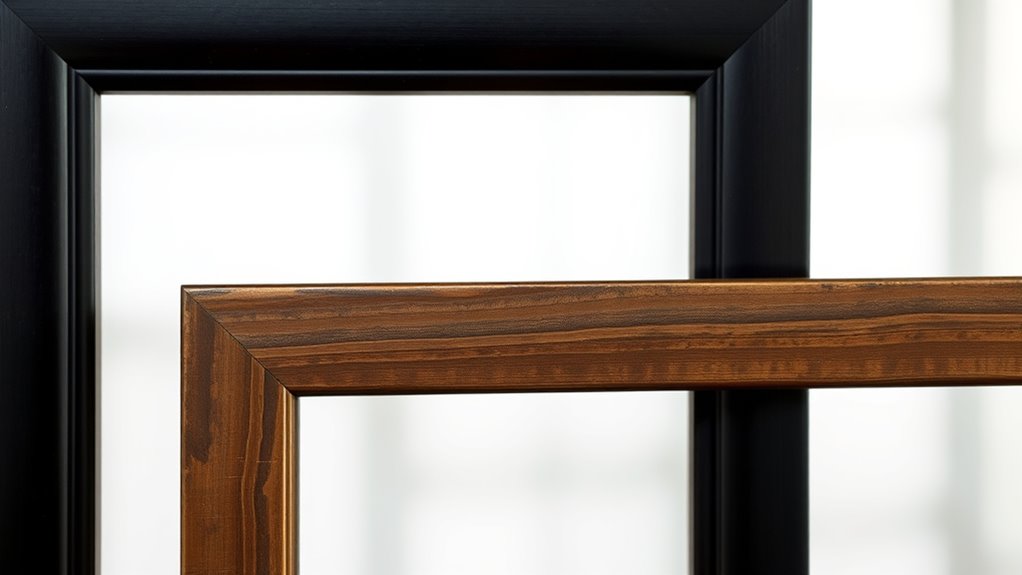
Material contrast is equally important when mixing frame finishes. Don’t shy away from combining different textures—wood, metal, acrylic, or even resin—to add tactile interest. For example, pairing a sleek metal frame with a rustic wooden one introduces contrast that catches the eye and emphasizes each piece’s unique qualities. The contrast in materials can elevate the overall design, giving it a curated, layered feel. However, you should aim for balance. If you choose a highly ornate, gilded frame, consider pairing it with a simpler, matte-finished frame to prevent one from overpowering the other. The contrast should be deliberate and well thought out, creating a visual dialogue between the different finishes and materials.
Additionally, considering lighting conditions can influence how the finishes appear and interact within your space, ensuring they complement rather than compete with natural or artificial light sources. When you’re mixing finishes, think about the purpose of each frame and how they relate to the artwork or photograph they hold. If you want a gallery wall to feel cohesive, select frames that share a common element, like a similar color or material, even if the finishes differ. This way, each piece stands out individually, but the collection still reads as a unified whole. Don’t be afraid to experiment with different combinations, but keep your eye on overall harmony. Pay attention to how the finishes interact with the room’s lighting—some finishes reflect more light, which can influence how they look in your space.
Ultimately, successful mixing of frame finishes hinges on your ability to balance color coordination with material contrast. When you do it thoughtfully, you’ll create a layered, engaging display that brings personality and sophistication into your space, all while maintaining visual cohesion.

LUCKYLIFE Picture Frames Collage Wall Decor 10-Pack, Gallery Wall Frame Set with 8×10 5×7 4×6 Frames in 3 Different Finishes
- Multi-size Frame Set: Includes 8×10, 5×7, and 4×6 frames
- Variety of Finishes: Black, gray, and wood grain brown options
- Easy to Use: Wall or tabletop display, vertical or horizontal
As an affiliate, we earn on qualifying purchases.
As an affiliate, we earn on qualifying purchases.
Frequently Asked Questions
Can Mixing Finishes Affect a Frame’s Durability?
Mixing finishes can affect a frame’s durability if you don’t consider finish compatibility and proper surface preparation. When finishes aren’t compatible, they might not adhere well or could cause peeling over time. To prevent this, make sure you clean and prepare the surface thoroughly before applying different finishes. Proper surface prep and choosing compatible finishes help maintain the frame’s strength and longevity, even when mixing different types intentionally.
What Tools Are Best for Blending Different Finishes?
You should use a high-quality brush or a foam roller for blending different finishes. Did you know that proper color matching and finish compatibility increase the durability of your frame by up to 30%? These tools allow you to seamlessly blend finishes, creating a cohesive look. Always work in small sections, feathering edges, to guarantee smooth progression. With the right tools, you’ll achieve a professional, polished result every time.
How Do You Prevent Color Bleeding When Mixing Finishes?
To prevent color bleed when mixing finishes, you should first guarantee finish compatibility by testing small areas beforehand. Use a primer or sealer designed for your specific finishes to create a barrier. Additionally, apply thin, even coats and allow proper drying time between layers. This approach promotes color bleed prevention, keeps your colors vibrant, and ensures a seamless blend, giving your project a professional, cohesive look.
Are There Specific Finishes That Shouldn’t Be Mixed?
You should avoid mixing finishes that aren’t compatible, like oil-based with water-based products, to prevent issues. Always check finish compatibility before combining them. If you need to change or remove a finish, use proper finish removal techniques first, such as sanding or chemical strippers, to guarantee a clean surface. Mixing incompatible finishes can lead to poor adhesion, uneven color, or peeling, so double-check before blending different types.
How Long Should You Wait Between Applying Different Finishes?
A little patience goes a long way in achieving perfect results. You should wait at least the recommended drying time between applying different finishes, which varies based on your brush techniques and the product used. Rushing can cause smudges or uneven coats, so check the manufacturer’s instructions for drying times. Allow each layer to dry thoroughly to ensure a smooth, professional finish, and avoid unnecessary touch-ups later.

Vittanly 15 Pack Picture Frames Collage Wall Decor, Wall/Tabletop Display
- Versatile Sizes Included: Includes 8×10, 5×7, and 4×6 frames
- Durable Construction: Made from scratch-resistant MDF and plexiglass
- Gallery Wall Flexibility: Create dynamic displays with multiple sizes
As an affiliate, we earn on qualifying purchases.
As an affiliate, we earn on qualifying purchases.
Conclusion
By mixing frame finishes intentionally, you’re painting a vivid tapestry that tells your unique story. Think of it as a symphony of textures and hues, each finish playing its part in harmony. When you blend different finishes with purpose, you craft an environment that feels alive and dynamic—like a garden blooming with variety. So, embrace the art of mixing finishes; it’s your chance to turn ordinary spaces into an enthralling masterpiece that reflects your personality.

Harley-Davidson Industrial Faux Metal & Wood Picture Frame- Holds 4 x 6 Photo
- Custom tooled resin frame with faux metal and…
- Holds 4" x 6" photo
- Engraved Harley-Davidson and Bar & Shield logo
As an affiliate, we earn on qualifying purchases.
As an affiliate, we earn on qualifying purchases.

Vicenpal Scalloped Picture Frame with Real Glass, Vintage Curved Funky Decorative Picture Frame Wavy Edge, for Desktop Wall Display Home Decor Gift Aesthetic Art(4 x 6 Inch,Retro Colors,3 Pack)
- Elegant Curved Design: Vintage-inspired wavy silhouette
- Set of 3 Colorful Frames: Includes sage green, blush pink, orange-yellow
- Suitable for 4×6 Photos: Fits 3.6 x 5.4 inch images
As an affiliate, we earn on qualifying purchases.
As an affiliate, we earn on qualifying purchases.