
TL;DR
A late-June 2026 report says consumer NVMe SSD prices have doubled or tripled while enterprise SSD contract prices rose 53% to 58% in Q1 2026. The report attributes the squeeze to NAND supply pressure from HBM production and direct AI storage demand, though some demand estimates remain uncertain.
SSD storage has joined the 2026 memory crunch, with 2TB consumer NVMe drives that sold for about $120-$150 in 2024 now listed at roughly $300-$480, according to a late-June report from Thorsten Meyer AI citing industry sources. The development matters because the report says AI systems are now consuming NAND flash directly, adding demand on top of factory competition with HBM memory.
The report says enterprise SSD contract prices rose a record 53% to 58% in the first quarter of 2026, while 1TB consumer drives have roughly doubled compared with late 2025. Across the underlying flash market, the report says NAND contract prices have increased about four to four-and-a-half times in nine months.
Thorsten Meyer AI attributes the squeeze to two forces. First, NAND flash competes with DRAM and HBM for cleanroom space, capital spending and engineering resources. Second, the report says AI inference systems now use large amounts of fast storage for vector databases, retrieval-augmented generation and key-value cache workloads.
The report says Samsung and SK Hynix have cut NAND wafer targets, while Micron has said it can meet only 55% to 60% of main customer demand. It also cites Phison as saying its 2026 output is sold out and that it is prioritizing higher-margin server customers over retail supply.
The SSD squeeze: storage joined the party
Storage was the last cheap thing in computing. Not anymore — a 2TB NVMe that was $120–150 in 2024 now lists at $300–480. And this time flash isn’t only collateral damage: AI eats storage directly.
both ways
Flash got hit twice — once as collateral sharing fabs with HBM, once directly as AI inference turned fast storage into something it consumes by the petabyte. That second force won’t fade; it grows with every model, every RAG pipeline, every cache that must live somewhere fast. Buy what you need now; favor TLC with DRAM cache, don’t overpay for Gen 5, watch for counterfeits. Relief isn’t forecast before late 2027. When the cheapest component in computing has a two-year waitlist, “commodity” no longer fits. Next: The High-End PC & Workstation Tax.
AI Turns Flash Strategic
The reported price surge affects more than enthusiasts building high-end PCs. Consumer SSD buyers face higher upgrade costs, PC makers may ship lower base storage, and cloud and AI providers face higher infrastructure costs for systems that need fast local capacity.
The report says the pressure is already reaching enterprise eSSDs, consumer NVMe drives, industrial and automotive storage, and even parts of the HDD market. If OEMs continue cutting base configurations from 1TB to 512GB, ordinary buyers could see the squeeze through both higher retail prices and smaller default storage options.
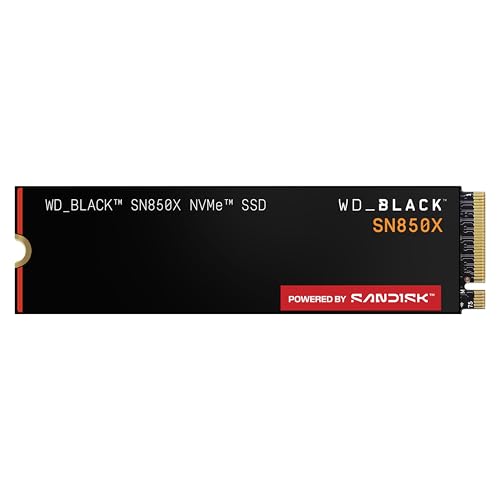
WD_BLACK SN850X 2TB NVMe SSD – M.2 2280, Up to 7,300 MB/s Read speeds, Up to 6,300 MB/s write speeds, Gaming Expansion, High Performance Internal Solid State Drive – WDS200T2X0E
TRANFORM YOUR PC: Insane speeds up to 7,300MB/s (1TB – 4TB models) deliver top-tier performance with ridiculously short…
As an affiliate, we earn on qualifying purchases.
As an affiliate, we earn on qualifying purchases.
From Cheap Drives To Scarcity
For much of the past decade, SSD storage became one of the cheaper parts of a computer build. The report frames the current move as a break from that pattern, saying 2TB NVMe drives were often treated as low-cost upgrades in 2024 before prices rose sharply into 2026.
The storage report follows earlier installments in the same Memory Squeeze series that focused on RAM. The difference, according to the report, is that NAND is not only affected by competition with HBM; it is also being consumed directly by AI workloads. The source describes estimated demand of about 16TB of flash per high-end AI GPU and more than 1,000TB per AI server rack, while labeling those figures as estimates.
“AI eats storage directly”
— Thorsten Meyer AI

OWC ThunderBay 4 24TB Four-Bay Thunderbolt 40Gb/s Enterprise Drive RAID Storage Solution with SoftRAID Premium
4-Drive SSD Storage Solution with Dual Thunderbolt 3 Ports
As an affiliate, we earn on qualifying purchases.
As an affiliate, we earn on qualifying purchases.
Price Relief Remains Unclear
Several points are still developing. The report says some NAND per-GPU and per-rack demand numbers are estimates, and the exact split between real supply shortage and manufacturer supply discipline is not settled. It is also not yet clear how much of the enterprise price pressure will pass through to consumer laptops, desktop builds and retail SSD shelves over the next few quarters.
The report says relief is not forecast before late 2027, but that depends on new fab capacity, AI infrastructure orders, wafer allocation and whether suppliers increase NAND output despite stronger margins during the shortage.

Samsung 990 PRO SSD 2TB NVMe M.2 PCIe Gen4, M.2 2280 Internal Solid State Hard Drive, Seq. Read Speeds Up to 7,450 MB/s for High End Computing, Gaming, and Heavy Duty Workstations, MZ-V9P2T0B/AM
MEET THE NEXT GEN: Consider this a cheat code; Our Samsung 990 PRO Gen4 SSD helps you reach…
As an affiliate, we earn on qualifying purchases.
As an affiliate, we earn on qualifying purchases.
Late 2027 Is The Watchpoint
Buyers and system builders will be watching NAND contract prices, enterprise SSD allocations, wafer target updates and base storage configurations in new PCs. The next signal will be whether suppliers add meaningful NAND output or continue steering capacity toward higher-margin AI and server customers.
For consumers, the report’s practical guidance is to buy needed capacity sooner rather than waiting for quick relief, favor TLC drives with DRAM cache, avoid overpaying for Gen 5 SSDs unless the speed is needed, and watch for counterfeit or relabeled drives as prices rise.

SIX NVME M.2 SSD PCIe 4.0-1TB m.2 2280 ssd, Read UP to 7350MB/s 1TB for Gaming PS5 Memory Storage Expansion with Heatsink, Internal Solid State Hard Drive PCIe gen 4×4 Nvme for Laptop Desktop pc
Unleash Upgraded power – Employing PCIe Gen4x4 High Speed Interface, SIX X7400 nvme m.2 ssd confer it UP…
As an affiliate, we earn on qualifying purchases.
As an affiliate, we earn on qualifying purchases.
Key Questions
Why are SSD prices rising now?
The report points to two pressures: NAND production competing with HBM and DRAM for factory resources, and direct AI infrastructure demand for fast storage.
How much have consumer NVMe drives increased?
According to the report, a 2TB NVMe SSD that sold for about $120-$150 in 2024 now lists around $300-$480. A 1TB drive has roughly doubled compared with late 2025.
Is AI the only reason for the SSD squeeze?
No. The report says AI demand is a direct driver, but factory allocation, HBM competition, wafer target cuts and server-first supply choices are also part of the pressure.
When could SSD prices ease?
The report says relief is not forecast before late 2027. That timing is uncertain because it depends on fab expansion, AI demand and supplier production choices.
Source: Thorsten Meyer AI