
TL;DR

Get furniture and decor delivered free — and shop member deals
- Fast, free delivery on millions of items
- Access to Prime Big Deal Days deals on October 6–7
- Prime Video, Amazon Music and more included
Thorsten Meyer AI published a July 1, 2026 ISR Briefing on Wide-Area Motion Imagery, describing how WAMI tracks movement across city-sized areas and stores footage for later review. The confirmed development is the publication of the analysis; its judgments about operational use, AI, radar and oversight are attributed to the report and cited sources.
Thorsten Meyer AI published a July 1, 2026 ISR Briefing AI Dispatch laying out how Wide-Area Motion Imagery can monitor city-scale movement and why its limits in weather, airspace and oversight matter for defense users, policymakers and the public.
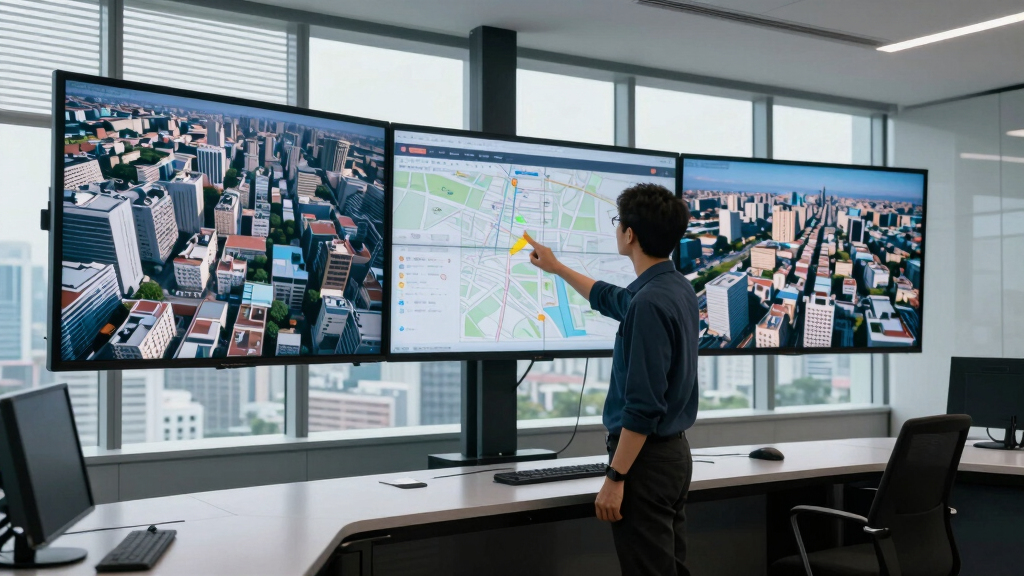
The dispatch contrasts a conventional drone camera with WAMI. A standard full-motion video feed watches a narrow field of view; WAMI uses camera arrays and processing to form a broad composite image that can cover several square kilometers at once, according to the source material.
The reported value is the archive. Because the system records the broad view, analysts can move backward from an incident and follow a vehicle or pedestrian track to an origin point or meeting location. Thorsten Meyer AI describes that capability as a forensic rewind tool, while marking the broader judgment as the author’s analysis.
The report also says WAMI cannot operate effectively without AI close to the sensor, because the data flow is too large to downlink fully or watch manually. It cites public descriptions of DARPA’s ARGUS-IS, which used 368 five-megapixel cameras for about a 1.8-gigapixel image and roughly 13 centimeters per pixel at 17,500 feet.
The eye over the city: how Wide-Area Motion Imagery works — and where it goes blind
A normal drone sees through a soda straw. WAMI watches an entire city at once, tracks every mover, and records it all for forensic rewind. Immense reach — with hard limits that make radar and AI its necessary partners.
- City-scale motion, fine detail
- Forensic rewind
- Cloud / smoke / dark degrade it
- Needs a platform loitering overhead
sensing
+ AI
- Sees through cloud & total dark
- Tasked over denied airspace
- Persistent, wide-area from orbit
- Sovereign · on-prem · air-gap
The same archive that traces a bomber to a safe house can trace anyone home — retroactively, without prior suspicion. Baltimore’s secret 2016 deployment led to a 2021 federal ruling that persistent aerial tracking violated the Fourth Amendment. The security value is real; so is the mass-surveillance risk. Who owns the sensor, the archive, and the AI is the accountability question.
WAMI’s power is the archive and the AI reading it; its weakness is weather, airspace, and oversight. The mature posture isn’t optical-vs-radar or capability-vs-liberty — it’s layered sensing (optical WAMI + all-weather SAR), AI-enabled exploitation, and sovereign, auditable control of the whole chain. WAMI shows what a persistent eye can do with clear skies and owned airspace; for the cloud, the night, and the denied area, the radar layer is where the resilient coverage lives.
Surveillance Power Meets Oversight
City-scale archiving changes the privacy stakes because collection can become retroactive. The same stored video that may help trace a bombing suspect or a vehicle after a shooting can also track unrelated people back to homes, workplaces or meetings without prior suspicion, according to the dispatch.
That is why the report frames WAMI as both an ISR capability and a governance problem. It cites Baltimore’s 2016 aerial surveillance deployment and a 2021 Fourth Circuit ruling that persistent aerial tracking violated the Fourth Amendment, making ownership of the sensor, archive and AI a public accountability issue.
wide-area motion imagery surveillance camera
As an affiliate, we earn on qualifying purchases.
As an affiliate, we earn on qualifying purchases.
Where Optical WAMI Fails
WAMI grew from persistent surveillance programs such as ARGUS/Gorgon Stare and Constant Hawk, which public reporting and defense sources have described as efforts to move beyond one-camera tracking. The report says the method depends on capture, stabilization, moving-object detection, track association and storage.
The dispatch also places WAMI beside synthetic aperture radar, or SAR. Optical WAMI can provide fine city-scale motion detail when an aircraft can loiter and visibility cooperates, while SAR can image through clouds, smoke and darkness and can be tasked over denied airspace, according to the analysis.
“A normal drone sees through a soda straw. WAMI watches an entire city at once.”
— Thorsten Meyer AI ISR Briefing
high-resolution drone camera for city monitoring
As an affiliate, we earn on qualifying purchases.
As an affiliate, we earn on qualifying purchases.
Limits Still Shape Deployment
Operational performance remains case-specific. The source material says clouds, smoke, darkness and the need for an overhead platform can limit optical WAMI, but it does not provide a single benchmark for how quickly performance falls in each environment or under different sensor designs.
Governance details are also unresolved. The dispatch argues for sovereign, auditable control of the full chain, but policy choices about data retention, access logs, warrant standards and AI model validation depend on the operator, jurisdiction and mission.
As an affiliate, we earn on qualifying purchases.
Procurement Turns To Layered Sensing
The next test is whether defense and security buyers treat WAMI as a stand-alone camera or as part of a layered sensing architecture. The July 1 dispatch points toward a stack combining optical WAMI, all-weather SAR, close-to-sensor AI and auditable data controls.
For readers watching the sector, the near-term signals will be procurement language, court or legislative action on persistent aerial surveillance, and technical claims about on-premise AI, air-gapped storage and analyst-ready radar products. Details are still emerging on which operators will adopt those controls and how they will be audited.
As an affiliate, we earn on qualifying purchases.
Key Questions
Is WAMI the same as ordinary drone video?
No. Ordinary full-motion video usually watches a small target area, while WAMI builds a city-scale image from many camera views and tracks many movers at once.
Why does WAMI need AI?
The report says the data rates are too large for full manual review or complete downlink. AI is used near the sensor to detect movement, follow tracks and help analysts search the archive.
What are WAMI’s blind spots?
According to the dispatch, optical WAMI can be degraded by clouds, smoke and darkness and needs a platform that can remain overhead. The report says SAR radar can cover some of those gaps, but it is a different sensing layer.
What legal issue did Baltimore raise?
The source material cites Baltimore’s 2016 aerial surveillance deployment and a 2021 Fourth Circuit ruling that persistent aerial tracking violated the Fourth Amendment. The case is used as an example of the legal pressure around city-scale archives.
Does the report confirm current city use of WAMI?
No current deployment is confirmed in the supplied material beyond the cited Baltimore example. The report focuses on capability, limits and oversight, while leaving active deployments and operator policies unclear.
Source: Thorsten Meyer AI
Fall Picks
fall essentials
As an affiliate, we earn on qualifying purchases.