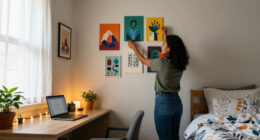
To follow the sightline rule when hanging art in open floor plans, position your artwork at eye level along natural viewing paths. This helps create a harmonious flow and guarantees your pieces are easily appreciated from different angles. It also helps define zones and guides the eye smoothly across the space. By paying attention to sightlines, you’ll produce a balanced, inviting environment that feels cohesive—continue exploring how lighting and color choices enhance this effect further.
Key Takeaways
- Hang artwork at eye level within sightlines to ensure visibility from multiple angles in open spaces.
- Maintain consistent spacing and height to create visual harmony along open sightlines.
- Use layered lighting to highlight art without obstructing views or creating clutter.
- Consider the flow of natural and artificial light to prevent glare and enhance artwork visibility.
- Ensure artwork placement complements wall colors and surrounding zones for cohesive visual connections.
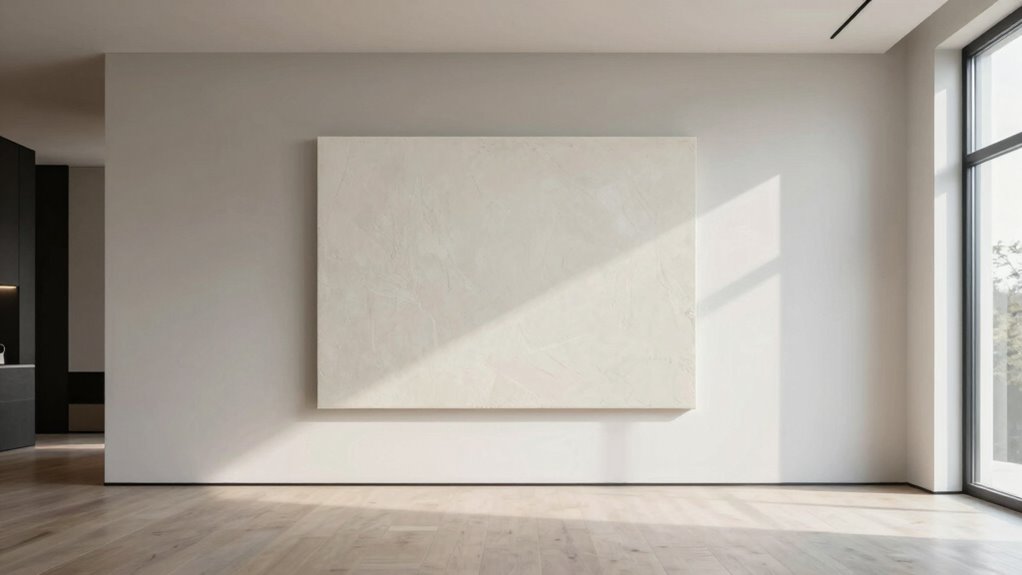
When decorating open floor plans, it’s easy to feel overwhelmed by the vast, interconnected spaces. The challenge lies in creating a cohesive look without making each area feel isolated or cluttered. One of the most effective ways to achieve this balance is by paying attention to your lighting techniques and wall color choices. These elements not only influence the overall ambiance but also set the stage for how your art will be experienced across the open layout.
Lighting plays a vital role in guiding the eye and emphasizing your artwork. Instead of relying solely on general lighting, incorporate layered lighting techniques—think spotlights, picture lights, or adjustable sconces—to highlight your art and create focal points. Proper lighting ensures your art isn’t lost in the space and helps define different zones within the open plan. For example, a well-placed spotlight can draw attention to a piece in the living area, even if the room’s overall lighting is soft and ambient. This approach helps you establish visual connections between spaces, making the entire area feel intentional and harmonious.
Layer your lighting with spotlights and picture lights to highlight artwork and define zones in open floor plans.
Your wall color choices also profoundly impact how art is perceived and how the space feels. When selecting wall colors, consider shades that complement your artwork and create a seamless flow. Neutral tones, such as soft grays, warm beiges, or subtle taupes, serve as versatile backdrops that allow your art to stand out without overwhelming the space. Lighter colors can make the area feel more open and airy, while darker hues add depth and sophistication. Keep in mind that in an open floor plan, the walls are often visible from multiple angles, so choosing colors that work well together across different zones is essential. Additionally, understanding visual flow can help you select wall colors that enhance the overall harmony of your space. Incorporating thoughtful spatial awareness can further improve how your art is seen from various vantage points and contribute to a balanced environment. Paying attention to design principles can also help you create a cohesive and inviting atmosphere. Recognizing how visual continuity impacts the overall aesthetic can help you achieve a more unified look throughout the open layout.
adjustable picture lights for artwork
As an affiliate, we earn on qualifying purchases.
As an affiliate, we earn on qualifying purchases.
Frequently Asked Questions
How Do I Apply the Sightline Rule to Uneven Ceiling Heights?
To apply the sightline rule with uneven ceiling heights, you should focus on creating visual balance across the space. Adjust the height of your art pieces based on ceiling variations, hanging taller works where ceilings are lower and vice versa. Use consistent framing or matting to unify the display, and consider eye level as a guide, ensuring your art remains visually appealing and harmonious despite ceiling differences.
Can the Sightline Rule Be Adjusted for Multi-Level Open Floor Plans?
Ever wonder if the sightline rule works for multi-level open floor plans? You can definitely adjust it to enhance art placement and maintain visual flow. Focus on creating a harmonious line that guides the eye naturally across different levels, using consistent heights or strategic positioning. Consider the overall sightlines from key viewpoints, and don’t be afraid to experiment—this way, your art will complement the varying elevations beautifully.
What Are Common Mistakes to Avoid When Hanging Art With This Rule?
When hanging art, avoid common mistakes like ignoring wall height and poor art placement. Don’t hang pieces too high or too low, as it disrupts sightlines and balance. Keep in mind that art should be at eye level for ideal viewing. Also, avoid overcrowding walls; give each piece enough space to breathe. By focusing on these details, you guarantee your art complements your open floor plan seamlessly.
How Does Furniture Placement Impact the Sightline Rule?
Your furniture arrangement considerably impacts the sightline rule by guiding the visual flow through your space. When you position furniture thoughtfully, it creates clear sightlines, making art visible without obstruction. Avoid cluttered arrangements that block views, and guarantee large pieces don’t dominate sightlines. Instead, place furniture to frame your art, enhancing the overall aesthetic and maintaining an open, harmonious flow that highlights your wall decor effectively.
Is This Rule Suitable for Very Large or Very Small Artworks?
Think of artwork scale like a conversation—large pieces make bold statements, while smaller ones create delicate dialogues. The sightline rule works well for both, as long as you maintain visual balance. For very large artworks, hang them at eye level to avoid overwhelming the space. For small pieces, group them or elevate their placement. When you balance scale and sightlines, your art feels intentional and harmonious, no matter its size.
As an affiliate, we earn on qualifying purchases.
Conclusion
By thoughtfully applying the sightline rule, you create a harmonious flow that subtly guides the eye without overwhelming the space. Think of it as a gentle dance—each piece of art carefully positioned to enhance your open floor plan’s beauty. When you’re mindful of sightlines, you’ll find your home feels more inviting and balanced, like a well-tuned melody. Ultimately, it’s about striking that delicate balance where art and architecture whisper in perfect harmony.
neutral wall paint for open floor plans
As an affiliate, we earn on qualifying purchases.
As an affiliate, we earn on qualifying purchases.
As an affiliate, we earn on qualifying purchases.