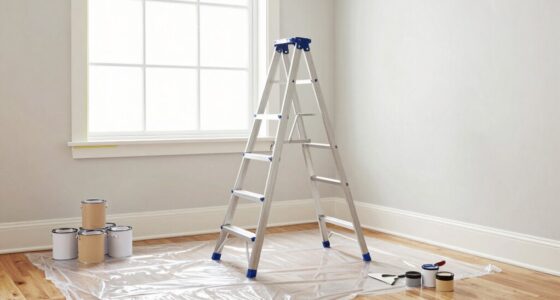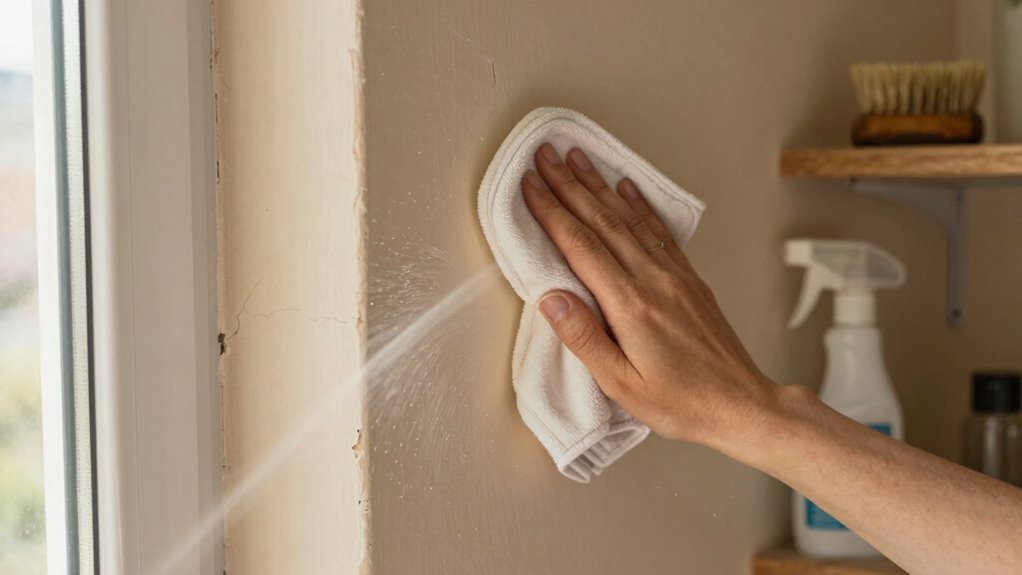

To handle dusty old walls without smearing, start by opening windows or turning on a fan for good ventilation. Gently dust from top to bottom using a microfiber cloth or soft brush, keeping tools slightly damp for stubborn dirt. Use smooth, consistent motions and avoid pressing too hard. Prevent streaks by lightly buffing with a dry cloth if needed. For more tips on protecting your walls while cleaning, keep exploring these techniques.

Get furniture and decor delivered free with Prime
- Fast, free delivery on millions of items
- Prime Video, Amazon Music and more included
- Member-only deals all year
Key Takeaways
- Use microfiber cloths or soft brushes to gently lift dust from walls without pressing hard.
- Keep dusting tools slightly damp to remove stubborn dust without spreading smears.
- Vacuum walls with a brush attachment to effectively remove dust without creating streaks.
- Wipe in smooth, consistent motions and avoid excessive pressure to prevent smearing.
- Lightly buff with a dry microfiber cloth after cleaning to eliminate streaks and smudges.
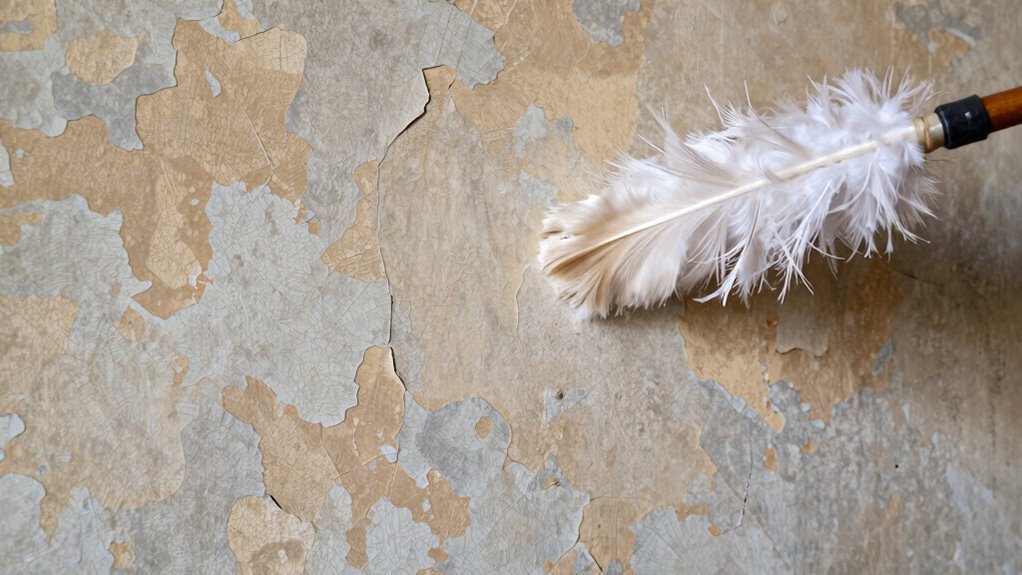
Old walls covered in dust can quickly make a room feel dingy and neglected, but with the right approach, you can restore their appearance. The key is to use effective wall cleaning techniques that remove dust without causing smears or damage. To do this, start by gathering the appropriate dust removal tools. A microfiber cloth or a soft dusting brush works well for gentle dust removal, as they trap dust particles instead of pushing them around. Avoid using rough or abrasive materials, which might scratch or damage the paint or wallpaper.
Before you begin cleaning, open windows or turn on a fan to guarantee good ventilation and reduce dust particles in the air. Lightly dust the walls from top to bottom, working carefully to prevent dust from falling onto furniture or floors. When using dust removal tools, keep them slightly damp if you have more stubborn dust, but avoid soaking them. Excess moisture can lead to smears or streaks, especially on painted or wallpapered surfaces. If you choose to use a damp cloth, make sure it’s only slightly damp and wipe gently in a consistent, smooth motion.
For larger or heavily dusty areas, a vacuum cleaner with a brush attachment can be highly effective. Use the vacuum to gently lift dust from the surface without pressing too hard, which could spread dirt or cause damage. This method prevents dust from becoming airborne again, making the process cleaner and more efficient. Proper technique and dust management are essential for achieving the best results and avoiding further mess. Additionally, using tools designed specifically for indoor dust removal can enhance the effectiveness of your cleaning routine. When finished, if you notice any smudges or streaks, lightly buff the area with a dry microfiber cloth to restore a smooth finish. Employing proper cleaning methods not only protects your walls but also prolongs their lifespan.
If your walls are particularly dirty or sticky, you might need to follow up with a mild cleaning solution, but always test a small area first to ensure it won’t harm the surface. For most dust removal, sticking to dry or slightly damp tools is best. Remember, patience is key—rushing or pressing too hard will only smear the dust and make cleaning more difficult.
microfiber dusting cloth for walls
As an affiliate, we earn on qualifying purchases.
As an affiliate, we earn on qualifying purchases.
Frequently Asked Questions
Can I Clean Dusty Walls Without Removing Paint?
Yes, you can clean dusty walls without removing paint. Gently dust with a soft, microfiber cloth or a vacuum with a brush attachment to preserve the paint and wall texture. For stubborn dust, lightly dampen the cloth with water—avoid harsh cleaners that can damage paint. Be gentle to prevent smearing or damaging the wall’s surface, ensuring your walls stay fresh and well-maintained without compromising their paint or texture.
What Tools Are Best for Delicate Wall Cleaning?
For delicate wall cleaning, you should use soft tools like microfiber cloths or gentle brushes, especially if your wall textures are intricate. Avoid harsh scrapers that could damage surfaces. When cleaning, opt for mild cleaning agents, such as a mix of water and a small amount of gentle dish soap, to prevent smearing or damaging the paint. Always test a small area first to guarantee safety for your specific wall type.
How Often Should I Clean Dusty Walls?
You should clean your dusty walls every 3 to 6 months to maintain their appearance and prevent buildup. Wall texture can trap dust, making it harder to remove if neglected. Regular dust prevention, like wiping gently with a soft cloth or using a vacuum attachment, keeps dust from settling deeply. Don’t wait too long—dust can hide in textured surfaces and cause long-term damage if left unaddressed.
Is There a DIY Method to Prevent Dust Buildup?
Yes, you can try DIY dust prevention strategies by applying a thin coat of washable, matte paint or a clear sealant to your walls, which helps repel dust. Regularly dust your walls with a microfiber cloth or soft brush to keep buildup minimal. Incorporate wall cleaning tips like gentle vacuuming or damp cloth wiping. Consistent cleaning and protective coatings are key to preventing dust accumulation and maintaining clean, fresh-looking walls.
Can I Use Water to Clean All Wall Types?
Did you know dust particles can carry allergens that affect your health? Water cleaning isn’t suitable for all wall types. For painted or wallpapered walls, light dust removal with a damp cloth works well. However, unpainted or delicate surfaces may need specialized cleaning methods. Always test a small area first. Using water for dust removal can be effective but be cautious, as excess moisture might damage certain materials.
As an affiliate, we earn on qualifying purchases.
Conclusion
Cleaning dusty old walls might seem intimidating, but with the right approach, it’s easily manageable without creating a mess. Remember, gentle dusting and careful wiping prevent smears and damage. If you’re worried about streaks, try using a damp microfiber cloth—no harsh chemicals needed. The key is patience and a light touch. So go ahead, give your walls a fresh look; a little effort now saves you from bigger clean-ups later.
vacuum cleaner with brush attachment
As an affiliate, we earn on qualifying purchases.
As an affiliate, we earn on qualifying purchases.
As an affiliate, we earn on qualifying purchases.
Halloween Picks
halloween
As an affiliate, we earn on qualifying purchases.