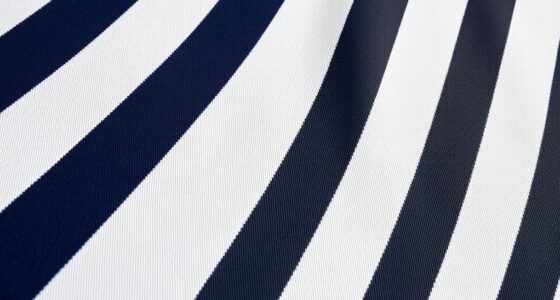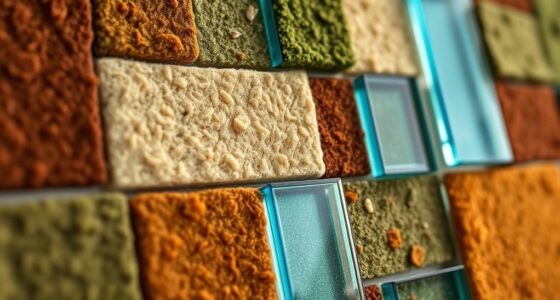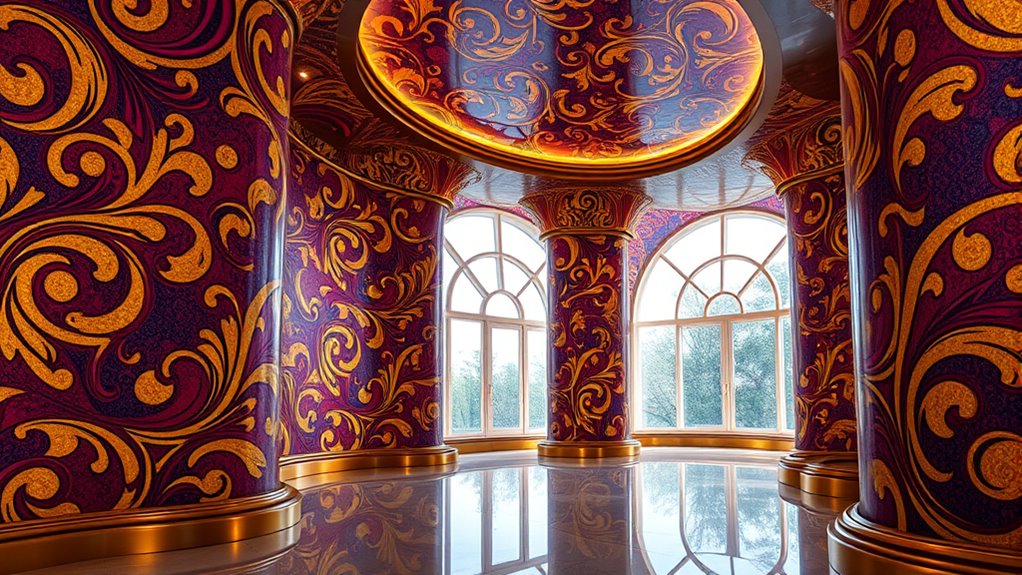

Wallpaper on curved walls and columns transforms these features into mesmerizing focal points by highlighting their shapes and adding depth. You can choose textured, glossy, or peel-and-stick options to perfectly conform to irregular surfaces. When combined with strategic lighting, wallpaper emphasizes contours and creates playful shadows for a dynamic look. Selecting the right materials and lighting can truly elevate your space. Keep exploring to discover how to make your curved features stand out even more.
Key Takeaways
- Use specialized wallpaper designed for curved surfaces, such as peel-and-stick or flexible wallpapers, for seamless adherence.
- Select materials with textures and finishes that respond well to lighting, enhancing the curvature’s visual impact.
- Incorporate strategic lighting to highlight contours, shadows, and wallpaper patterns, emphasizing the architectural shape.
- Opt for reflective or matte finishes to achieve desired ambiance and accentuate curves effectively.
- Ensure proper installation techniques to maintain smooth, bubble-free surfaces that complement the curved features.
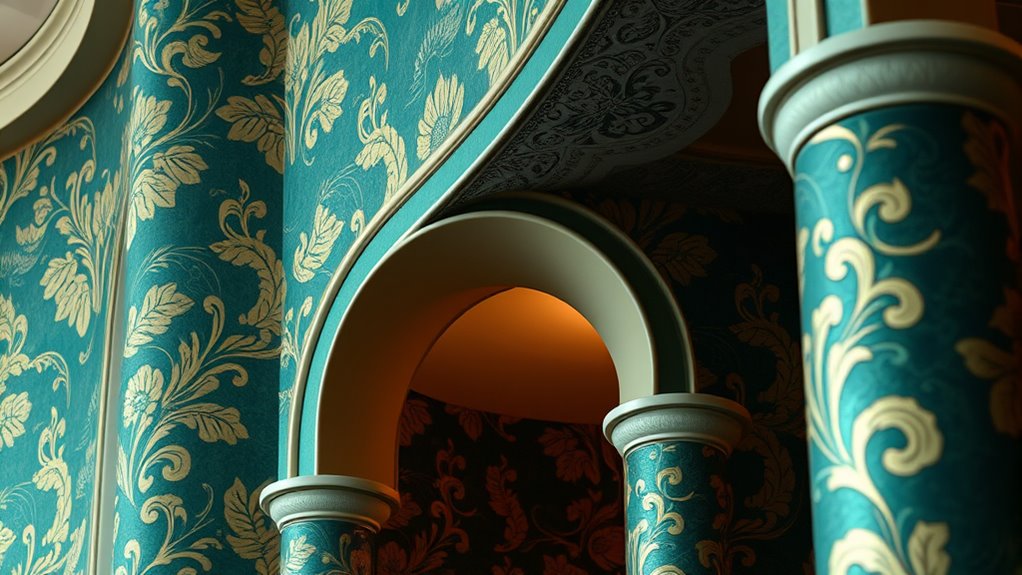
Have you ever wondered how wallpaper can transform curved walls and columns into stunning focal points? The secret lies in understanding how lighting effects and material choices can work together to enhance the unique architecture of these surfaces. When you select wallpaper for curved or rounded features, you’re not just covering a surface—you’re creating a visual experience that emphasizes the shape and adds depth to the space. Lighting effects play a vital role here, as they can highlight the contours of the curves, casting subtle shadows that make the design pop. For example, placing directional lighting near a curved wall can accentuate its shape by creating contrast and drawing attention to the wallpaper’s pattern or texture. This interplay between light and shadow can turn a simple wall into an eye-catching centerpiece.
Lighting and material choices transform curved walls into stunning focal points.
Material choices are equally important in achieving a striking effect. Opt for wallpapers with textured finishes or reflective surfaces, which respond dynamically to different lighting conditions. Metallic or glossy wallpapers, for instance, bounce light across the surface, emphasizing the curvature and adding a sense of movement. Matte finishes, on the other hand, offer a softer, more subdued look that can create a cozy atmosphere while still highlighting the wall’s shape through careful lighting placement. When selecting materials, consider how the wallpaper’s texture interacts with the room’s natural light and artificial lighting setups—this will influence the overall ambiance and impact of your design. Additionally, the choice of wallpaper materials can impact how well the surface conforms to curved features, making installation easier and more seamless.
Furthermore, choosing the right material allows you to play with the wallpaper’s flexibility and durability. For curved walls and columns, peel-and-stick options or wallpapers designed specifically for irregular surfaces can make installation easier and more seamless. These materials are often lightweight and adaptable, ensuring the wallpaper conforms smoothly to the contours without tearing or bubbling. This guarantees that the visual effect remains clean and precise, allowing the lighting effects to work their magic without interference from uneven surfaces.
Ultimately, your goal is to create a harmonious balance between the wallpaper’s material, the lighting effects, and the architectural form. By carefully selecting the right wallpaper with suitable textures and finishes, and by thoughtfully planning your lighting setup, you can turn your curved walls and columns into captivating design elements. This thoughtful approach will elevate your space, making it feel more dynamic, inviting, and uniquely tailored to your style. So, next time you consider wallpapering curved surfaces, remember that the right combination of material choices and lighting effects can truly transform your space into a visual masterpiece.
Frequently Asked Questions
Can Curved Wall Wallpaper Be Removed Easily Without Damage?
Yes, you can remove curved wall wallpaper without causing wall damage if you use the right techniques. Start by gently scoring the wallpaper to loosen the adhesive, then apply a removal solution or warm water to soften it. Carefully peel off the wallpaper, working slowly to prevent wall damage. Using proper tools and patience makes wallpaper removal easier and helps preserve your curved wall’s surface.
What Types of Wallpaper Are Best for Curved Surfaces?
You should choose flexible vinyl or fabric-backed wallpaper for curved surfaces, as they offer superior design flexibility and durability. Did you know that flexible wallpapers can conform to complex shapes, reducing seams and wrinkles? These materials adapt easily to curves, making installation smoother and lasting longer. Their durability ensures your design stays vibrant, even on challenging surfaces, giving you a seamless, professional look that enhances your space’s aesthetic appeal.
How Do I Measure Curved Walls for Wallpaper?
To measure curved walls for wallpaper, start with measuring the height and width at several points along the curve using a flexible measuring tape. Use measuring techniques that follow the wall’s curvature, ensuring you capture the full shape. Make curvature adjustments by noting the widest points and the most curved sections. Record all measurements carefully, then add extra for seams and overlaps, so your wallpaper fits perfectly on the curved surfaces.
Are Special Adhesives Needed for Curved Wall Installation?
Do you really want your wallpaper to peel off or bubble? For curved walls and columns, you don’t need special adhesives, but you must guarantee adhesive compatibility with your wallpaper type. Use proper installation techniques, like smoothing carefully and applying adhesive evenly, to get a flawless finish. Regular wallpaper adhesives work fine if you follow these tips, making your project easier and more successful without extra fuss.
Can Textured or Patterned Wallpaper Be Used on Curved Surfaces?
Yes, you can use textured finishes and patterned designs on curved surfaces. To achieve a smooth application, choose wallpapers with flexible or stretchable materials that conform well to curves. Use a high-quality adhesive designed for textured or patterned wallpapers, and apply carefully with a smoothing tool to avoid bubbles. With patience, your textured or patterned wallpaper will enhance the unique contours of your curved walls or columns beautifully.
Conclusion
When you choose wallpaper for curved walls and columns, you transform your space into a flowing masterpiece. You create a sense of movement, a play of light and shadow, a harmony of patterns and textures. You bring life to every curve, every column, every line. With the right wallpaper, you turn ordinary into extraordinary, static into dynamic, simple into stunning. Embrace the curves, celebrate the columns, and let your walls tell a mesmerizing story.