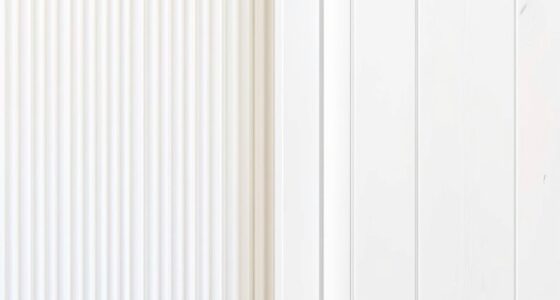
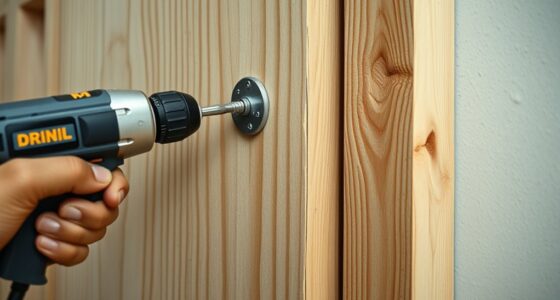
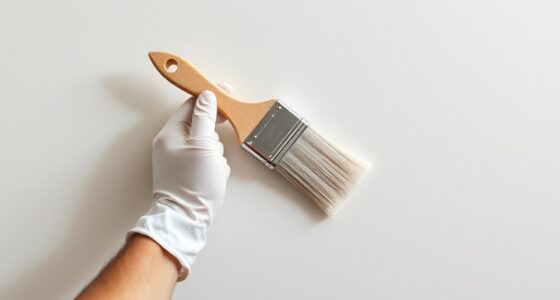
To wallpaper niches and recessed shelves, start by measuring carefully for a seamless fit and prepping the surface with cleaning and priming. Choose wallpaper patterns that enhance the space—bold for minimal decor or subtle for more flexibility—and apply it to the back wall to create depth. Add lighting like LED strips or spotlights to highlight the wallpaper and showcase your decor. Using thoughtful placement and decor choices, you can turn these spaces into stunning focal points—discover how to make them truly stand out.

Get furniture and decor delivered free with Prime
- Fast, free delivery on millions of items
- Prime Video, Amazon Music and more included
- Member-only deals all year
Key Takeaways
- Measure and cut wallpaper precisely to fit the back wall of niches and recessed shelves for a seamless look.
- Apply wallpaper only to the back wall to create depth, keeping sides and edges painted or finished separately.
- Use proper lighting, such as LED strip lights or spotlights, to highlight wallpaper patterns and enhance visual appeal.
- Coordinate decor and accessories that complement the wallpaper’s colors and motifs for cohesive styling.
- Ensure surface preparation and careful installation to achieve a professional, durable finish that elevates the space.

Adding wallpaper to niches and recessed shelves is a great way to transform these often-overlooked spaces into stylish focal points. Instead of leaving them plain or cluttered, you can use wallpaper to add texture, color, and personality. When selecting wallpaper, consider how the space will be illuminated. Incorporating niche lighting can make your wallpaper pop and highlight the unique design you’ve chosen. Soft, warm lighting placed strategically can emphasize the wallpaper’s pattern and create a cozy ambiance. You might opt for LED strip lights or small spotlights to cast gentle illumination, drawing attention to the niche or shelf.
Once you’ve set the lighting, think about shelf decor options that complement your wallpaper choice. For example, if your wallpaper features bold geometric patterns, keep your decor minimal with sleek vases or simple sculptures. Conversely, if you choose a subtle or textured wallpaper, you can afford to be more adventurous with your decor. Use books, framed photos, or decorative objects that contrast or harmonize with the wallpaper’s colors and motifs. The goal is to create a cohesive look that draws the eye without feeling cluttered.
When wallpapering recessed shelves, measure carefully to ensure a seamless fit, especially around corners and edges. Use a sharp utility knife and a straightedge to cut the wallpaper precisely, avoiding wrinkles or overlaps. For niches, consider applying wallpaper to the back wall only, allowing the sides and front edges to be painted or finished in a complementary color. This technique can give the space depth and dimension while keeping the wallpaper as the main visual feature. Proper preparation, including cleaning and priming surfaces, can also improve adhesion and longevity.
In terms of shelf decor options, think vertically and horizontally. Use tall vases or stacked books for height, and layer smaller objects in front to add depth. Incorporate metallic accents or glass items to reflect light from your niche lighting, enhancing the visual appeal. Be mindful of the overall style of your room—whether modern, rustic, or eclectic—and select decor that aligns with that aesthetic. Wallpapering niches and recessed shelves isn’t just about covering up an empty space; it’s about creating a curated display that adds character and charm.
Ultimately, wallpapering these spaces allows you to personalize your home and make every nook and cranny work for you. With good lighting and thoughtful decor choices, your niches and shelves will stand out as eye-catching design elements rather than afterthoughts. By understanding installation techniques, you can ensure a professional and durable finish that elevates your interior design.
As an affiliate, we earn on qualifying purchases.
Frequently Asked Questions
What Types of Wallpaper Are Best for Niches and Recessed Shelves?
For niches and recessed shelves, moisture-resistant wallpapers work best because they handle humidity and occasional splashes well. Textured wallpaper options also add depth and interest, making your space feel more dynamic. You should choose materials like vinyl or laminated wallpapers, which are durable and easy to clean. These types help protect the wall surfaces and keep your design looking fresh, even in high-moisture areas like bathrooms or kitchens.
How Do I Prepare Uneven Surfaces Inside Niches Before Wallpapering?
To prepare uneven surfaces inside niches before wallpapering, you should start with surface smoothing. Fill any gaps or bumps with joint compound or spackle and sand it smooth once dry. Clean the area thoroughly to remove dust. Apply an even layer of adhesive to guarantee proper sticking. This prep work creates a flat, clean surface, making wallpapering easier and ensuring your design looks professional and lasts longer.
Can I Use Peel-And-Stick Wallpaper for Niches?
Sure, peel-and-stick wallpaper works perfectly for niches, despite its reputation for flimsy adhesion. It offers good adhesive strength and is easy to apply, making pattern matching a breeze. Just make certain your surface is clean and smooth for a seamless look. While some doubt its durability, with proper prep, peel-and-stick wallpaper can beautifully enhance your niche without the mess of traditional paste.
How Do I Prevent Wallpaper From Peeling in Humid Environments?
To prevent wallpaper from peeling in humid environments, you should focus on humidity control and sealing techniques. Use a dehumidifier or ensure proper ventilation to reduce moisture. Before applying wallpaper, thoroughly clean and dry the surface. Seal the edges with a high-quality adhesive or sealant to create a moisture barrier. This helps the wallpaper adhere better and resist peeling caused by humidity.
What Tools Are Essential for Wallpapering Recessed Areas?
To wallpaper recessed areas, you need essential tools like a putty knife for wall preparation and a brush or roller for adhesive application. Use a level to ensure precise alignment and a utility knife to trim excess wallpaper neatly. A sponge or damp cloth helps smooth out bubbles and remove excess adhesive. These tools make it easier to achieve a professional finish by guaranteeing proper wall prep and even adhesive application.
As an affiliate, we earn on qualifying purchases.
Conclusion
Wrapping your niches and recessed shelves in wallpaper transforms them into hidden treasures, like secret chambers waiting to be discovered. They become symbols of your creativity and attention to detail, turning ordinary spaces into personal masterpieces. As you step back and admire your work, remember that these small details reflect the bigger picture of your unique style. With each patterned wall, you’re not just decorating—you’re creating a story that invites curiosity and wonder.
small spotlights for display shelves
As an affiliate, we earn on qualifying purchases.
As an affiliate, we earn on qualifying purchases.
decorative objects for wall niches
As an affiliate, we earn on qualifying purchases.
As an affiliate, we earn on qualifying purchases.
Fall Picks
fall essentials
As an affiliate, we earn on qualifying purchases.