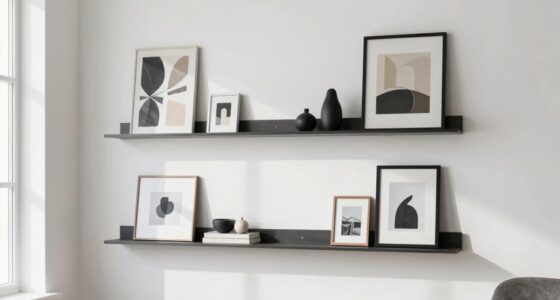

To choose between a triptych and three separate pieces, consider your space and style goals. If you want a unified, sophisticated look, a triptych creates a strong, harmonious statement, especially in larger or minimalist spaces. For more flexibility, a set of separate pieces lets you experiment with arrangement and express a playful or eclectic vibe. Think about your room’s layout and the mood you prefer; exploring these options will help you make the right choice.

Get furniture and decor delivered free with Prime
- Fast, free delivery on millions of items
- Prime Video, Amazon Music and more included
- Member-only deals all year
Key Takeaways
- Consider the room size and wall space; large, open areas benefit from a triptych, while smaller or intricate walls suit separate pieces.
- Decide on your desired visual impact: unified and calming or eclectic and playful.
- Think about flexibility; separate pieces allow easier rearrangement and personalized styling over a cohesive triptych.
- Match the artwork’s style with your interior decor—minimalist spaces often favor triptychs, while eclectic spaces embrace separate pieces.
- Focus on design principles like harmony and balance to ensure the chosen arrangement enhances the room’s overall aesthetic.
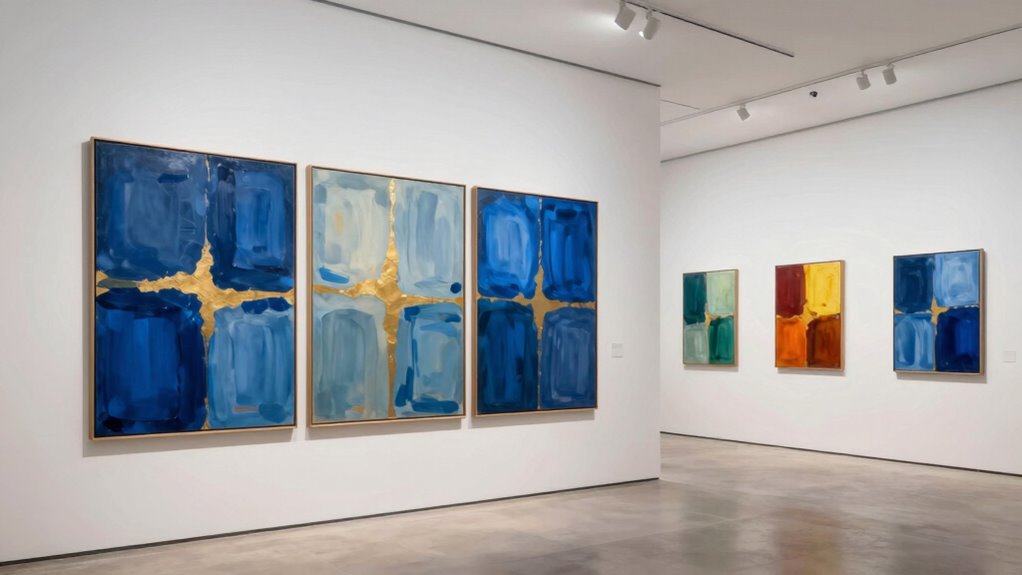
Are you struggling to decide whether a triptych or separate art pieces best suit your space? Making this choice depends on how you want to create a focal point and how your room’s layout influences the overall aesthetic. A triptych offers a unified statement—three panels designed to work together—while separate pieces provide flexibility to arrange and rearrange as you see fit. Your decision hinges on understanding how each option affects artistic cohesion and visual balance in your environment.
Choose between a triptych or separate art pieces to balance cohesion and flexibility in your space.
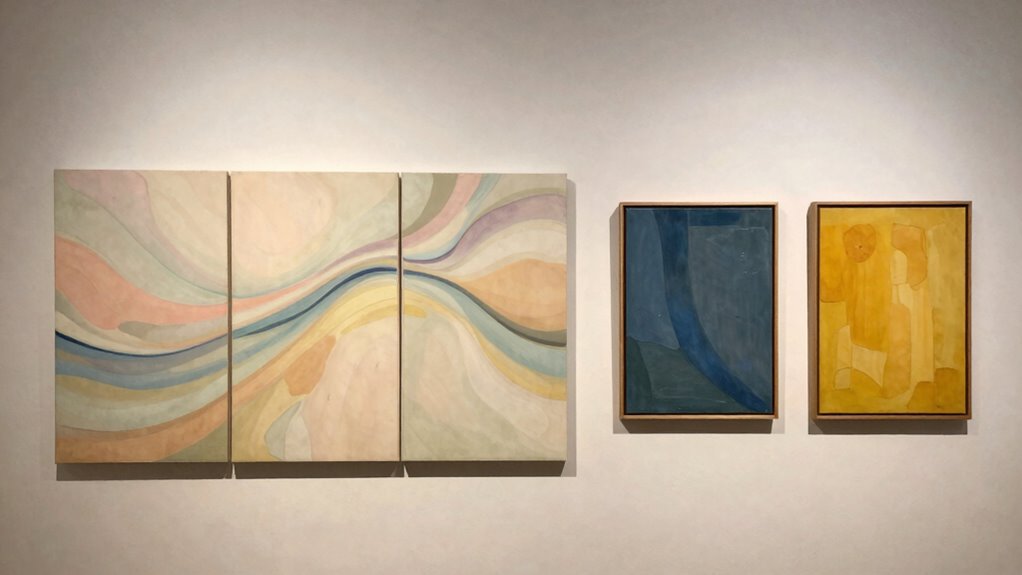
A triptych creates a strong sense of artistic cohesion. Because the panels are designed to complement each other, they work together to form a single, impactful visual narrative. If you want your artwork to serve as a central feature, a triptych can anchor a wall and draw the eye seamlessly across the space. The continuity between panels enhances the sense of unity, making your artwork feel intentional and harmonious. This is especially effective in minimalist or modern interiors, where clean lines and symmetry are key. You’ll find that a triptych can elevate the room’s sophistication without overwhelming the space.
On the other hand, choosing three separate pieces gives you more control over your display and can add variety to your decor. With individual artworks, you can tailor each piece to different sections of the wall, creating a layered or eclectic look. This flexibility allows you to experiment with visual balance—adding or removing pieces, shifting their positions, or varying sizes. Separate artworks can also be swapped out more easily, giving your space a dynamic, ever-evolving feel. If your room has multiple focal points or you want to showcase different styles or themes, separate pieces might serve you better. Considering artistic cohesion can help guide your decision-making process. Additionally, understanding how visual balance influences the overall atmosphere can aid in selecting the best display method. Incorporating design principles such as rhythm and harmony can further refine your arrangement choices.
When deciding, consider your room’s size and layout. A large, open wall often benefits from a triptych because it fills the space evenly and creates a cohesive visual impact. Conversely, a smaller or more complex wall might be better suited for separate pieces, which can be arranged to complement architectural features or existing furniture. Think about the mood you aim for—if you prefer a sense of unity and calm, a triptych might be the way to go. If you want a more playful or curated look, separate pieces give you the freedom to mix and match.
Ultimately, your choice should reflect your personal style and how you want to interact with your art. Whether you opt for a unified triptych or a collection of separate pieces, focus on achieving the right balance of artistic cohesion and visual balance in your space.
As an affiliate, we earn on qualifying purchases.
Frequently Asked Questions
How Do I Determine the Best Size for My Artwork?
To determine the best size for your artwork, consider proportional sizing to guarantee each piece complements the overall display. Think about the space where it’ll hang, and choose dimensions that fit comfortably without overwhelming or underwhelming the area. Also, explore framing options, as different sizes may require different frames. Measure your wall, visualize the layout, and select sizes that create a balanced, harmonious look that enhances your space.
Can a Triptych Be Used as Separate Wall Art?
Yes, a triptych can be used as separate wall art, offering versatility in display and artistic flexibility. You can hang the panels close together for a unified look or space them apart for a more eclectic, individualistic vibe. This adaptability allows you to tailor your artwork arrangement to suit your space and mood, making a triptych a dynamic choice for decorative expression.
What Are the Cost Differences Between Triptychs and Individual Pieces?
Thinking a triptych costs more? Think again! The cost comparison often favors a single triptych because it’s produced as one piece, reducing framing and shipping expenses. Meanwhile, three separate artworks can add up with individual frames and handling fees. So, your value assessment depends: a triptych offers a unified look at a better price, or splurging on three pieces might give you more flexibility and variety.
How Do I Decide Which Style Suits My Interior Decor?
To decide which style suits your interior decor, consider color harmony and material consistency. If your space has a cohesive color palette and uniform materials, a triptych can create a seamless, unified look. However, if your decor features diverse colors or textures, three separate pieces might add visual interest without overwhelming the space. Match your artwork style to your room’s overall vibe for a harmonious and balanced feel.
Are There Specific Themes Better Suited for Triptychs or Separate Pieces?
Certain themes, like landscapes, abstract designs, or nature scenes, work best as triptychs because they promote thematic consistency and visual harmony across the panels. If your theme is more diverse or complex, separate pieces allow for greater flexibility and variety. Consider how the artwork interacts with your space; a triptych can create a unified focal point, while individual pieces can add dynamic interest throughout your decor.
set of three separate art pieces
As an affiliate, we earn on qualifying purchases.
As an affiliate, we earn on qualifying purchases.
Conclusion
Ultimately, whether you choose a triptych or three separate pieces, it’s about finding what resonates with you. A triptych offers unity, a single story told in parts, like a heartbeat pulsing through your space. Separate pieces provide versatility, like individual voices singing their own tune. Both choices reflect your style—sometimes harmony, sometimes variety. So, trust your instinct; your perfect art setup is the one that speaks to your soul amid the silence.
As an affiliate, we earn on qualifying purchases.
As an affiliate, we earn on qualifying purchases.
Halloween Picks
halloween
As an affiliate, we earn on qualifying purchases.