
To soften black frames on light walls, try using matte finishes or textured surfaces that reduce glare and create a more subtle look. Adding a light-colored mat inside the frame can act as a buffer, easing the contrast. Choosing warm or harmonious colors for the frames or surrounding decor can also help, making the space feel more inviting. For more ideas on creating a balanced, gentle appearance, keep exploring options tailored to your style.

Get furniture and decor delivered free with Prime
- Fast, free delivery on millions of items
- Prime Video, Amazon Music and more included
- Member-only deals all year
Key Takeaways
- Add a light-colored matte mat inside the frame to create a soft transition between the wall and the black frame.
- Choose frames with matte or textured finishes to reduce glare and soften visual impact.
- Incorporate warm or complementary colors in surrounding decor to harmonize with the black frames.
- Select materials with tactile qualities that add warmth and subtle softness to the frame’s appearance.
- Include subtle details or textures in the frame design to create visual interest and diminish starkness.
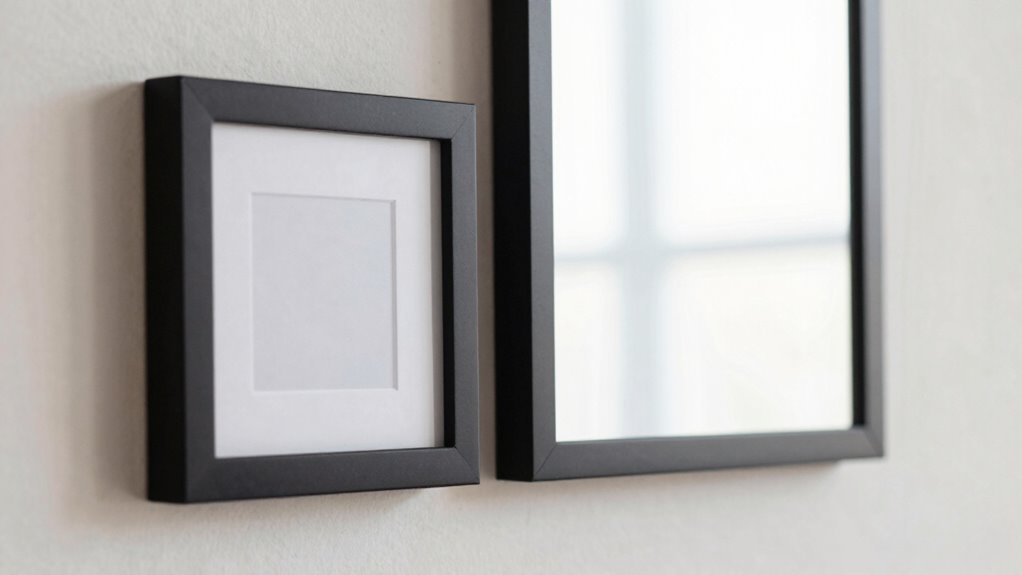
Have you ever felt that black picture frames starkly contrast against light-colored walls, making them seem harsh or overwhelming? If so, you’re not alone. The boldness of black can be powerful, but on light walls, it often creates a jarring effect that distracts from your artwork or decor. To soften this visual impact, you’ll want to think about how color contrast and frame material work together to influence the overall feel of your space.
First, think about the color contrast. Black, by nature, provides a high contrast against light walls, which is why it grabs your attention immediately. To dial down that starkness, you can introduce elements that help blend or balance the contrast. For example, opting for frames with a softer, matte finish can help reduce glare and create a more subtle boundary around your art. Alternatively, choosing frames with a slight sheen or a textured surface can break up the sharpness, making the frame appear less commanding. You might also consider adding a thin, light-colored mat inside the frame. This acts as a buffer zone, gradually shifting from the wall color to the dark frame, softening the overall look and making the black less imposing. Incorporating visual warmth into your framing choices can further enhance the inviting feel of your space. Additionally, considering color harmony can help your frames blend more seamlessly with your decor. Exploring different frame materials that emphasize tactile qualities can also influence the overall softness, making the black frames feel more integrated and less stark. Paying attention to texture and finish in your framing options can further refine how the black frames interact with your light walls, creating a more harmonious appearance.
As an affiliate, we earn on qualifying purchases.
Frequently Asked Questions
Can Adding Texture Help Soften the Appearance of Black Frames?
Yes, adding texture can help soften the appearance of black frames. You can choose frame materials like wood with a natural grain or textured finishes, which create visual warmth. Incorporating decorative accents such as fabric mats or padded borders around the frames also adds softness. These elements break up the starkness of black edges, making your display feel more inviting and harmonious with light walls.
What Lighting Options Enhance the Softness of Black Frames?
You can enhance the softness of black frames by choosing warm, diffused lighting, like gallery lighting with adjustable bulbs, which creates gentle shadows. Soft LED or incandescent lights work well, especially when paired with matte or wood frame materials that reflect light subtly. These options reduce harshness, making black frames feel more inviting against light walls. Play with placement to avoid glare and achieve a cozy, balanced glow.
Do Matte Finishes Make Black Frames Feel Less Harsh?
Matte finishes do make black frames feel less harsh because they reduce glare, softening shadow contrast and minimizing the starkness created by color contrast. By diffusing light, a matte surface creates a more subtle appearance, blending better with light walls. This effect helps the frames appear more integrated and less dominant, giving your space a softer, more inviting feel without sacrificing the frame’s definition or style.
How Do Wall Colors Influence the Perception of Black Frames?
Wall colors profoundly influence how you perceive black frames. Light walls with high color contrast make black frames stand out sharply, emphasizing their boldness. Softer, muted wall colors create a more subtle frame effect, blending the frame with the wall. Additionally, the frame material impacts perception; matte finishes soften the look, while glossy ones reflect more light. Choosing wall colors and materials thoughtfully helps you achieve the desired balance and mood in your space.
Are There Specific Frame Styles That Naturally Feel Softer?
Think of certain frame styles as gentle whispers rather than loud shouts. Soft-edged, rounded frames made of materials like wood or acrylic tend to feel more inviting and less harsh. Light-colored or matte finishes also help reduce stark color contrast, making black frames seem more subtle. These styles naturally evoke a softer vibe, balancing the boldness of black with the lightness of your walls, creating a more harmonious and calming space.
light-colored mat for picture frames
As an affiliate, we earn on qualifying purchases.
As an affiliate, we earn on qualifying purchases.
Conclusion
Think of your black frames as bold characters in a gentle story, standing out without shouting. By softening their edges with warm mats or delicate details, you’re turning a striking character into a friendly neighbor on a light wall. Just like a well-tuned orchestra, each element plays its part in harmony. With these tweaks, your frames become inviting accents, creating a cozy gallery where every piece whispers softly, inviting you to pause and enjoy.
As an affiliate, we earn on qualifying purchases.
As an affiliate, we earn on qualifying purchases.
Halloween Picks
halloween
As an affiliate, we earn on qualifying purchases.