When mounting guitars and instruments on your wall, choose sturdy brackets or hooks designed specifically for your gear, ensuring the arms are padded to prevent damage. Leave enough space between each piece to avoid scratches and accidental bumps, and select mounting hardware appropriate for your wall material—using anchors for drywall or stronger fasteners for heavier walls. Proper spacing and support keep your instruments safe while creating an organized display; keep exploring to get more tips on perfect wall setups.
Key Takeaways
- Use sturdy, padded wall-mounted hangers or brackets designed for guitars to prevent pressure damage.
- Leave at least a few inches between instruments to avoid scratches and allow easy access.
- Mount brackets into drywall with anchors or into studs for heavier instruments, ensuring secure support.
- Distribute instruments evenly to prevent stress points and minimize the risk of accidental falls.
- Consider wall material and weight capacity when selecting hardware to ensure safe, long-term display.
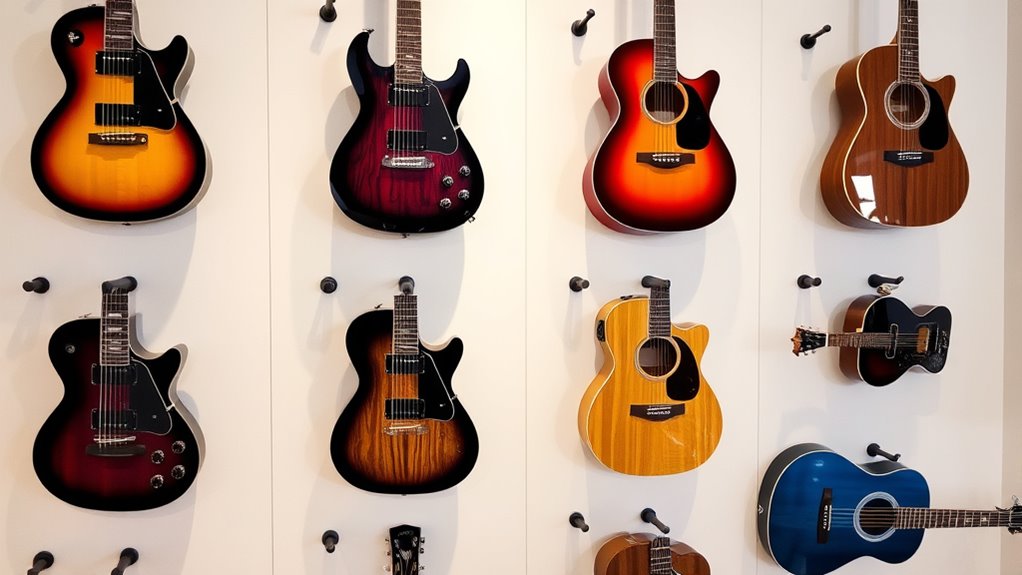
Ever considered how a well-designed guitar or instrument wall can transform your space? There’s more to it than simply mounting your gear; the way you hang your instruments makes a huge difference in both display and safety. When it comes to hanging techniques, you want to think about how your instruments are supported and spaced. Proper hanging methods ensure your gear stays secure and accessible, while also preventing damage. Use sturdy brackets or hooks designed specifically for musical instruments. For guitars, wall-mounted hangers with padded arms are ideal—they cradle the neck without putting pressure on the body. For other instruments, consider wall mounts that distribute weight evenly, avoiding stress points that could cause cracks or warping over time.
Spacing your instruments correctly is just as vital as the hanging technique itself. You want enough room between each piece so they don’t bump into each other, which could lead to scratches or falls. A good rule of thumb is to leave at least a few inches between instruments, especially if they’re hanging on the same wall. This also helps when you’re selecting wall material considerations, as some materials are better suited for certain hanging techniques. For example, drywall can support lightweight mounts but might require anchors for heavier gear. Wooden walls offer more stability and can handle heavier brackets, while metal walls might need specialized fasteners. Always check the weight capacity of your wall material and choose brackets accordingly to prevent accidents.
When planning your wall setup, consider the wall material considerations from the start. If you’re working with drywall, opt for toggle bolts or wall anchors that can handle the weight of your instruments. For brick or concrete walls, masonry anchors and screws will give you a more secure hold. If your space has wooden paneling or exposed wood studs, you can screw directly into the studs for maximum support. Remember, the goal is to balance aesthetics with practicality—your instruments should look good and stay safe. Properly spaced and securely hung instruments not only look organized but also reduce the risk of accidental damage.
guitar wall mount with padded arms
As an affiliate, we earn on qualifying purchases.
As an affiliate, we earn on qualifying purchases.
Frequently Asked Questions
How Do I Prevent My Guitars From Slipping off the Brackets?
To prevent your guitars from slipping off brackets, make certain you use proper wall anchoring techniques like sturdy wall anchors or mounting hardware designed for weight. Incorporate guitar strap safety by attaching straps or padded rests to keep guitars secure. Regularly check that brackets are tightly secured and properly spaced to provide adequate support. These steps help stabilize your instruments and prevent accidental falls, keeping your guitars safe and ready to play.
What Materials Are Best for Durable Instrument Wall Brackets?
Imagine your prized instruments resting on a sturdy cradle—opt for brackets made from high-quality steel or hardwood for unmatched durability. These materials resist warping and provide strong support, ensuring your guitars stay safe. Opt for brackets with reinforced joints and rust-resistant finishes to enhance longevity. By choosing the right material selection, you create an enduring display that keeps your instruments secure and beautifully showcased over time.
How Can I Customize Spacing for Multiple Instrument Types?
You can customize spacing for multiple instrument types by using adjustable spacing options and customized brackets. Install brackets that allow you to easily modify the distance between instruments, ensuring each piece fits securely without crowding. Measure your instruments carefully, then adjust the brackets accordingly. This flexibility helps you create a tailored display, keeps your instruments safe, and makes it simple to reorganize whenever needed.
Are There Safety Concerns With Heavy Instrument Wall Mounts?
Yes, there are safety concerns with heavy instrument wall mounts. You should always follow wall mounting regulations to make certain the brackets are securely installed and capable of supporting the weight. Failing to do so could cause your instruments to fall, risking damage or injury. Additionally, check your insurance considerations, as improper mounting might affect coverage in case of damage or accidents. Proper installation is essential for safety and peace of mind.
How Do I Maintain the Wall and Brackets Over Time?
To preserve your wall and brackets over time, regularly inspect for signs of wear or damage, making certain they stay secure. Clean the brackets and wall surface with a soft cloth to prevent dust buildup. Tighten any loose screws or bolts promptly to sustain bracket longevity. Keep the wall clear of clutter and avoid excessive weight, which can strain the mounting system. Consistent maintenance ensures your instruments stay safe and your wall remains sturdy.
instrument wall brackets for drywall
As an affiliate, we earn on qualifying purchases.
As an affiliate, we earn on qualifying purchases.
Conclusion
Think of your guitar and instrument walls as a well-tended garden, where each piece is a unique flower thriving with proper care. When you choose the right brackets and spacing, you’re creating a safe, organized space that lets your instruments shine. With thoughtful setup, your collection becomes a symphony of harmony and beauty, ready to inspire every time you glance at your wall. Keep it balanced, and let your musical garden flourish.
As an affiliate, we earn on qualifying purchases.
wall anchors for musical instruments
As an affiliate, we earn on qualifying purchases.
As an affiliate, we earn on qualifying purchases.




![9 Labor Day Mattress Sales From Organic Brands [2026]](https://thecreativewalls.com/wp-content/uploads/2026/09/9-labor-day-mattress-sales-from-organic-brands-2026-featured-260x140.jpg)