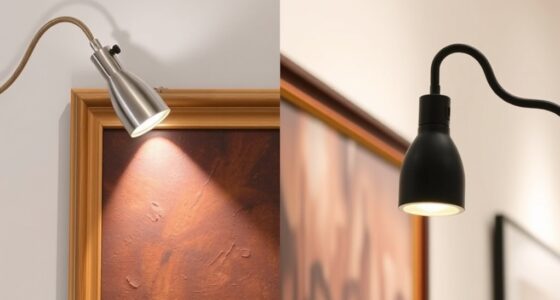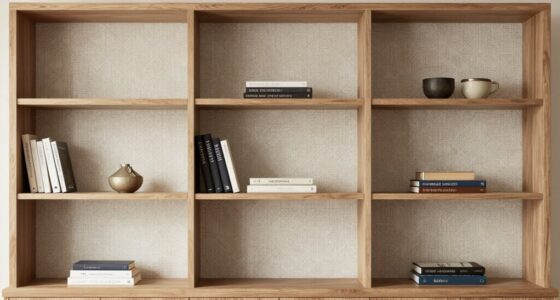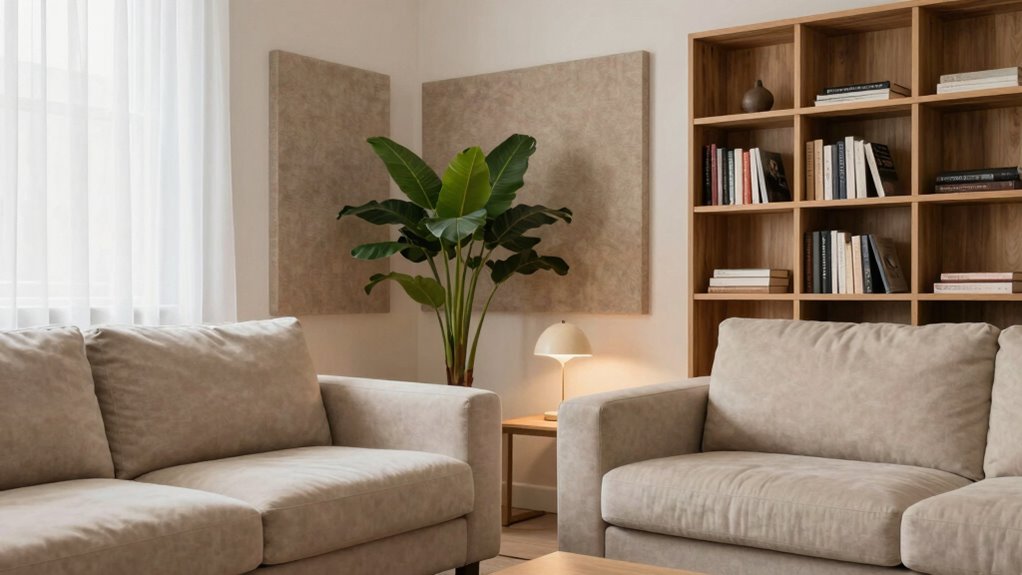

To hide acoustic treatments effectively, integrate them into your decor behind seating areas or near loud sources like speakers and TVs. Use wall-mounted panels that blend with artwork or textured textures to add visual interest. Place plush furniture and rugs strategically to absorb sound naturally. Incorporate natural materials like cork or wool into furniture pieces for added effect. If you keep exploring, you’ll discover even more clever tips to improve your space’s acoustics discreetly.

Get furniture and decor delivered free with Prime
- Fast, free delivery on millions of items
- Prime Video, Amazon Music and more included
- Member-only deals all year
Key Takeaways
- Hide acoustic panels behind artwork or decorative wall hangings to blend with interior decor.
- Conceal treatments within bookshelves or furniture to maintain aesthetic appeal.
- Place acoustic panels behind seating areas or near loud sources to maximize sound absorption discreetly.
- Integrate natural materials like cork or wool into furniture or decor for subtle sound dampening.
- Use room corners or behind large furniture pieces to effectively hide acoustic treatments out of sight.
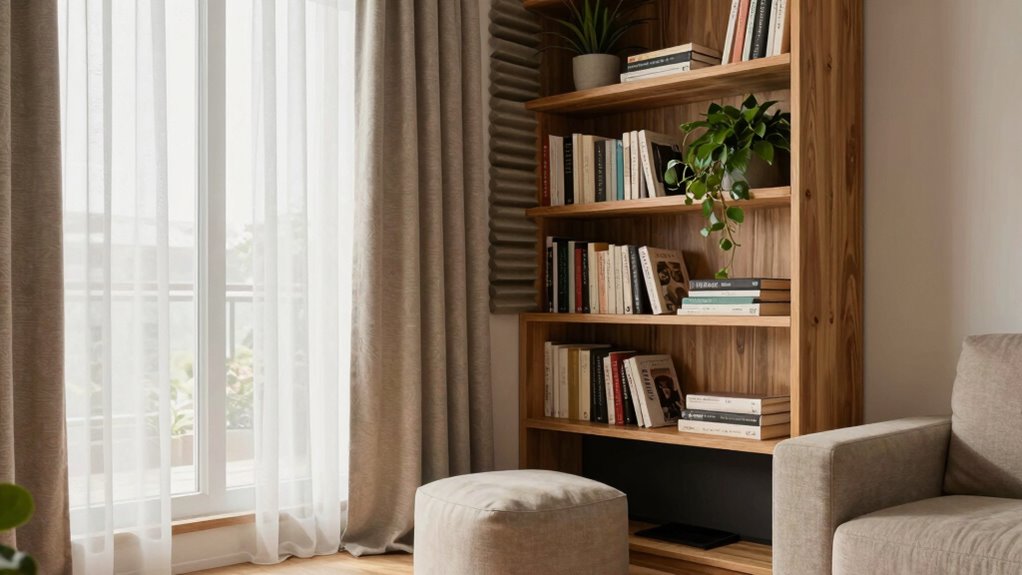
If you’re looking to improve your home’s acoustics without sacrificing style, knowing where to hide acoustic treatments is key. You want solutions that blend seamlessly into your decor, so you don’t have to compromise on aesthetics. One effective way is to incorporate decorative wall panels into your space. These panels come in a variety of designs, from sleek modern options to more artistic, textured styles. Hang them on your walls, especially in areas where sound tends to bounce around, like living rooms or home offices. Not only do they absorb sound, but they also add visual interest. Place them strategically behind seating areas or near loud sources like speakers or TVs, and they’ll work double-duty—improving sound quality and elevating your interior design. Additionally, integrating decorative acoustic panels into your decor allows for both functionality and style, making the treatment almost indistinguishable from art or design features.
Another smart move is to rethink your furniture arrangements. Soft furnishings like plush sofas, armchairs, and rugs act as natural sound absorbers. Position your furniture to create cozy zones that minimize echo and sound bounce. For example, placing a large sofa opposite a wall with decorative wall panels can help contain noise within a specific area. Layering rugs on hardwood or tile floors also dampens sound, especially in open-plan spaces. Bookshelves filled with books and decorative pieces can serve as both visual focal points and sound diffusers, breaking up sound waves before they reflect around the room. Keep in mind that arranging furniture to avoid large empty spaces can markedly reduce echo, and considering room shape can also influence how sound behaves within a space. Incorporating biodiversity principles by using natural materials like cork or wool in furniture and decor can further enhance sound absorption and create a healthier indoor environment. Using natural materials thoughtfully can help create a more balanced and calming atmosphere in your home. Additionally, paying attention to room dimensions can significantly impact the effectiveness of acoustic treatments.
As an affiliate, we earn on qualifying purchases.
Frequently Asked Questions
How Do I Choose the Most Effective Hiding Spots for Acoustic Help?
To choose the most effective hiding spots for acoustic help, consider decorating strategies that blend with your home’s style. Use discreet spots like behind furniture, inside closets, or under staircases. Opt for acoustic panel designs that look like decorative wall art or mirrors, making them less noticeable. Prioritize areas where sound reflection is high, such as living rooms or hallways, ensuring your acoustic help improves sound quality without sacrificing aesthetics.
Are There Any Safety Concerns When Hiding Acoustic Panels?
Hiding acoustic panels is like locking treasure chests—if you’re not careful, safety hazards and ventilation concerns can turn the treasure into trouble. Make sure panels aren’t blocking vents or airflow, which can cause overheating or poor air quality. Avoid placing panels near electrical outlets or heat sources. Regularly check that your hiding spots don’t create hazards, keeping your home both soundproofed and safe, like a fortress with open windows.
Can Hidden Acoustic Help Improve Sound Quality in Large Rooms?
Yes, hidden acoustic panels can improve sound quality in large rooms. You can use decorative panel ideas and DIY concealment techniques to seamlessly blend them into your space. By strategically placing these panels behind artwork, furniture, or within built-in shelving, you enhance acoustics without sacrificing style. This approach reduces echo and noise, making your large room more comfortable and functional while maintaining a cohesive aesthetic.
How Often Should I Check or Replace Hidden Acoustic Materials?
Think of your hidden acoustic materials as loyal guardians—check them every 6 to 12 months to make certain they’re still effective. Regular inspections help maintain aesthetic integration and sound quality. If you notice dust, wear, or sagging, replace or clean them through simple DIY installation. Staying attentive keeps your home’s acoustics ideal, ensuring your discreet sound solutions continue to work seamlessly without compromising your decor’s style.
Will Hiding Acoustic Help Affect the Warranty or Manufacturer Instructions?
Hiding acoustic help can potentially affect your warranty or manufacturer instructions if not done correctly. You should always check warranty implications before concealing acoustic materials, as improper installation might void coverage. Follow manufacturer guidelines carefully, ensuring that acoustic treatments are accessible for inspection or maintenance. To avoid issues, consult the product’s instructions and contact the manufacturer if you’re unsure whether your hiding method complies with warranty requirements.
As an affiliate, we earn on qualifying purchases.
Conclusion
Now that you know where to hide acoustic panels, picture your home transformed into a cozy sanctuary. Soft, almost whispering walls gently absorb sound, creating a peaceful haven from the outside world. With discreet placements blending seamlessly into your decor, you’ll enjoy quiet comfort without sacrificing style. Imagine walking through your space, every surface quietly working to muffle noise, wrapping you in a serene silence that feels almost like a warm embrace.
natural cork soundproofing panels
As an affiliate, we earn on qualifying purchases.
As an affiliate, we earn on qualifying purchases.
As an affiliate, we earn on qualifying purchases.
Halloween Picks
halloween
As an affiliate, we earn on qualifying purchases.