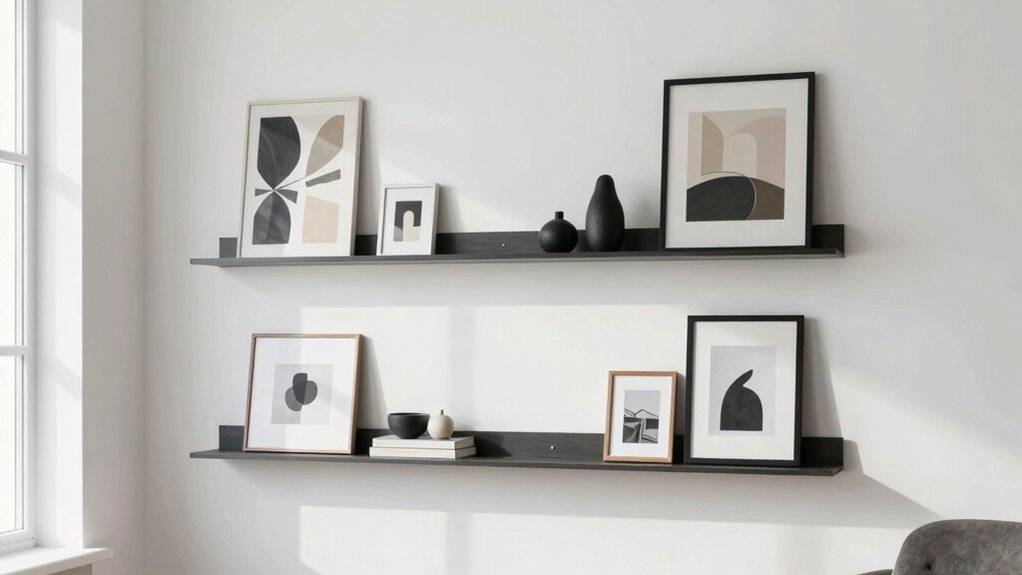

To use floating shelves and art together without clutter, choose a few meaningful pieces that fit your space and stick to a cohesive color scheme or theme. Arrange items with proper spacing and balance—place larger pieces in the back or bottom, and smaller objects in front for interest. Keep the display intentional and simple, ensuring each piece interacts well with others. Stay tuned to discover how to perfect your arrangement and achieve a harmonious look.

Get furniture and decor delivered free — and shop member deals
- Fast, free delivery on millions of items
- Access to Prime Big Deal Days deals on October 6–7
- Prime Video, Amazon Music and more included
Key Takeaways
- Select a limited, cohesive color palette for both art and decor to maintain visual harmony.
- Arrange larger art pieces toward the back or center of shelves to create depth.
- Use smaller decor items and plants in front to add interest without overcrowding.
- Maintain proper spacing and balance between art and objects to prevent clutter.
- Keep the display simple and intentional, focusing on quality over quantity.
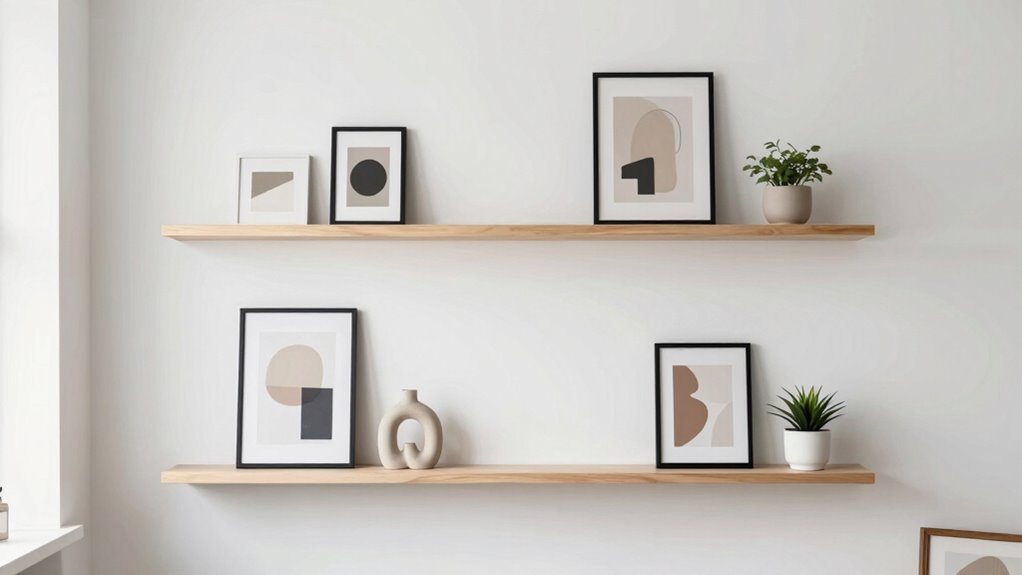
Creating a stylish, clutter-free space often involves balancing art and storage, and floating shelves are perfect for this. They provide a sleek way to display your favorite items while keeping your space organized. When you’re working on decor arrangement, it’s essential to think about how each piece interacts with the others. Floating shelves can serve as a canvas for your creativity, but if not arranged thoughtfully, they can quickly lead to visual chaos. The goal is to create a harmonious display that highlights your art without overwhelming the room.
To achieve this, start by selecting a few key pieces for your shelves. Limit the number of objects you display, focusing on quality over quantity. Mix different types of decor—books, small plants, decorative objects, or framed photos—to add visual interest. Keep a consistent color palette or theme to prevent the display from feeling cluttered. When arranging items, consider their size and shape, placing larger pieces toward the back or bottom and smaller items in front. This creates a sense of depth and order, helping to establish visual balance.
Pay attention to the spacing between objects—too tight, and it looks crowded; too sparse, and it appears empty. Aim for a balanced distribution that guides the eye smoothly across the shelf. Use symmetry or asymmetry deliberately to suit your style. For example, a symmetrical arrangement with matching objects on either side can evoke a sense of order, while asymmetrical groupings can add energy and visual interest. Experiment with different configurations until you find a layout that feels natural and cohesive. Incorporating visual balance as a key principle helps ensure your space feels curated, welcoming, and balanced, without the clutter.
Ultimately, using floating shelves with art requires a thoughtful eye for decor arrangement and a keen sense of visual balance. Keep your display simple, intentional, and aligned with your style, and you’ll create a space that’s both functional and beautiful. Paying attention to decor principles can enhance how well your display communicates your personal style while maintaining harmony.
floating shelves for art display
As an affiliate, we earn on qualifying purchases.
As an affiliate, we earn on qualifying purchases.
Frequently Asked Questions
How Do I Choose the Right Size for Floating Shelves?
You choose the right size for floating shelves by considering your space and the items you’ll display. Opt for material options like wood or metal that match your decor. Use placement strategies such as balancing shelf length with wall size and avoiding overcrowding. Smaller shelves work well for art or delicate decor, while larger ones suit books or multiple pieces. Measure carefully to make certain your shelves enhance without cluttering your space.
What Are the Best Types of Art for Floating Shelves?
You can choose various art styles like abstract, photography, or minimalist pieces that complement your shelf materials, such as wood or metal. Don’t worry about your art clashing; mixing textures and styles can create visual interest. Opt for lightweight frames to keep things simple and avoid clutter. This way, your floating shelves become a stylish display without overwhelming your space, making your decor feel cohesive and curated.
How Can I Prevent Clutter When Displaying Multiple Art Pieces?
To prevent clutter when displaying multiple art pieces, focus on color coordination and shelf spacing. Choose artworks with complementary colors to create harmony, and leave enough space between each piece so they don’t look crowded. You can also vary the height and size of the art to add visual interest without overwhelming the area. Regularly reassess your display to guarantee it stays organized and balanced, keeping your space neat and stylish.
Are There Safety Tips for Installing Floating Shelves With Art?
When installing floating shelves with art, prioritize safety precautions by using proper tools and wall anchors suited for your wall type. Follow installation tips like measuring carefully, marking drill spots precisely, and securing brackets firmly. Wear safety glasses and be cautious with heavy items to avoid accidents. Double-check that shelves are level and securely attached before placing art on them. These steps help guarantee a safe, clutter-free display that showcases your art beautifully.
How Often Should I Update or Rotate My Shelf Decor?
You should update or rotate your shelf decor every few months, like changing a wardrobe for the seasons. Seasonal updates keep your space fresh and reflect your evolving personal style. For example, swapping out bright summer accents for cozy winter pieces keeps your shelves lively and engaging. Regular updates prevent clutter from building up and help your decor stay aligned with your current taste and mood.
small decorative plants for shelves
As an affiliate, we earn on qualifying purchases.
As an affiliate, we earn on qualifying purchases.
Conclusion
By thoughtfully pairing floating shelves with art, you create a harmonious balance that reflects your personality and style. Think of your shelves as open arms, welcoming your favorite pieces into your home’s story. When arranged with intention, they symbolize a canvas of your life—organized yet expressive. With patience and care, your space becomes a sanctuary where clutter transforms into meaningful art, inviting you to pause and appreciate the beauty of intentional living.
As an affiliate, we earn on qualifying purchases.
decorative objects for floating shelves
As an affiliate, we earn on qualifying purchases.
As an affiliate, we earn on qualifying purchases.
Fall Picks
fall essentials
As an affiliate, we earn on qualifying purchases.