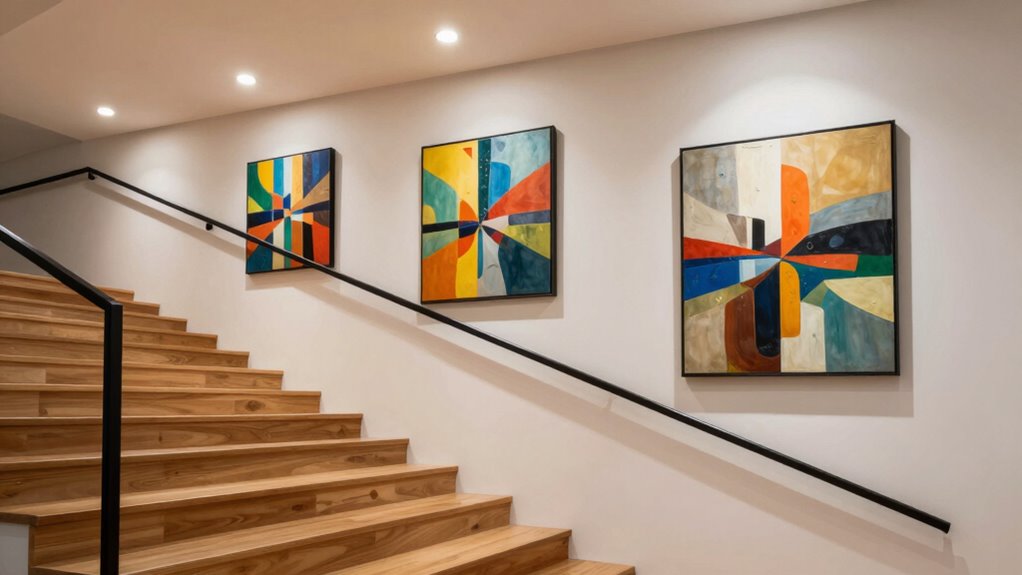

To light stairwell art evenly, avoid direct sunlight and position fixtures at 30-45 degrees, slightly above eye level, angled downward. Use adjustable track lights or wall-mounted spotlights to easily fine-tune angles and coverage. Opt for bulbs with neutral or daylight color temperatures to reveal true colors and soften shadows with diffusers or frosted lenses. Experiment with fixture placement until shadows are minimized, and learn how to create a balanced, inviting display by exploring these tips further.

Get furniture and decor delivered free with Prime
- Fast, free delivery on millions of items
- Prime Video, Amazon Music and more included
- Member-only deals all year
Key Takeaways
- Use adjustable track or wall-mounted fixtures aimed at 30-45 degrees for even light distribution.
- Mount lights slightly above eye level and angle downward to minimize shadows.
- Incorporate diffusers or frosted lenses to soften light and reduce harsh spots.
- Position lights away from direct sunlight to prevent glare and uneven illumination.
- Experiment with fixture placement and adjust until shadows are minimized and artwork is evenly lit.
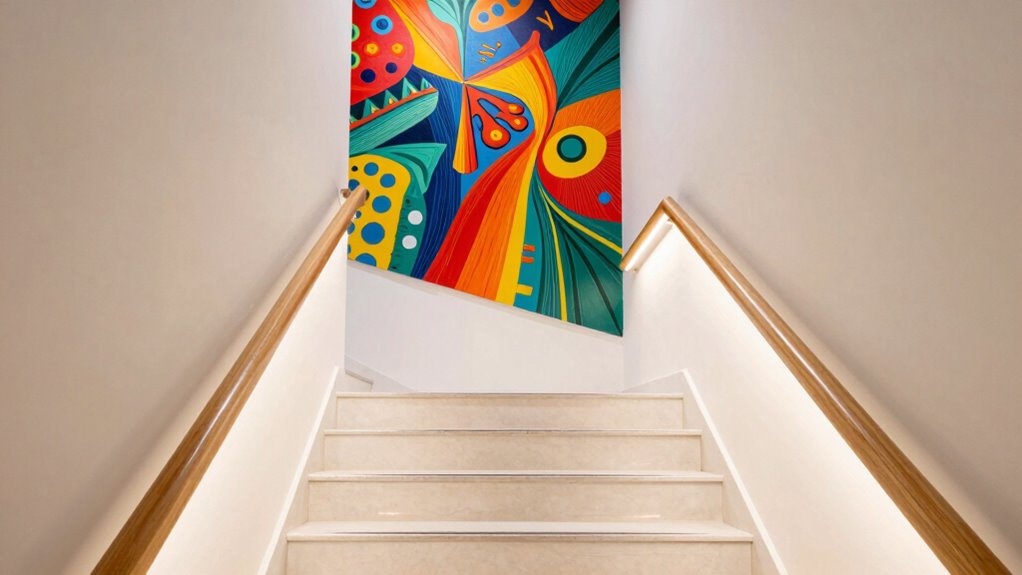
Lighting stairwell art can be challenging because uneven shadows often distract from the artwork’s details and beauty. The key to avoiding this problem lies in thoughtful gallery placement and choosing the right lighting color. When you decide where to hang your art, consider how natural light interacts with the space. Positioning artwork away from direct sunlight helps prevent glare and harsh shadows that can obscure details. If possible, place pieces where they won’t be hit by direct beams from windows or skylights, and instead, let indirect light highlight their features. This strategic gallery placement minimizes the risk of uneven shadows that can distort the viewer’s perception.
Strategically place artwork away from direct sunlight to prevent glare and uneven shadows.
Lighting color plays an essential role in showcasing stairwell art effectively. Opt for bulbs with a neutral or daylight color temperature, typically around 3500K to 5000K. These tones provide a balanced, natural light that reveals true colors without washing out or overly warm tinting. Avoid warm yellow lights, which can cast a golden hue that skews the artwork’s appearance, or cool bluish lights that might make the piece feel cold or distant. When choosing your lighting, think about how the color temperature affects the way colors are perceived and how it complements the art and enhances its details without creating distracting color casts or shadows.
To achieve even lighting, use adjustable fixtures like track lights or wall-mounted spotlights. These allow you to direct light precisely onto the artwork, reducing the chance of uneven shadows forming. Position the fixtures at a proper height and angle—aim for about 30 to 45 degrees from the artwork—to evenly disperse light across the entire piece. Mounting lights slightly above eye level and angling them downward helps avoid casting unwanted shadows behind or on the sides of the art. You should also consider using diffusers or frosted lenses on your fixtures, which soften the light and prevent harsh spots that can create uneven shadows or glare. Additionally, consider the lighting placement to ensure optimal coverage and minimize shadowing. Proper light layering with multiple fixtures can further enhance the overall effect and reduce shadow formation.
Finally, experiment with the placement of your lighting fixtures before finalizing. Move them around, observe how shadows fall at different times of the day, and adjust accordingly. It’s also helpful to understand how ambient light interacts with your artificial lighting, so you can make adjustments that complement both sources. The goal is to create a uniform glow that enhances every detail and color without drawing attention to the lighting itself. When you combine thoughtful gallery placement with the right lighting color and proper fixture positioning, you’ll guarantee your stairwell art is displayed beautifully—bright, vibrant, and free of distracting shadows.
adjustable track lighting for art
As an affiliate, we earn on qualifying purchases.
As an affiliate, we earn on qualifying purchases.
Frequently Asked Questions
What Types of Lighting Fixtures Are Best for Stairwell Art?
You should use a combination of ambient fixtures and accent lighting to illuminate stairwell art effectively. Ambient fixtures provide even, overall light that reduces harsh shadows, while accent lighting highlights your artwork without creating uneven shadows. Recessed or track lighting works well for accent lights, and wall sconces can add warmth and focus. This blend guarantees your art is well-lit, vibrant, and visually appealing without distracting shadows.
How Do I Prevent Glare on Glossy Artwork?
To prevent glare on glossy artwork, you need to focus on glare reduction techniques. Position your lights at an angle rather than directly facing the piece to avoid reflections on reflective surfaces. Use diffused or soft lighting to minimize harsh reflections, and consider matte or non-reflective glass if possible. These steps help you see the art clearly without the distraction of glare, making your stairwell display more inviting and professional.
Can Motion Sensors Be Used for Stairwell Lighting?
Yes, you can definitely use motion sensors for stairwell lighting. They activate smart lighting systems automatically when you enter, providing both convenience and energy efficiency. With smart lighting, you can customize brightness levels and even schedule when sensors are active. This setup guarantees the stairwell is well-lit when needed, reducing the risk of accidents while avoiding unnecessary energy use. It’s a smart, seamless way to keep your stairwell illuminated.
How Often Should I Replace Lighting Bulbs in Stairwells?
Ever wondered how often you should replace stairwell bulbs? Typically, you should check your bulbs every 6 to 12 months, depending on their bulb lifespan and usage. Regular replacement guarantees consistent lighting and safety. Following a set replacement schedule helps prevent unexpected burnout, which can leave you in the dark. Keep track of bulb ages and replace them proactively to maintain peak brightness and avoid uneven shadows or dark spots in your stairwell.
Are There Energy-Efficient Options for Stairwell Art Lighting?
Yes, there are energy-efficient options for stairwell art lighting. You can install LED strips, which consume less power and provide bright, even illumination. Solar-powered fixtures are another eco-friendly choice, especially if your stairwell gets enough sunlight during the day. These options not only save energy but also reduce your electricity bills, while ensuring your stairwell art is beautifully lit without creating uneven shadows.
As an affiliate, we earn on qualifying purchases.
Conclusion
Now that you know the secrets to illuminating stairwell art without uneven shadows, you’re almost ready to transform your space. But remember, the real magic happens when you experiment with different angles and light intensities. Will your next adjustment reveal a hidden detail or cast an unexpected shadow? Keep testing, stay curious, and your stairwell will become a mesmerizing gallery—one that invites viewers to discover its secrets with every step they take. The perfect lighting is just a tweak away.
As an affiliate, we earn on qualifying purchases.
As an affiliate, we earn on qualifying purchases.
Halloween Picks
halloween
As an affiliate, we earn on qualifying purchases.