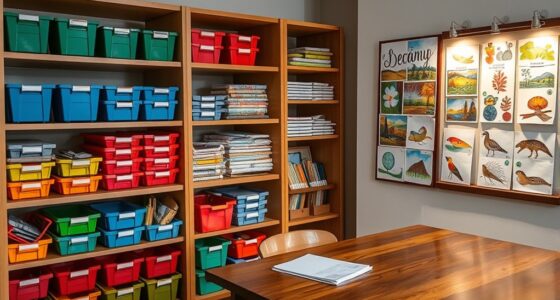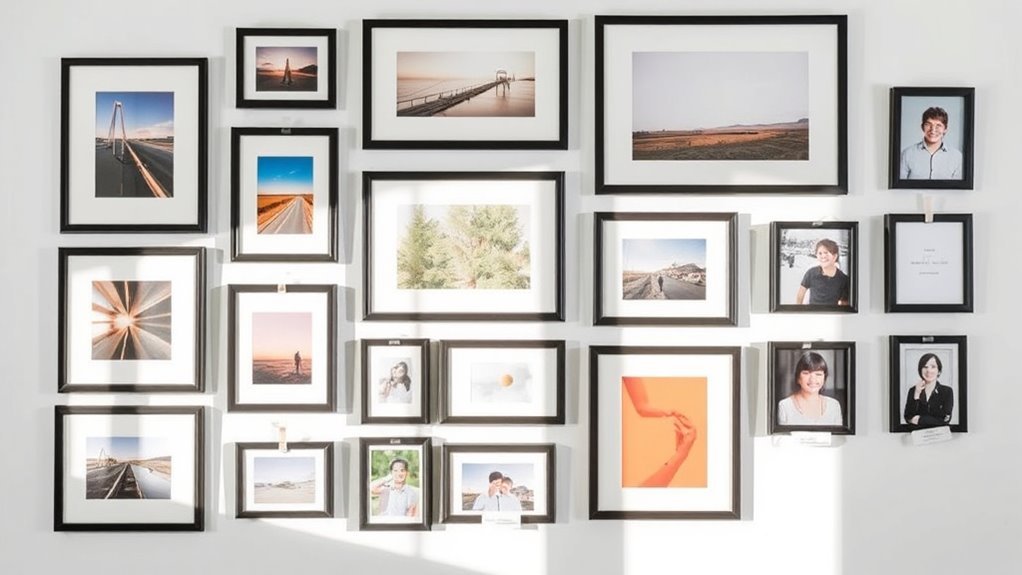
To document a gallery wall with photos and notes, use consistent framing and natural light to capture clear images from multiple angles. Take wide shots for the overall layout and close-ups for details like framing and spacing. Keep notes on arrangement specifics, framing choices, and memories attached to each piece. Editing photos for brightness and contrast helps preserve true colors. If you want tips on organizing and maintaining these records, explore more guidance below.
Key Takeaways
- Take consistent, well-lit photos from multiple angles to accurately capture the gallery wall’s layout and details.
- Include close-up images of framing styles, matting, and artwork for detailed documentation.
- Record notes on spacing, grouping strategies, and positioning relative to furniture for future reference.
- Use digital collages or archives to compare different arrangements and track style changes over time.
- Preserve memories by noting artwork origins, dates, and personal stories associated with each piece.
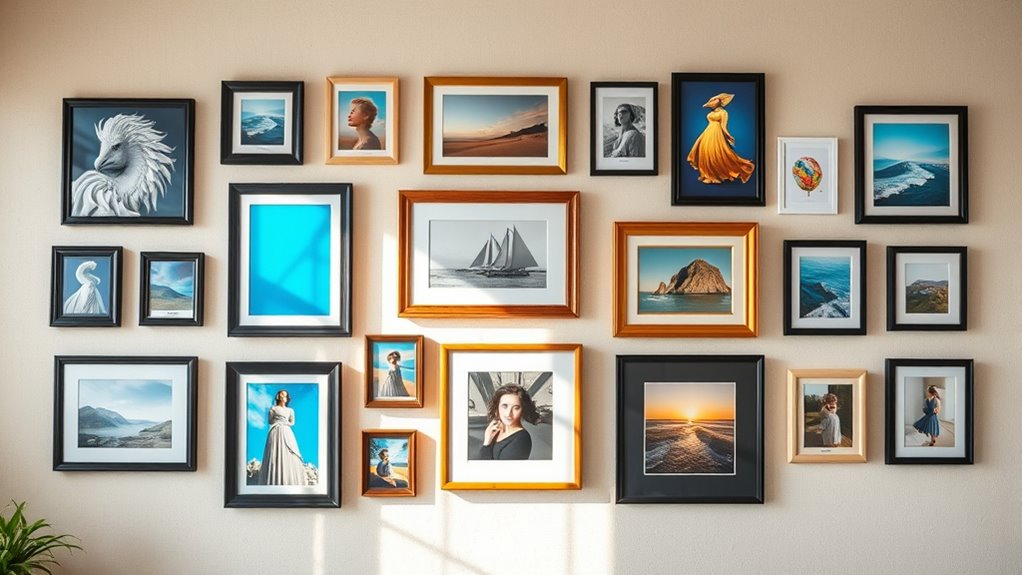
Ever wondered how to efficiently organize and preserve your gallery wall? Documenting it with photos and notes is a smart way to keep track of your display, especially if you plan to update or recreate the arrangement later. The key to effective documentation starts with paying attention to framing choices and wall arrangement. When you’re photographing your gallery, make sure your framing choices are consistent and showcase each piece’s details. Use natural light whenever possible, and take multiple shots from different angles to capture the full effect. This way, you can choose the best image that truly represents your wall’s aesthetic. Keep your camera or phone steady to avoid blurry photos, and consider taking wide shots to show the overall layout, along with close-ups to highlight individual frames and artwork. Additionally, color accuracy in your photos can significantly enhance how true-to-life your images appear, helping you better remember the original display. Once you’ve captured the photos, it’s useful to create a visual record or even a digital collage of your gallery wall. This makes it easier to compare different arrangements or to remember what worked well. When documenting your wall arrangement, note the spacing between frames, the positioning relative to furniture, and any particular grouping strategies you used. These notes help you understand the logic behind your display and serve as a reference if you want to replicate or modify the setup later. You might also want to include details about framing choices—such as frame styles, colors, and matting—to ensure consistency or to inspire future updates. In addition to visual documentation, keeping notes about the context of each piece enhances your gallery wall’s meaning. Write down where you acquired each artwork, the date of hanging, or special memories associated with certain pieces. If you’ve customized frames or added unique embellishments, include those details as well. This thorough record-keeping allows you to revisit the story behind your collection and brings a personal touch to your documentation process. Over time, your gallery wall may evolve, and having a detailed photo and note archive makes it easier to make informed adjustments. Whether you’re swapping out artwork or rethinking your wall arrangement, your documentation becomes a reference point. It also serves as a creative journal, helping you reflect on your design choices and style progression. By consistently documenting your gallery wall with photos and notes, you preserve not just the visual beauty but the memories and intentions behind your display—making it a meaningful part of your space that you can cherish and update with confidence.

Vittanly 15 Pack Picture Frames Collage Wall Decor for Mounting or Tabletop Display, Gallery Frame Set for Family, Multi Sizes Including 3pcs 8×10, 6pcs 5×7, 6pcs 4×6, Black
Versatile Sizes for Display: Vittanly 15-Pack Multi-Size Picture Frame Set includes 3x 8×10", 6x 5×7", and 6x 4×6"…
As an affiliate, we earn on qualifying purchases.
As an affiliate, we earn on qualifying purchases.
Frequently Asked Questions
What Are the Best Tools for Documenting a Gallery Wall?
You should use a photo cataloging app or software to keep track of your gallery wall photos, making it easy to organize and update. For physical documentation, framing adhesives help secure notes or small prints without damage. Keep a detailed record of each piece, including placement and framing details, so you can easily recreate or modify your gallery wall later. This combination guarantees your artwork stays organized and well-documented.
How Often Should I Update My Gallery Wall Photos and Notes?
Imagine your gallery wall as a living storybook, constantly evolving. You should update your photos and notes every 6 to 12 months to guarantee photo preservation and note organization stay fresh and meaningful. This keeps your memories vibrant and your display relevant. Regular updates allow you to add new moments, swap out outdated images, and keep your gallery wall a dynamic reflection of your journey.
How Can I Digitalize My Gallery Wall Documentation?
You can digitalize your gallery wall documentation by taking high-quality photos of each piece and notes, then organizing them into a digital archive. Use scanning apps or photo editing software to enhance images, and store everything in cloud-based platforms for easy access. Additionally, create virtual tours using slideshow software or online gallery tools, allowing you to share and revisit your curated collection anytime, anywhere.
What Are Common Mistakes to Avoid When Documenting a Gallery Wall?
When documenting your gallery wall, avoid inconsistent label styles and uneven frame spacing, which can make your records look cluttered. Confirm your labels are uniform for easy identification, and double-check that your frame spacing stays consistent to reflect the original arrangement. Don’t rush the process; take your time to measure and note details carefully. This attention to detail keeps your documentation clear, organized, and true to your gallery’s aesthetic.
How Do I Organize Notes for Different Themes or Seasons?
Think of it as hitting two birds with one stone—organizing notes by themed categorization and seasonal grouping keeps everything neat and easy to find. Use separate folders or digital labels for each theme or season, and include dates or tags for quick reference. Regularly review and update your notes to stay in sync with your evolving display, ensuring your gallery wall remains fresh and meaningful all year round.

CAGIE Lined Journal Notebook for Women Men 320 Pages 100 Gsm Paper Thick Journaling Notebooks A5 Leather Journals for Writing Hardcover Journal Supplies for Work Note Taking Diary, 5.7×8.3 In, Green
320 Pages Paper – Journaling notebooks with 320 pages provides you with enough writing space. A5 notebook journal…
As an affiliate, we earn on qualifying purchases.
As an affiliate, we earn on qualifying purchases.
Conclusion
Now that you’ve documented your gallery wall, the possibilities are endless. Will you add new pieces or rearrange what’s there? Perhaps a surprise is hiding behind that last frame? Keep your notes handy and your camera ready—your wall may hold secrets waiting to be uncovered. The next chapter in your gallery’s story is just around the corner. Are you prepared to see what’s next? Only time will tell.

Self Adhesive Picture Frame Backing Tape Rolls Kraft Brown 2'' Wide x 55 Yd
Size(Wide x Length): 2 inch(5cm) x 55Yd(50m)
As an affiliate, we earn on qualifying purchases.
As an affiliate, we earn on qualifying purchases.

2-Pack LED Video Light Kit, NiceVeedi Studio Light, 2800-6500K Dimmable Photography Lighting Kit with Tripod Stand&Phone Holder, 73" Stream Light for Video Recording, Game Streaming, YouTube
【MULTIPLE COLOR TEMPERATURE & ADJUSTABLE BRIGHTNESS】There are 3 Color temperatures (2800K, 4800K & 6500K) which offer different lighting…
As an affiliate, we earn on qualifying purchases.
As an affiliate, we earn on qualifying purchases.