
TL;DR
Dave and Jenny Marrs used cream-colored square tiles in a checkered, diagonal layout for a kitchen featured in Season 7, Episode 9 of Fixer to Fabulous. The design pairs with soft blue cabinets and shows how tile color, orientation, size and grout can change a backsplash’s look.
Dave and Jenny Marrs used a cream-colored, checkered square-tile backsplash in a kitchen featured in Season 7, Episode 9 of HGTV’s Fixer to Fabulous. The diagonal layout offers a pattern-led alternative to a plain backsplash or standard subway tile, paired with soft blue cabinets for a classic farmhouse look.

Get furniture and decor delivered free with Prime
- Fast, free delivery on millions of items
- Prime Video, Amazon Music and more included
- Member-only deals all year
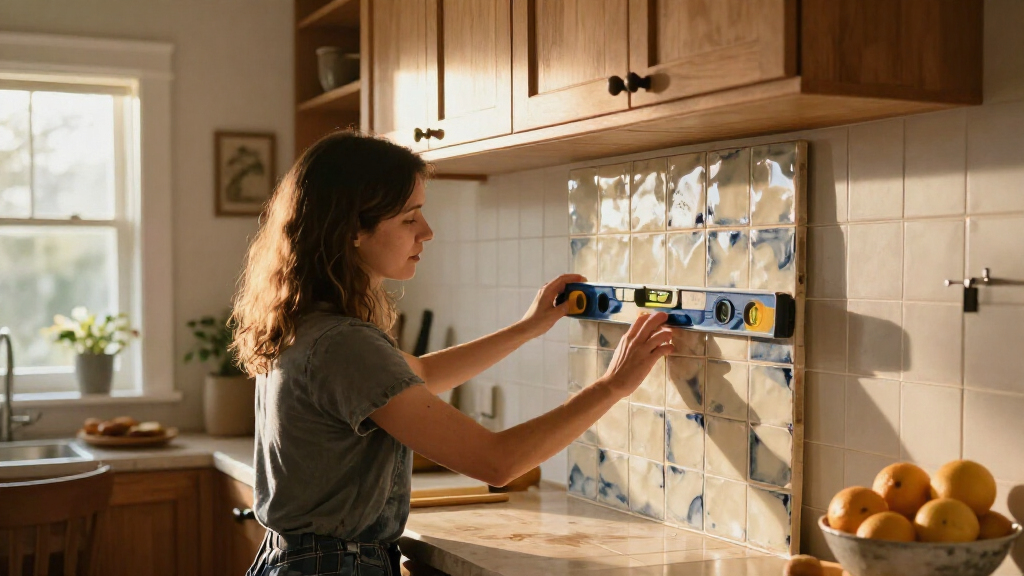
The episode follows the Marrs as they build a three-bedroom home on the foundations of an old barn. In the family kitchen, the backsplash combines cream and beige tones in a repeating checkerboard. The tiles appear to be classic four-by-four-inch squares, turned on a diagonal to form a diamond, or harlequin, pattern.
Jenny Marrs described the design on the couple’s blog: “We chose a soft blue for the cabinets and paired it with a cream-colored, checkered square backsplash for a classic farmhouse look.” The combination keeps the palette restrained while making the backsplash more visually distinctive than a single-color tile surface.
The same idea can be adapted with other color pairings, such as black and white or two shades of green. Tiles can also be set in a straight, horizontal grid rather than on a diagonal. The choice of grout matters too: the featured kitchen uses off-white grout, while darker grout or wider lines would make the pattern more pronounced.
A checkerboard backsplash with farmhouse charm
Dave and Jenny Marrs paired cream tile with soft blue cabinets in a Fixer to Fabulous kitchen. A diagonal layout gives familiar square tiles a more distinctive look.
The featured look
The kitchen appeared in Season 7, Episode 9, in a home built on an old barn’s foundations.
Cream and soft blue
Cream and beige tiles sit alongside soft blue cabinets for a restrained farmhouse palette.
Diagonal squares
Alternating square tiles turned on a diagonal create a diamond, or harlequin, pattern.
Off-white grout
The described grout blends with the light tile colors, keeping the pattern subtle.
Ways to adapt it
Color, orientation and grout change how strongly the backsplash stands out.
- Cream and beige tiles
- Off-white grout
- Diagonal or straight grid
- Black and white, or two greens
- Darker grout or wider lines
- More emphasis on the pattern
Before ordering tile
Use the example as inspiration, then check the choices against the actual kitchen.
Check tile colors against the cabinets and room lighting.
Decide whether diagonal or straight-grid placement suits the space.
Verify tile dimensions, grout choice and the quantity needed before ordering.
A Pattern Without Complex Tilework
The design offers homeowners a way to add contrast and pattern without relying on elaborate tile shapes. Square tiles are a familiar format, but changing their orientation and alternating two colors can give a backsplash a different character. That makes the approach relevant to people who want a kitchen focal point while keeping the materials and overall palette relatively simple.
The example also shows why a tile pattern should be considered alongside cabinets and grout, rather than as an isolated finish. A muted checkerboard can complement colored cabinetry without overwhelming it; a higher-contrast palette or darker grout would draw more attention to the wall. Those are design choices, not guarantees of a particular resale value or performance benefit.
For anyone planning a renovation, the Marrs’ kitchen is an example to evaluate, not a one-size-fits-all specification. The tile dimensions, color contrast and layout need to suit the proportions of the room and the look a homeowner wants.
Products Worth Considering

Ring Alarm 14-Piece Kit

Philips Hue Festavia Permanent Outdoor String Lights, 80 Lights, 150 ft

Google Nest Doorbell (Wired, 2nd Generation), Snow
As an affiliate, we earn on qualifying purchases.
Inside the Barn-Foundation Kitchen
The backsplash appears in an episode centered on creating a three-bedroom house from the foundations of an old barn. The kitchen’s soft blue cabinets and cream-colored tile contribute to the classic farmhouse style Jenny Marrs described. The available account identifies the season and episode number but does not provide an air date or further production details.
Checkerboard tile is not limited to diagonal layouts. Both straight-grid and diagonal arrangements are commonly used for checkerboard floors, and the same orientations can be applied to square backsplash tiles. In this kitchen, the diagonal setting is the key detail that separates the pattern from a conventional square grid.
The design description also points to practical visual choices: the size of the tile in relation to the room, the amount of grout visible between tiles, and whether grout blends in or stands out. It does not specify a tile manufacturer, product model, installation cost or a full set of dimensions for the kitchen.
““We chose a soft blue for the cabinets and paired it with a cream-colored, checkered square backsplash for a classic farmhouse look.””
— Jenny Marrs, writing on the Marrs’ blog
Details the Episode Description Omits
The available details do not identify the tile brand, exact product, material, price or installation method. The tiles are described as appearing to be four-by-four-inch squares, so that measurement should not be treated as a confirmed product specification. The account also does not state whether the backsplash was installed by the show’s team or provide guidance on maintaining the finished surface.
Suggestions such as using six-by-six-inch tiles in a larger kitchen are design considerations, not a universal rule. The best size, grout width and pattern depend on the actual space, materials and desired appearance. No claims about project cost, durability or impact on home value are provided.
Choices Before a Similar Remodel
Homeowners considering a similar look can first compare tile samples against their cabinetry and lighting, then decide whether a diagonal or straight-grid layout better fits the room. They can also assess how much contrast they want from the tile colors and grout. The episode provides inspiration, but not a step-by-step installation guide or a confirmed product list.
Before ordering, a renovation plan should confirm tile dimensions, layout, grout selection and the number of tiles required for the backsplash area. The next useful information for anyone seeking to replicate this kitchen would be verified product and installation details; none are included in the available account.
Source: rss
Key Questions
Where did Dave and Jenny Marrs use the checkered backsplash?
It appears in a family kitchen featured in Season 7, Episode 9 of HGTV’s Fixer to Fabulous, in a home built on the foundations of an old barn.
What makes the tile layout different?
The square tiles are arranged in alternating cream and beige tones and turned on a diagonal, creating a diamond or harlequin pattern rather than a straight square grid.
What colors did the Marrs use?
Jenny Marrs said the kitchen paired soft blue cabinets with a cream-colored checkered backsplash. The described grout is off-white.
Can the pattern be adapted for another kitchen?
Yes. The design description suggests other color pairings, including black and white or two shades of green, and allows for either diagonal or straight-grid placement. Tile size and grout choices should be considered for the specific room.
Are the tile brand and cost known?
No. The available details do not identify the manufacturer, exact product, price or installation cost. The tiles appear to be four-by-four-inch squares, but that size is not confirmed as a product specification.
Source: hunker.com