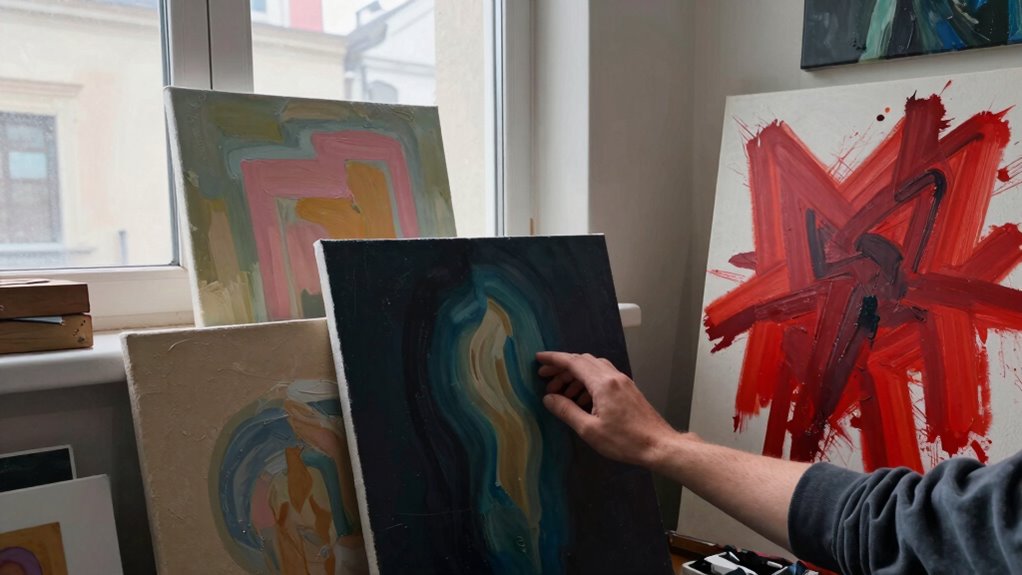

To choose art by mood rather than just color, focus on how textures, composition, and natural elements resonate with your feelings. For calm emotions, opt for soft, flowing textures and muted palettes that promote tranquility. If you seek energy, select bold colors and jagged textures that stir excitement. Trust your instincts and think about how the art makes you feel, beyond aesthetics. Keep exploring, and you’ll discover how aligning art with your emotional state enhances your space and well-being.

Get furniture and decor delivered free with Prime
- Fast, free delivery on millions of items
- Prime Video, Amazon Music and more included
- Member-only deals all year
Key Takeaways
- Focus on the overall composition and textures that evoke the desired emotional response, not just color.
- Select artwork that mirrors your current mood through abstract textures and expressive forms.
- Use natural elements or motifs to deepen emotional connections aligned with your feelings.
- Trust your instincts to choose pieces that resonate emotionally, rather than following aesthetic trends.
- Consider how the artwork’s mood and textures influence your emotional well-being and sense of harmony.
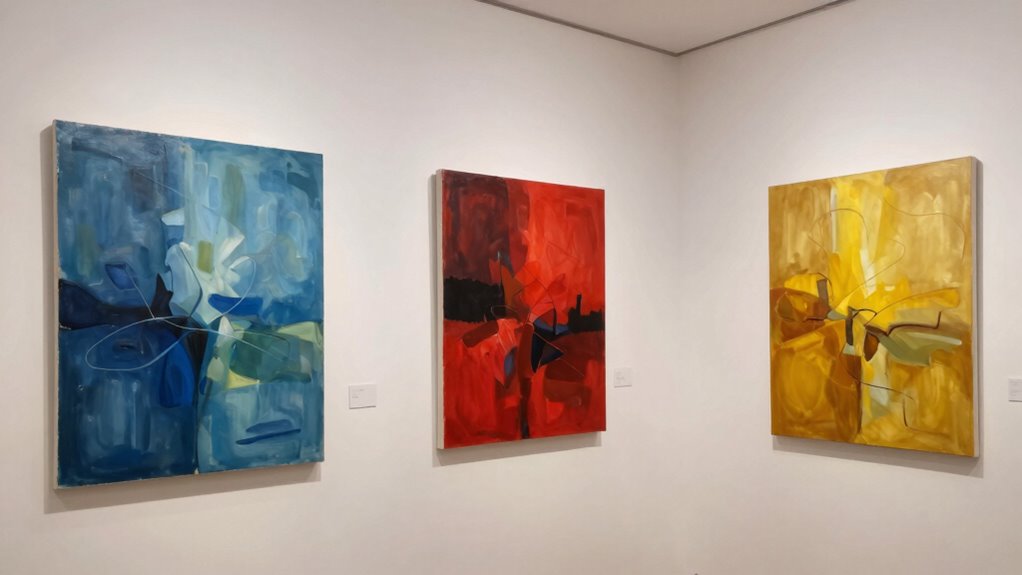
Your mood can profoundly influence the art you choose to surround yourself with, shaping the atmosphere of your space and your emotional well-being. When you’re feeling reflective or introspective, abstract textures in artwork can resonate deeply, offering layers of meaning that mirror your inner thoughts. These textures—swirling, jagged, smooth—invite you to interpret them in your own way, creating a personal connection that goes beyond just their visual appeal. By focusing on abstract textures, you allow your emotions to guide you toward pieces that evoke the feelings you’re experiencing, whether it’s calmness, tension, or curiosity.
Alongside the textures, emotional color palettes play a vital role in aligning art with your current mood. Instead of selecting pieces based solely on aesthetic trends or color preferences, consider how specific colors influence your emotional state. Warm hues like reds and oranges tend to energize and uplift, making them perfect if you’re feeling lively or optimistic. Conversely, cooler tones such as blues and greens promote serenity and introspection, ideal if you seek calm or mental clarity. When choosing art based on mood, pay attention to these emotional color palettes—they can amplify or soothe your feelings, helping you create a space that supports your emotional needs.
It’s essential to think beyond just the color itself. The overall composition and the abstract textures within a piece can amplify your emotional response. For example, a painting with soft, flowing textures in a muted palette might evoke tranquility, while sharp, jagged textures in bold colors could stir excitement or even anxiety. Your emotional response is key—select art that feels authentic to your current state, not just visually appealing. Recognizing the impact of biodiversity in art choices can also deepen your connection to natural elements, fostering a sense of harmony and balance. Incorporating elements inspired by natural diversity can evoke feelings of vitality and interconnectedness, enriching your emotional experience with the artwork. Additionally, exploring the variety of natural motifs can help you find pieces that resonate with your personal journey or current state of mind. Being mindful of how natural elements influence your emotional landscape can further enhance the connection you feel with your chosen artworks.
Furthermore, trust your instincts. If a piece with complex abstract textures and an emotional color palette draws you in, it’s likely because it resonates with your current feelings. It’s less about matching your décor and more about aligning your surroundings with your emotional landscape. Over time, you’ll notice your choices evolve—art that once reflected a specific mood might now serve different emotional needs, helping you navigate your feelings more consciously. By focusing on abstract textures and emotional color palettes, you empower yourself to select art that enhances your well-being, turning your space into a reflection of your authentic emotional self.
Frequently Asked Questions
How Can Mood Influence the Perception of Art?
Mood deeply influences how you perceive art by shaping your emotional resonance with a piece. When you’re in a calm mood, you might find serenity in soothing visuals, whereas a lively mood can heighten your appreciation for dynamic, energetic artwork. Your emotional state alters your visual perception, making some art feel more impactful or meaningful. Recognizing this connection helps you select pieces that truly resonate with your current feelings and mood.
Are Certain Art Styles Better for Specific Moods?
Yes, certain art styles work better for specific moods. For instance, abstract art often fosters emotional resonance, making it ideal for calming or introspective moods. Art therapy emphasizes this connection, helping you process feelings through styles that evoke particular emotions. Choose expressive, fluid styles like watercolor for serenity, or bold, dynamic pieces like expressionism for energy. Matching art styles to your mood enhances emotional well-being and deepens your connection with the artwork.
Can Mood-Based Art Selection Improve Mental Well-Being?
Yes, selecting art based on mood can boost your mental well-being. When you choose pieces with emotional resonance, they evoke positive feelings and comfort, fostering a sense of calm or inspiration. This influences your cognitive responses, reducing stress and enhancing mood. By intentionally surrounding yourself with art that aligns with your emotional needs, you create a supportive environment that promotes mental health and emotional balance.
How Do Personal Experiences Affect Mood and Art Choices?
Your personal experiences shape your mood and influence your art choices through personal associations and emotional triggers. When you see certain images or colors, they may evoke memories or feelings linked to past events, guiding your preferences. By recognizing these connections, you can select art that resonates with your current mood, providing comfort or inspiration. Understanding your emotional triggers helps you make mindful art choices that support your mental well-being.
Is It Possible to Change the Mood of a Space With Art?
Yes, you can change the mood of a space with art. Focus on selecting pieces with strong emotional resonance and mood compatibility to evoke the desired feelings. For example, calming landscapes can create serenity, while vibrant abstracts energize the room. By thoughtfully choosing art that resonates emotionally and aligns with your mood goals, you influence the atmosphere, making your space more inviting and reflective of your current or intended emotional state.
Conclusion
Now that you understand how to select art based on mood, imagine the possibilities awaiting your space. Will you embrace serenity or ignite passion? Every piece you choose can transform your environment in ways you never expected. The next time you stand before art, ask yourself: what feeling do I want to feel? The choice is yours, and the power to change your space—and perhaps even your day—lies just beyond that decision. Are you ready to make it?
Halloween Picks
halloween
As an affiliate, we earn on qualifying purchases.