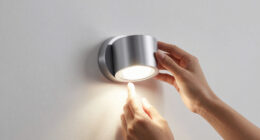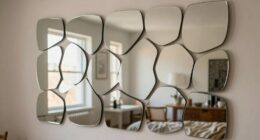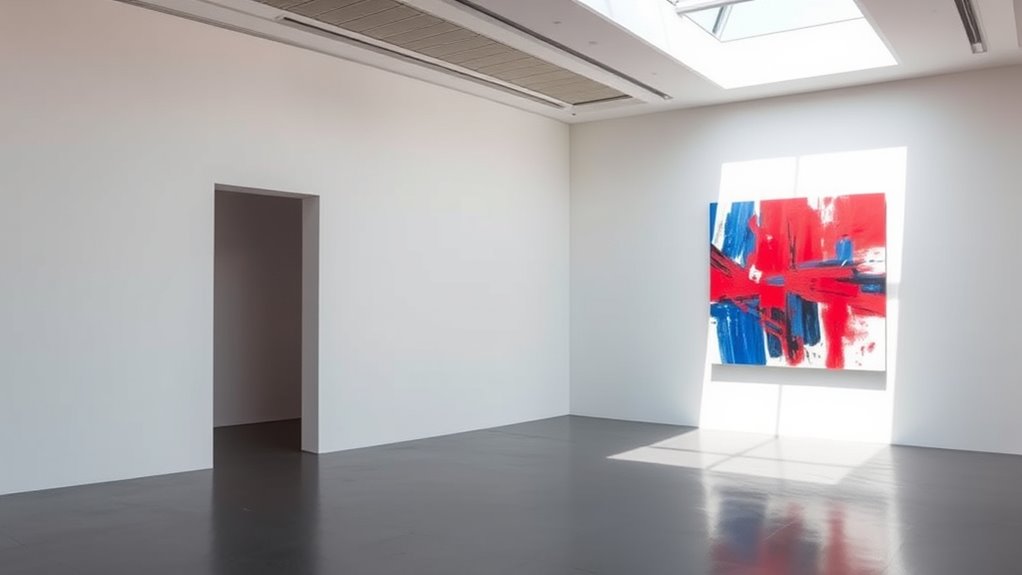

When art is on off-center walls, focus on strategic lighting and textured backdrops to create balance and visual interest. Use adjustable spotlights to highlight the artwork and emphasize wall textures, turning imperfections into design features. Grouping pieces or using asymmetrical arrangements can also guide viewers eye smoothly across the display. By combining lighting and textures thoughtfully, you can showcase your art compellingly, even on less-than-ideal walls—there’s more to explore if you keep going.
Key Takeaways
- Use strategic lighting to highlight the artwork and draw attention away from wall imperfections.
- Arrange multiple pieces in a cohesive group to create a balanced focal point on the off-center wall.
- Incorporate wall textures with lighting to add depth and visually anchor the artwork.
- Center the art relative to the wall’s dominant features or surrounding elements for visual harmony.
- Consider adding a complementary border, frame, or decorative element to visually balance the display.

Have you ever wondered how to make your artwork truly stand out on your walls? Sometimes, the secret isn’t just in choosing the right piece but in how you present it. When your walls aren’t perfectly centered or aligned, it can feel like your art gets lost or overlooked. But don’t worry—there are ways to highlight off-center walls and still create a compelling, balanced display. One of the key elements is understanding how to use gallery lighting effectively. Proper lighting can draw attention to your artwork and compensate for less-than-ideal wall placements. Instead of relying solely on natural light, consider installing adjustable spotlights or track lighting that can be directed precisely at your art. This focused illumination not only emphasizes the colors and details but also creates shadows and depth, making the piece pop regardless of its position on the wall. Additionally, the way you light your work can soften or accentuate wall textures, which adds an extra layer of visual interest. For example, textured walls—whether brick, plaster, or wood—can serve as a backdrop that enhances the artwork’s presence. When you choose gallery lighting that highlights these textures, you create a dynamic interplay between the art and the wall itself. This technique can make an off-center piece feel intentional and curated, rather than accidental or awkward.
You don’t need to perfectly align every piece to achieve a cohesive look; instead, focus on how lighting and wall textures work together to create visual balance. When hanging art on off-center walls, consider grouping multiple pieces to form a gallery-style arrangement. This approach allows you to play with asymmetry and draw the eye across the display intentionally. Use lighting to accentuate each piece and the wall’s textures, guiding viewers’ attention smoothly from one work to the next. The goal is to create a sense of rhythm and harmony, even if the wall isn’t perfectly symmetrical. Remember, walls with rich textures can add depth and character, making your artwork feel more integrated into the space. When you highlight these textures with strategic lighting, your art becomes part of a layered, eye-catching vignette. So, rather than *striving* for perfect symmetry, embrace the unique qualities of your off-center walls. Use thoughtful gallery lighting to enhance textures, create focus, and turn an imperfect wall into a stunning showcase for your art. With these techniques, your artwork will command attention and elevate the entire room, regardless of its placement.

SENLAN LED Shapeable Spotlight with Adjustable Stand, spot Light for Gallery,musum,Concert,Stage
Light source:1pcs*15W COB cool white&warm white 2-in-1 LED.Can be choosed any single cool white,warm white or mixed colors…
As an affiliate, we earn on qualifying purchases.
As an affiliate, we earn on qualifying purchases.
Frequently Asked Questions
How Do I Choose the Right Artwork for Off-Center Walls?
To choose the right artwork for off-center walls, focus on creating artistic focal points that draw the eye. Select pieces that complement the room’s color scheme and style, ensuring they enhance visual harmony despite their off-center placement. Consider size and shape to balance the space, and don’t be afraid to experiment with different arrangements until you find a setup that feels intentional and visually appealing.
What Tools Are Best for Measuring Uneven Wall Surfaces?
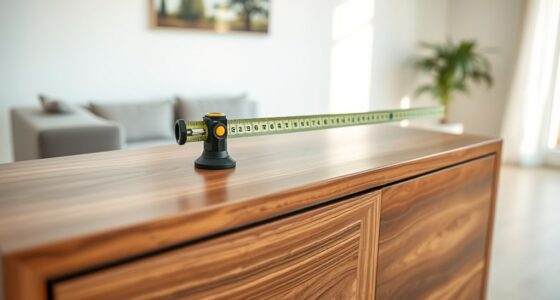
Imagine a sailor steering unpredictable waters—you’ll need reliable measuring tools to handle surface irregularities. Use a laser level for precise measurements across uneven surfaces, or a flexible ruler to adapt to curves and bumps. A spirit level with a bubble vial also helps identify true horizontal lines. These tools help you accurately measure uneven wall surfaces, ensuring your artwork hangs perfectly, even when the wall’s surface isn’t uniform.
How Can Lighting Enhance Art on Off-Center Walls?
You can dramatically enhance your art on off-center walls with accent lighting and spotlight techniques. Use adjustable spotlights to highlight specific pieces, creating focal points that draw attention despite the wall’s irregular placement. Incorporate accent lighting to add warmth and depth, emphasizing textures and colors. Properly angled lighting guarantees your artwork stands out, transforming uneven walls into stunning visual displays that captivate viewers and complement your space’s unique character.
Are There Specific Frame Styles That Suit Off-Center Placements?
Ever wonder if your art deserves a frame as unique as its placement? You should choose frame styles that complement off-center wall mounting, like asymmetrical or minimalist designs, which highlight the art’s dynamic position. Thin metal or sleek black frames work well, adding contrast without overpowering. These choices draw the eye and create harmony, making your off-center art pop with style and confidence.
How Do I Balance Multiple Artworks on Asymmetrical Walls?
To balance multiple artworks on asymmetrical walls, you should focus on managing visual weight and wall symmetry. Arrange your pieces so heavier or larger artworks are evenly distributed, creating a balanced look. Use varying frame sizes and styles to add interest and harmony. Step back frequently to assess the overall balance, adjusting placements until the arrangement feels cohesive and visually appealing, even if the wall isn’t perfectly symmetrical.
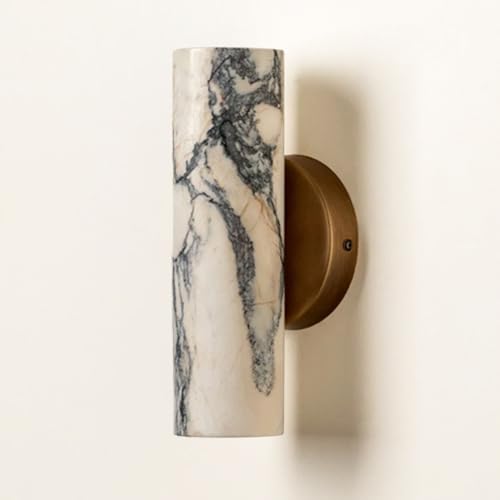
ZHKABEG 9.45 Inch Alabaster Wall Sconces, Nordic Style Natural Stone Wall Lamp, Marble Lampshade Up and Down Lighting Fixtures, Metal Base Hardwired Indoor Wall Light for Bedroom Bedside Hallway
Appearance Design: Our wall sconce lighting is a combination of nordic and modern, which can bring more beauty…
As an affiliate, we earn on qualifying purchases.
As an affiliate, we earn on qualifying purchases.
Conclusion
Remember, when you hang art off-center, it creates visual interest and energy in a space. Don’t shy away from experimenting with unconventional placements—sometimes, breaking the rules leads to the most mesmerizing designs. Trust your instincts and observe how the art interacts with its surroundings. Ultimately, the truth is that art’s placement is about personal expression; if it feels right to you, then that’s the perfect choice.

EZVALO Picture Light for Wall, 4800mAh Rechargeable Wireless Remote, 16in Dimmable Magnetic LED Art Display Light with 3 Color Temperatures, for Gallery, Living Room, Bedroom, Hallway (Gold)
Powerful 4800mAh Rechargeable Battery: Say goodbye to battery swaps and messy cords! Built-in 4800mAh battery offers 11 hours…
As an affiliate, we earn on qualifying purchases.
As an affiliate, we earn on qualifying purchases.

hejiagongsi Picture Frames Collage Wall Decor – Family Tree Wall Decor for Living Room 4×6 5×7 8×10 11×14 3D DIY-Acrylic Family Wall Decor Photo Collage Frame for Wall
Product requires splicing: This is not a finished tree, but a box of acrylic parts! You need to…
As an affiliate, we earn on qualifying purchases.
As an affiliate, we earn on qualifying purchases.