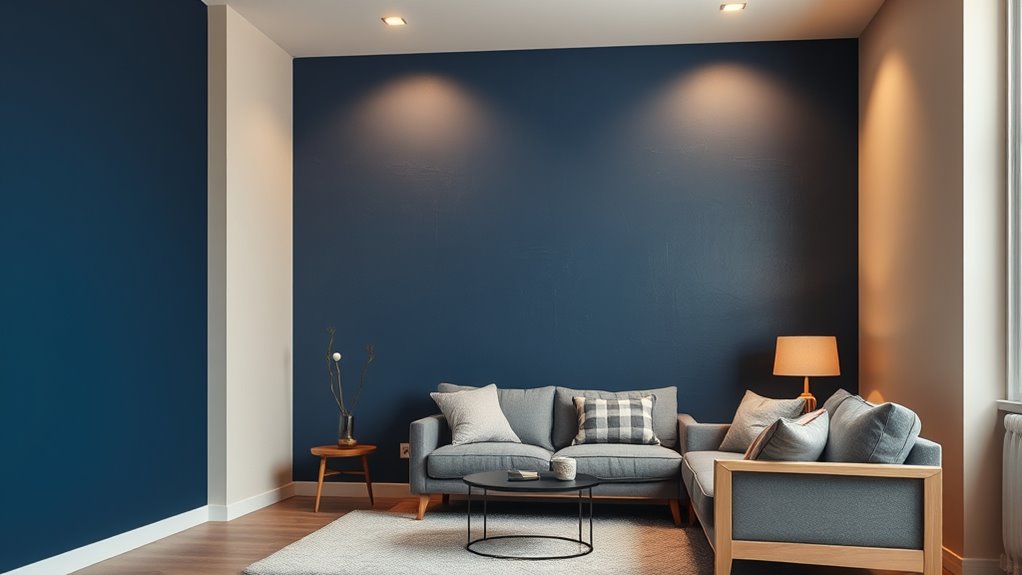

To decide between an accent wall and all-over color, consider your room’s size, lighting, and the mood you want. Smaller spaces work well with a focal wall to add interest, while larger rooms can handle bold, all-over hues for a cohesive look. Good lighting influences your color choice, and reflect on whether you want a calming or energizing vibe. Exploring your style and maintenance needs will refine your choice—if you keep exploring, you’ll find the best fit for your space.

Get furniture and decor delivered free — and shop member deals
- Fast, free delivery on millions of items
- Access to Prime Big Deal Days deals on October 6–7
- Prime Video, Amazon Music and more included
Key Takeaways
- Consider room size: small spaces benefit from accent walls, while larger rooms can handle all-over color for cohesion.
- Evaluate lighting: bright rooms suit lighter shades or accents; darker or cozier spaces may need warm, rich hues across the entire wall.
- Determine the mood: use accent walls for focal interest; all-over color creates a harmonious, immersive environment.
- Assess maintenance needs: durable, easy-to-clean finishes favor all-over paint; accent walls may require less coverage and be easier to update.
- Align with design goals: accent walls highlight specific features or styles; all-over color emphasizes uniformity and overall ambiance.
Evaluating Room Size and Layout

When deciding between an accent wall or all-over color, it’s important to contemplate your room’s size and layout. Larger rooms can handle bold, all-over colors without feeling overwhelming, creating a cohesive look that emphasizes visual balance. Conversely, smaller spaces benefit from an accent wall, which acts as a focal point without overpowering the room. Think about how the wall’s color will complement existing furniture and decor, helping to establish harmony. An accent wall draws attention and adds interest, while a uniform color can make a space feel larger and more open. Your goal should be to enhance the room’s natural proportions and guarantee the color choice supports the overall design, making the space feel inviting and well-balanced. Considering color schemes and their impact on room perception can further refine your decision. Incorporating visual weight and balance considerations can help create a more harmonious environment. Additionally, understanding how room size influences color choices can be crucial in achieving the desired ambiance. Embracing the concept of creative practice can inspire unique approaches to color selection, ensuring your decorating process remains innovative and personalized.
Considering Lighting and Natural Brightness
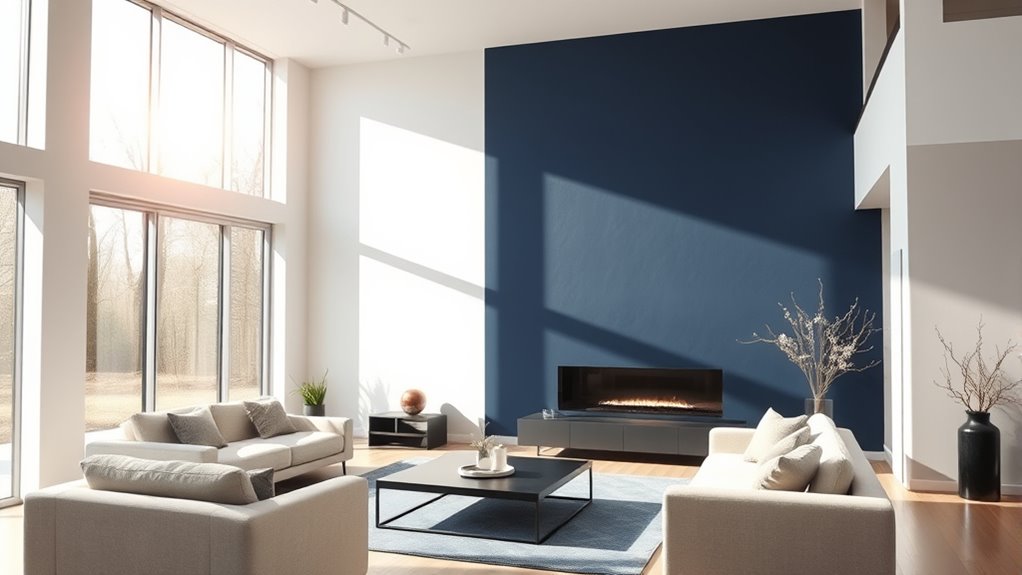
Lighting and natural brightness play a crucial role in how paint colors appear in your space. If your room receives ample daylight exposure, brighter or lighter shades can enhance the sense of openness. On the other hand, rooms with limited natural light may benefit from warmer, richer hues to create a cozy atmosphere. Artificial lighting also impacts color perception; cool-toned bulbs can make colors appear more muted, while warm lighting can intensify warmth in your chosen paint. Consider testing paint swatches at different times of day under your typical lighting conditions to see how they change. This approach helps you avoid surprises once the walls are painted, ensuring your color choice complements both daylight and artificial lighting in your space. Additionally, understanding your financial situation, such as budgets for home improvement projects, can help you select the most suitable paint options without overspending. Being aware of color perception factors, including lighting conditions and room brightness, can further guide your decision-making process. To make informed choices, it’s helpful to understand how lighting conditions can alter the way colors appear in different environments. Incorporating lighting strategies can also optimize how your chosen colors look throughout the day.
Reflecting on Desired Atmosphere and Mood

Choosing the right paint color isn’t just about how it looks in your space; it’s also about the mood and atmosphere you want to create. Your choice impacts emotional impact through color psychology, influencing feelings like calm, energy, or coziness. Contemplate what vibe you want: a tranquil retreat or an energizing hub? Use this table to guide your mood selection:
| Mood | Colors to Consider | Emotional Impact |
|---|---|---|
| Relaxed | Soft blues, muted greens | Promotes calm and serenity |
| Energized | Bright yellows, reds | Boosts energy and enthusiasm |
| Cozy | Warm neutrals, deep browns | Creates comfort and intimacy |
Reflect on your desired atmosphere to choose colors that support your emotional goals. Considering home furnishings choices that enhance your space can also contribute to creating the right ambiance. Additionally, understanding zodiac compatibility can inspire color choices that align with your personality traits and emotional needs. Incorporating color psychology principles into your interior decor can further help craft a space that truly reflects your desired mood.
Aligning With Personal Style and Design Goals
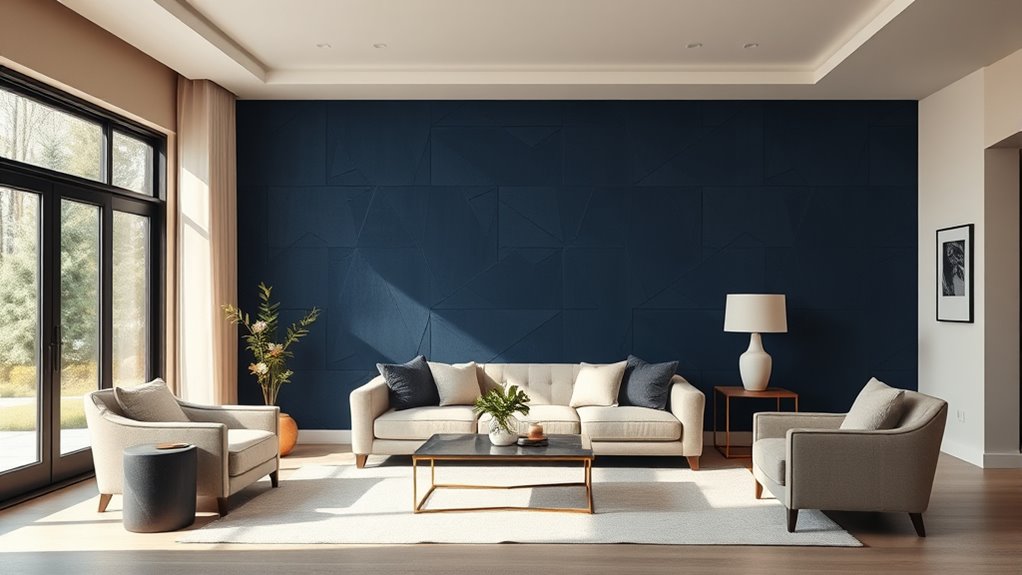
Aligning your paint choices with your personal style and design goals guarantees your space truly reflects who you are. Your color selections serve as a form of artistic expression, allowing you to communicate your unique personality and preferences. Consider how different hues evoke specific emotions through color psychology—calming blues, energizing reds, or sophisticated neutrals. Whether you prefer bold statements or subtle elegance, choosing colors that resonate with your style helps create a cohesive environment. Think about your overall aesthetic and the mood you want to establish. When your paint choices correspond with your personal style and goals, your space becomes more than just visually appealing; it becomes an authentic reflection of you. This intentional approach ensures your home feels both harmonious and inspiring. Incorporating color psychology into your decision-making process can further enhance the emotional impact of your chosen hues, especially when paired with tuning principles from automotive modifications to achieve a balanced and harmonious design. Additionally, understanding and applying Cultural Intelligence can help you appreciate how cultural influences may affect color preferences and perceptions in diverse environments. Being aware of appliance integration trends can also inspire how you incorporate tech-savvy elements into your space for a modern touch.
Weighing Practicality and Maintenance Needs
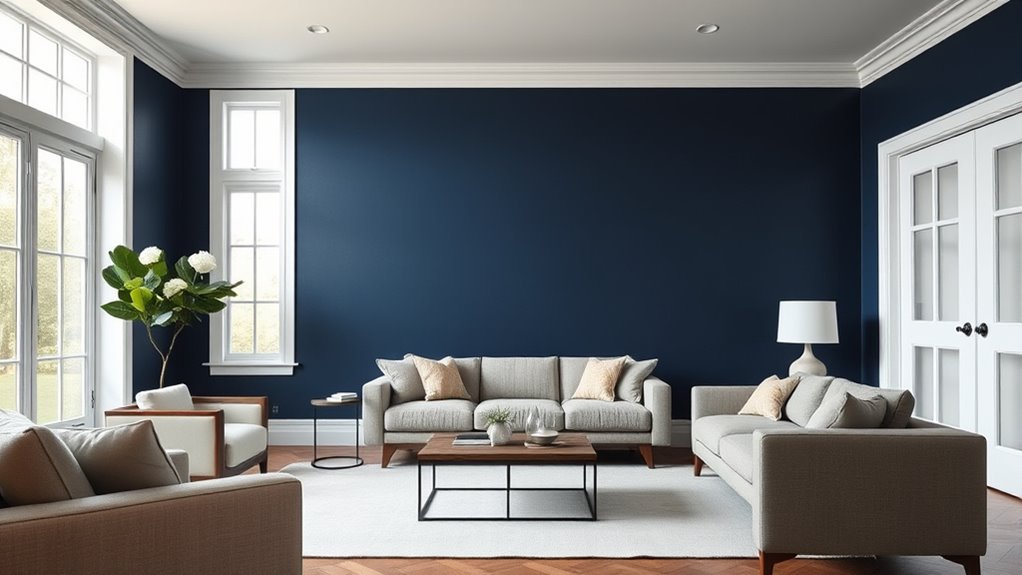
Considering practicality and maintenance needs is essential when selecting your paint finish and color, especially in high-traffic or busy areas. You want paint with good durability to withstand daily wear and tear, reducing the risk of chips and marks. Matte finishes may hide imperfections but can be harder to clean, while satin or semi-gloss finishes offer easier cleaning and better resistance to moisture. Think about cleaning frequency—if the space gets dirty quickly or spills are common, choose paints that are easy to wipe down without damaging the surface. This way, you minimize upkeep and preserve your walls’ appearance over time. Additionally, selecting the right paint type can also impact the effectiveness of application of beauty treatments like eye patches, as certain finishes may be more suitable for sensitive skin areas or for creating a smooth surface for application. Proper sound design techniques in selecting paint can help create a more harmonious environment by reducing noise and echo, especially in larger spaces. Using paints with soundproofing qualities can further enhance acoustic comfort, particularly in shared or noisy environments. Incorporating AI safety measures in choosing durable and appropriate paint finishes can ensure your environment remains both attractive and resilient over time, reducing maintenance costs and efforts. Balancing durability with the right finish ensures your paint choice remains attractive and functional, saving you time and effort in maintenance.
Frequently Asked Questions
How Do I Choose the Right Color for My Accent Wall?
To choose the right color for your accent wall, consider color psychology to evoke the mood you want, like calming blues or energizing reds. Also, evaluate your lighting effects—natural light can make colors appear brighter or softer, so test samples in your space at different times. Opt for a hue that complements your existing decor and enhances the room’s atmosphere, creating a harmonious focal point.
Can I Combine Both Accent Wall and All-Over Color?
Yes, you can combine both accent wall and all-over color to create stunning design harmony. Imagine a room where a bold, contrasting color on one wall draws the eye, while a softer hue coats the rest, enhancing depth and visual interest. This mix allows you to play with color contrast thoughtfully, making your space feel dynamic yet balanced. Just guarantee the colors complement each other to maintain a cohesive, inviting atmosphere.
What Are the Best Paint Finishes for Durability?
For durability, you should choose a paint with a satin or semi-gloss sheen, as they offer excellent stain resistance and are easy to clean. These finishes work well in high-traffic areas like kitchens and bathrooms. Avoid flat or matte paints in these spaces, since they’re less resistant to stains and wear. Opt for a durable paint that balances sheen and stain resistance to keep your walls looking fresh longer.
How Do I Visualize the Final Look Before Painting?
You can visualize the final look by using visualization tools like virtual room designers or augmented reality apps. These tools let you see how different colors and finishes will appear in your space. Also, compare color samples side-by-side on your walls to get a real sense of the shades. This approach helps you make confident decisions, ensuring you love the final result before you start painting.
Are There Seasonal Considerations for Repainting or Touch-Ups?
You should consider seasonal weather when repainting or doing touch-ups, as humidity and temperature affect paint drying times and finish quality. During hot, dry months, paint dries faster, giving you a smoother finish. In contrast, cold or humid seasons slow down drying, risking smudges or uneven layers. Plan your project accordingly, ideally during moderate weather, to make certain of proper drying and a durable, beautiful result.
Conclusion
Ultimately, choosing between an accent wall or all-over color depends on your space and style. Think about your room size, lighting, and the mood you want to create—like a well-placed quill in a sea of parchment. Trust your instincts, weigh practicality, and don’t be afraid to take a leap of faith. With a little planning, your walls will tell a story that’s uniquely yours—no need for a crystal ball, just good taste.
Halloween Picks
halloween
As an affiliate, we earn on qualifying purchases.