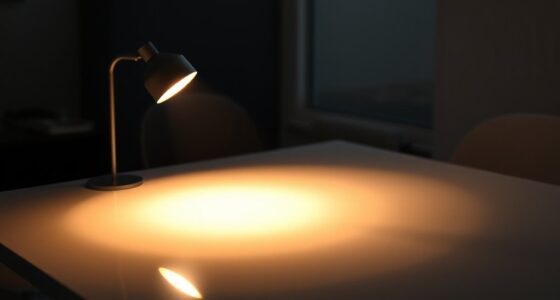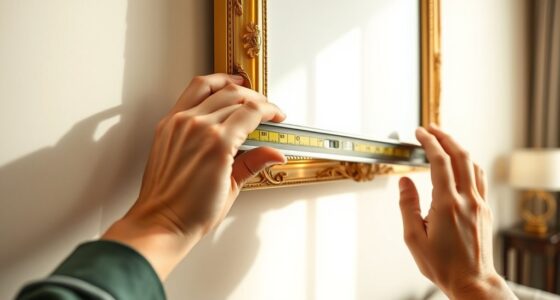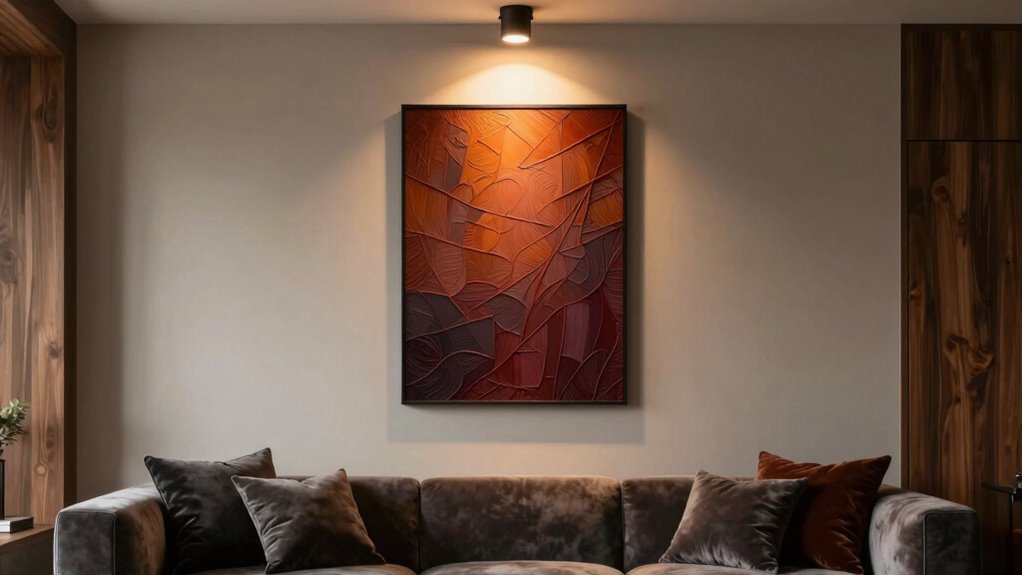

The one lighting move that instantly makes wall art look more expensive is strategically using adjustable accent lighting to highlight the piece. Focus bright, directed light slightly above and angled downward to create contrast and emphasize textures, colors, and details. This approach draws attention and adds depth, transforming your art into a sophisticated focal point. Mastering this technique can elevate your decor effortlessly — if you keep exploring, you’ll discover more tips to perfect your display.

Get furniture and decor delivered free — and shop member deals
- Fast, free delivery on millions of items
- Access to Prime Big Deal Days deals on October 6–7
- Prime Video, Amazon Music and more included
Key Takeaways
- Use focused accent lighting like picture lights or spotlights to highlight artwork precisely.
- Install adjustable fixtures to direct light at optimal angles, avoiding glare and shadows.
- Position lights slightly above and angled downward for a natural, sophisticated illumination.
- Opt for warm white bulbs (2700K-3000K) to create an inviting, high-end ambiance.
- Combine targeted accent lighting with ambient room lighting for a polished, luxurious look.
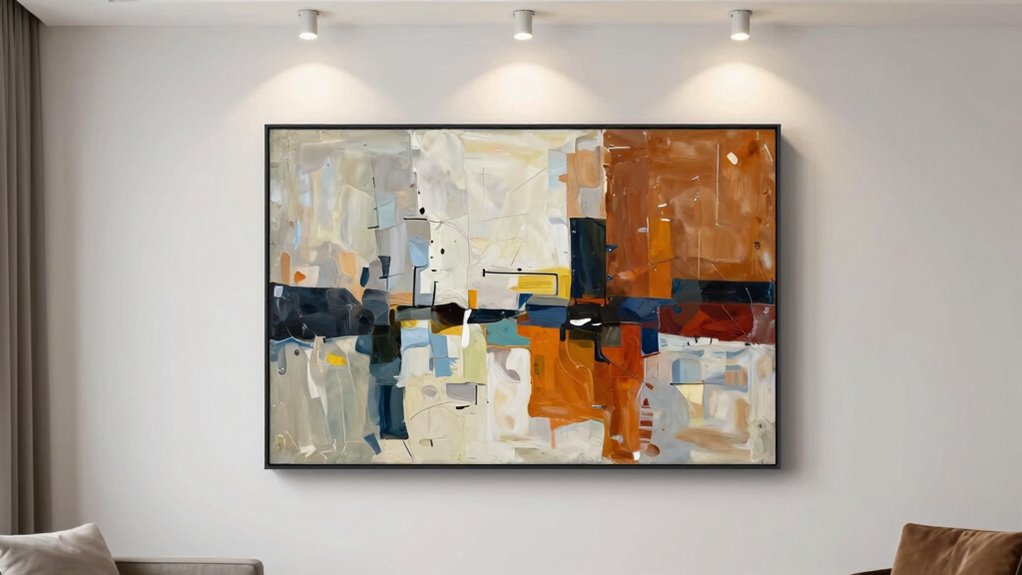
If you want your wall art to look more expensive, the key lies in how you illuminate it. Proper lighting transforms a simple piece into a focal point of your space, elevating its perceived value and sophistication. The most effective way to do this is through gallery lighting, which involves directing bright, focused light onto your artwork. When executed correctly, gallery lighting creates a dramatic effect, emphasizing textures, colors, and details that might otherwise go unnoticed. It’s not about flooding the entire wall with light but about highlighting the art precisely where you want the viewer’s eye to land.
Effective gallery lighting highlights artwork’s details, creating a sophisticated focal point and elevating your space’s style.
Accent illumination plays a vital role here. This technique involves using directional light fixtures—such as picture lights, wall-mounted spotlights, or track lighting—to cast a concentrated beam onto the art piece. By doing so, you create contrast between the artwork and the surrounding wall, which enhances its visual impact. When you strategically position accent lights, you draw attention to the artwork while also adding depth and dimension to the overall room. This focused lighting approach makes even modestly priced art look like a curated, high-end gallery piece.
To maximize the effect, consider installing adjustable fixtures that allow you to direct light precisely where needed. This flexibility ensures that you can adapt the lighting to different pieces or change the ambiance of the room. Also, pay attention to the color temperature of your bulbs. A warm white (around 2700K to 3000K) tends to give a cozy, inviting glow that complements most art styles, while cooler tones (around 3500K to 4100K) can make colors pop and create a modern, sleek look.
The placement of your accent illumination matters just as much as the fixture itself. Position the lights slightly above and angle them downward toward the artwork to avoid glare and harsh shadows. Keep the light source close enough to focus the beam but not so close that it causes hotspots or uneven illumination. When you combine gallery lighting with well-placed accent illumination, you craft a visual experience that makes your artwork look like it belongs in a gallery. The result is a more polished, expensive appearance that elevates your entire space without breaking the bank.
In the end, it’s all about highlighting the art’s best features with precision and care. When you master this lighting move, you turn even everyday wall art into a statement piece—an investment in style that’s well worth the effort. Recognizing the importance of lighting techniques can truly transform your decor and dramatically enhance the perceived value of your art. Additionally, understanding how lighting placement influences the overall ambiance can help you create a cohesive and sophisticated display that draws the eye naturally.
adjustable picture lights for wall art
As an affiliate, we earn on qualifying purchases.
As an affiliate, we earn on qualifying purchases.
Frequently Asked Questions
What Type of Lighting Is Best for Wall Art?
You should use accent lighting with adjustable color temperature to highlight wall art effectively. This type of lighting directs focus precisely where you want, making your art stand out. Opt for warm light to create a cozy, inviting feel or cooler tones for a modern look. Adjusting the color temperature enhances the artwork’s colors and details, giving your space a more sophisticated and curated appearance.
How High Should Wall Art Be Hung for Optimal Lighting?
You should hang wall art so that its center is at eye level, typically about 57-60 inches from the floor, to optimize art placement and viewing angles. This height guarantees that lighting highlights the piece evenly, no matter where you stand. Adjust slightly for taller or shorter ceilings, but keep it at a comfortable height for natural viewing, making your wall art look more refined and inviting.
Can Colored Lighting Enhance the Appearance of Wall Art?
You bet, colored lighting can boost your wall art’s appeal. By choosing the right color temperature, you can set an ambient glow that highlights your art’s details and colors, making it pop. Warm tones create a cozy, inviting feel, while cooler hues add a modern touch. When you play with colored lighting, you turn your wall art into an engaging focal point, proving that sometimes, a little color goes a long way.
What Are Common Mistakes When Lighting Wall Art?
When lighting wall art, avoid common mistakes like creating glare that distracts from the piece. You might also cast unintentional artistic shadows that distort its appearance. Make sure your light source is well-positioned to reduce glare and highlight textures without overpowering the artwork. Use adjustable fixtures to fine-tune the lighting, emphasizing the art’s details while maintaining a balanced, sophisticated look. Proper lighting elevates your wall art’s overall impact.
How Does Lighting Affect the Artwork’s Longevity?
Think of your artwork as a delicate flower; lighting is the sun. Too much exposure causes light damage, which accelerates artwork deterioration. Proper lighting, like gentle sunlight, preserves your art’s vibrancy and guarantees its longevity. By controlling light intensity and duration, you prevent damage and maintain its beauty for years. Thoughtful lighting acts as a guardian, protecting your investment and keeping your wall art looking stunning over time.
gallery accent lighting fixtures
As an affiliate, we earn on qualifying purchases.
As an affiliate, we earn on qualifying purchases.
Conclusion
So, next time you want your wall art to scream “I’m worth a fortune,” forget the fancy frames or overpriced art. Just master that one lighting move—because nothing says “luxury” like a spotlight that makes your wall art look way more expensive than your bank account. Who knew a simple shift could turn your humble space into a gallery? Just don’t be surprised when your friends start asking if you’ve suddenly become a millionaire.
wall-mounted spotlights for artwork
As an affiliate, we earn on qualifying purchases.
As an affiliate, we earn on qualifying purchases.
warm white LED bulbs for art lighting
As an affiliate, we earn on qualifying purchases.
As an affiliate, we earn on qualifying purchases.
Halloween Picks
halloween
As an affiliate, we earn on qualifying purchases.