
TL;DR

Get furniture and decor delivered free with Prime
- Fast, free delivery on millions of items
- Prime Video, Amazon Music and more included
- Member-only deals all year
A vacant site in Osaka has been temporarily transformed into a public space using scaffolding pipes and street furniture. This intervention supports community activity and tests future site management approaches before the planned mixed-use development begins.
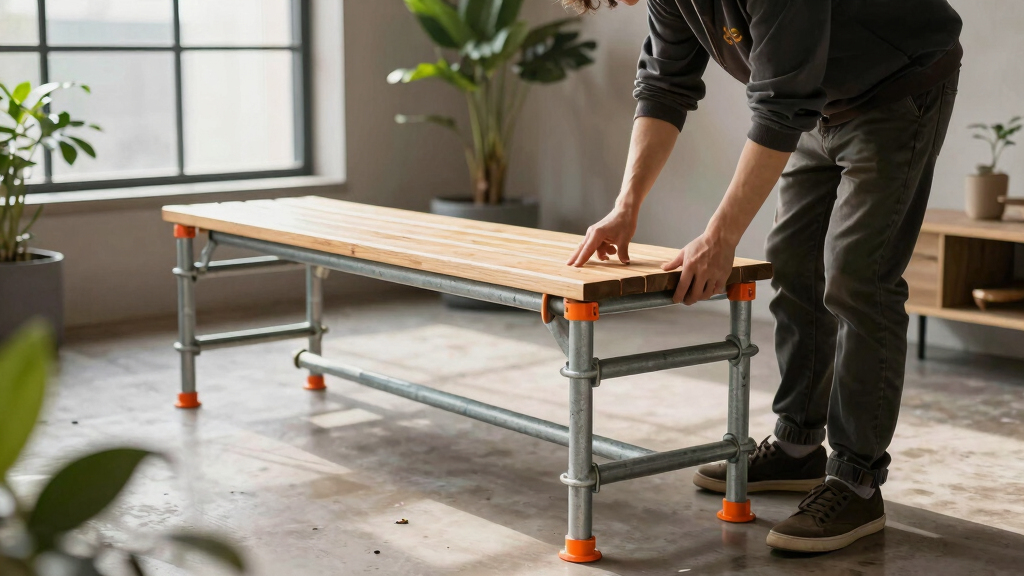
Scaffolding pipes have been repurposed into street furniture as part of a temporary urban intervention on a vacant site in Osaka, Japan. The project, called GAS STAND, aims to activate the site for community use before the planned mixed-use development begins. This initiative is led by team raw row for Osaka Gas Urban Development and is designed to test new approaches to site management and public engagement during the pre-construction phase.
The site along Midosuji, Osaka’s main north–south boulevard, is currently undeveloped but has been transformed into a public platform that supports informal gatherings, community activities, and everyday use. Instead of a traditional plaza, the intervention extends the streetscape into the site, blurring the boundary between public and private spaces. The design incorporates familiar urban components such as benches, counters, bulletin boards, traffic mirrors, and notably, scaffolding pipes, which are reconfigured to serve as adaptable street furniture.
These elements are not fixed amenities but are designed as flexible tools that encourage participation and accommodate changing activities. The project also features graphic markings and planters that add playful visual moments. Operated by Osaka Gas Urban Development, GAS STAND functions as an interim environment where office workers, residents, and visitors can gather, test community programming, and foster local initiatives. The intervention aims to demonstrate how temporary designs can support social life and community engagement before the permanent development is completed.
Why Temporary Urban Interventions Matter in Osaka
This project illustrates how temporary urban interventions can activate vacant sites, fostering community engagement and testing future urban strategies. By using familiar materials like scaffolding pipes and street furniture, the initiative maintains visual continuity with the surrounding city while providing adaptable spaces for public use. It also offers a model for other cities seeking to make productive use of undeveloped land during pre-construction periods, supporting social cohesion and urban vitality.
As an affiliate, we earn on qualifying purchases.
Background and Purpose of GAS STAND in Osaka
The site along Midosuji, a key commercial corridor in Osaka, has been designated for a future mixed-use development that will include the Daigas Group headquarters. While construction plans are underway, the site remains vacant, creating an opportunity for temporary activation. The GAS STAND project, developed by team raw row, responds to the limited public spaces in the neighborhood, which sees high pedestrian activity on weekdays but quieter weekends. The intervention aims to extend the street’s character into the vacant lot, providing a temporary yet meaningful public space that aligns with the city’s urban fabric and community needs.
This approach aligns with broader trends in urban design that favor temporary, flexible, and participatory interventions as a way to enhance city life and test new concepts before permanent development.
“Using scaffolding pipes and street furniture as adaptable tools encourages community participation and supports the evolving use of the space.”
— an anonymous researcher
As an affiliate, we earn on qualifying purchases.
Unclear Aspects of the Future Development and Long-Term Use
It is not yet clear how long the temporary site will remain active or how the community’s use of the space will evolve over time. Details about the timeline for the permanent development and whether the temporary interventions will influence the final design are still emerging. Additionally, the extent to which the community’s involvement will shape future planning remains uncertain.
recycled scaffolding materials for public spaces
As an affiliate, we earn on qualifying purchases.
As an affiliate, we earn on qualifying purchases.
Next Steps for the Osaka Development Site Activation
The project is currently ongoing, with community activities and public engagement continuing. Osaka Gas Urban Development has indicated that the temporary activation will remain in place until the start of construction for the permanent mixed-use development, though specific timelines have not been publicly announced. Future phases may include further testing of temporary interventions or transitioning to more permanent public space features as planning progresses.
modular street benches and counters
As an affiliate, we earn on qualifying purchases.
As an affiliate, we earn on qualifying purchases.
Key Questions
How long will the scaffolding pipe furniture remain in place?
The temporary setup is expected to remain until construction begins on the permanent development, but exact timelines are not yet confirmed.
Can the public participate in shaping the future development?
While community activities are encouraged during this phase, it is not yet clear how much influence public input will have on the final design.
Will the temporary furniture be reused or repurposed?
The scaffolding pipes and other elements are designed to be adaptable and may be reconfigured for future uses or transitioned into permanent features.
What is the goal of using scaffolding pipes as street furniture?
The goal is to create flexible, familiar, and visually connected elements that support community gathering and test new urban interaction models.
How does this project fit into Osaka’s broader urban development plans?
The project aligns with Osaka’s strategy to activate vacant land temporarily, encouraging community engagement and innovative urban design before permanent construction begins.
Source: designboom
Halloween Picks
halloween
As an affiliate, we earn on qualifying purchases.