
TL;DR
Lesley Lorimer and her family renovated a small bathroom after white paint over its dated brown tiles began cracking and peeling. Their $21,000 project removed the tile and plaster walls, replaced a rarely used bathtub with a shower, and added storage using a pocket door and drawers built into space taken from a neighboring closet.
Lesley Lorimer’s family renovated its small bathroom after paint over dated brown tiles covering about 75% of the walls began cracking and peeling. The project, budgeted at $21,000, removed the tiled and plastered surfaces, replaced a rarely used bathtub with a shower, and added storage by borrowing space from a neighboring bedroom closet.

Get furniture and decor delivered free with Prime
- Fast, free delivery on millions of items
- Prime Video, Amazon Music and more included
- Member-only deals all year
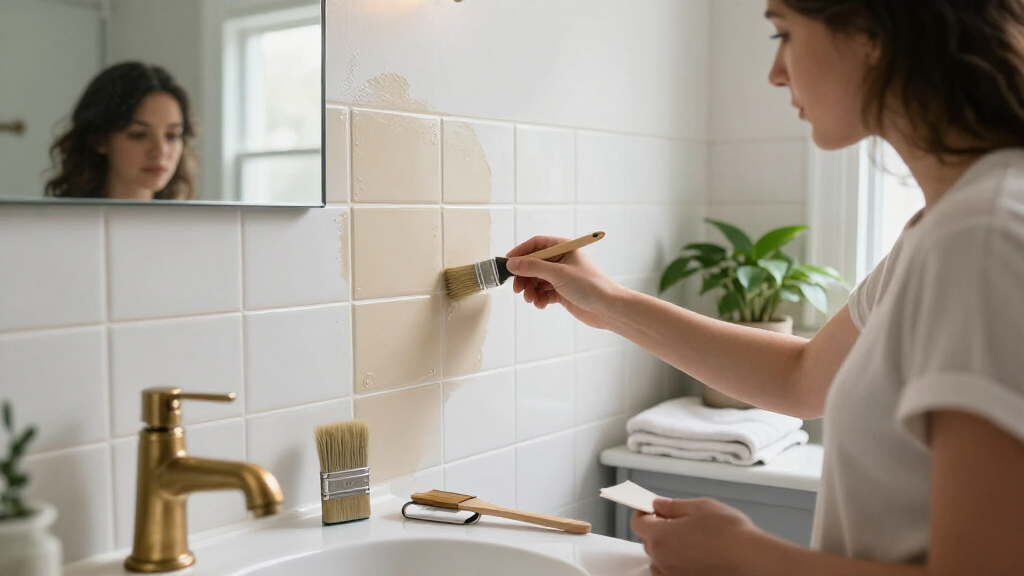
The family moved into its bungalow in 2015 and initially resurfaced the bathroom tiles and bathtub with white acrylic paint in 2019. According to Lorimer, the paint eventually began to crack and peel uncontrollably, making a more extensive renovation necessary. Because removing all the tiles meant gutting the room, the family used the work as a chance to rethink the bathroom’s layout.
Working with contractor Keilan Cook, the family removed the tiles and plaster walls and installed white tiles, black fixtures and wooden accents. The bathtub was replaced by a shower. Lorimer said the family rarely used the tub and their children had outgrown baths, so the change suited their needs. She described the new shower as “spacious, modern, and practical.”
A pocket door freed up floor space, including room for drawers opposite the vanity. Cook used part of the children’s bedroom closet on the other side of the bathroom wall to create a built-in storage area for prefab drawers. The project also paired an IKEA ENHET vanity with a custom wooden shelf made by a local carpenter, and finished the walls in PPG’s Frosty Glade paint.
A Small Bathroom,
A Smarter Refresh
When painted-over tiles began peeling, Lesley Lorimer’s family used a full renovation to rethink the room’s layout, shower and storage.
From paint to full remodel
The white acrylic paint eventually cracked and peeled, making a more permanent change necessary.
Layout choices that fit
The family used the renovation to address an underused tub and a lack of storage.
- Replaced the rarely used bathtub with a shower.
- Added a pocket door to free up floor space.
- Used part of the neighboring closet for built-in prefab drawers.
- Paired an IKEA ENHET vanity with a custom wooden shelf.
What shaped the result
Removing the tile opened the way to rethink both finishes and how the small room worked.
A fresh material mix
White tiles, black fixtures and wooden accents updated the bathroom; the walls were finished in PPG’s Frosty Glade.
A shower instead of a tub
The family rarely used the tub, and the children had outgrown baths, so a shower suited their routine.
Storage Changed the Small Bathroom
The renovation shows how replacing dated finishes can also prompt a rethink of a cramped room’s layout. In this case, the family did not rely on new fixtures alone: a pocket door reduced the space needed for a door swing, while drawers set into the adjacent closet wall created storage for towels, toiletries and first-aid supplies without taking up the bathroom’s usable floor area.
The choices were specific to the household. Removing the tub made sense to Lorimer because her family rarely used it, but that trade-off may not suit households that need a bathtub. The project’s stated $21,000 budget offers one example of a substantial renovation, not a standard price for similar work; costs can vary with room conditions, materials and labor.
Products Worth Considering

iRobot Roomba 415X Robot Vacuum & Mop Combo

Dyson Airwrap i.d. 6-in-1 Multi-Styler and Dryer

Samsung 48-Inch S90F OLED 4K Smart TV (2025)
As an affiliate, we earn on qualifying purchases.
From Painted Tile to Full Remodel
The family’s first response to the brown tile was to cover it with white acrylic paint in 2019, rather than remove the tile. That approach lasted for a time, but the paint later cracked and peeled. Lorimer said the family then knew it was time for a more permanent change. The tiles covered about three-quarters of the wall surface, so their removal became a central part of the renovation rather than a small cosmetic update.
Once the family decided to gut the room, it considered how to address another existing problem: the small bathroom had little storage. Lorimer noticed that the other side of one wall was the children’s double closet. Cook used some of that closet space for a drawer unit, which the family says did not affect its living space. The family saved toward the project over time, rather than starting the entire renovation before it had reached its budget goal.
“We almost never use our tub, and our kids had outgrown baths, so it made sense to replace the tub with a shower.”
— Lesley Lorimer
Costs and Construction Details
The reported $21,000 is the renovation budget, but the published account does not provide an itemized breakdown of spending, the project’s location, or a detailed timeline for the construction. It also does not specify the exact amount of closet space used for the drawers or provide product details for every material and fixture.
The account describes this family’s design decisions, not a universal recommendation. It does not establish whether removing a bathtub would suit another household, or how the renovation would affect resale value. Any homeowner considering a similar project would need to weigh their own storage needs, budget and room layout.
How the Family Uses the Room
The renovation account presents the bathroom as a completed project; it does not announce additional work or provide a schedule for future changes. Lorimer said the features work together and that the family now has a practical, enjoyable space. For readers considering a similar update, the next step is to identify which problems matter most—such as peeling finishes, insufficient storage or an underused tub—and budget for the full scope before beginning.
Removing tile and rebuilding walls can involve more than changing visible finishes. Homeowners should discuss the condition of the underlying surfaces and the work plan with a qualified contractor before demolition. The family’s experience suggests that deciding on layout and storage alongside tile choices helped shape the renovation, but the reported project does not include a detailed construction guide or cost estimate for other homes.
Key Questions
What was the bathroom renovation budget?
The family reported a $21,000 budget for its bathroom renovation. The account does not provide an itemized list of costs, so the figure should not be treated as a typical price for other projects.
Why did the family replace the bathtub with a shower?
Lesley Lorimer said the family rarely used the tub and that the children had outgrown baths. The household chose a shower that Lorimer described as “spacious, modern, and practical.”
How did the renovation add storage?
Contractor Keilan Cook used space from the children’s bedroom closet, which shared a wall with the bathroom, for a built-in area holding prefab drawers. A pocket door also freed up floor space inside the bathroom.
What happened to the painted tiles?
The family had covered the dated brown tile with white acrylic paint in 2019. When the paint began cracking and peeling, the family decided to remove the tiles and undertake a more extensive renovation.
Source: apartmenttherapy.com