
TL;DR

Get furniture and decor delivered free with Prime
- Fast, free delivery on millions of items
- Prime Video, Amazon Music and more included
- Member-only deals all year
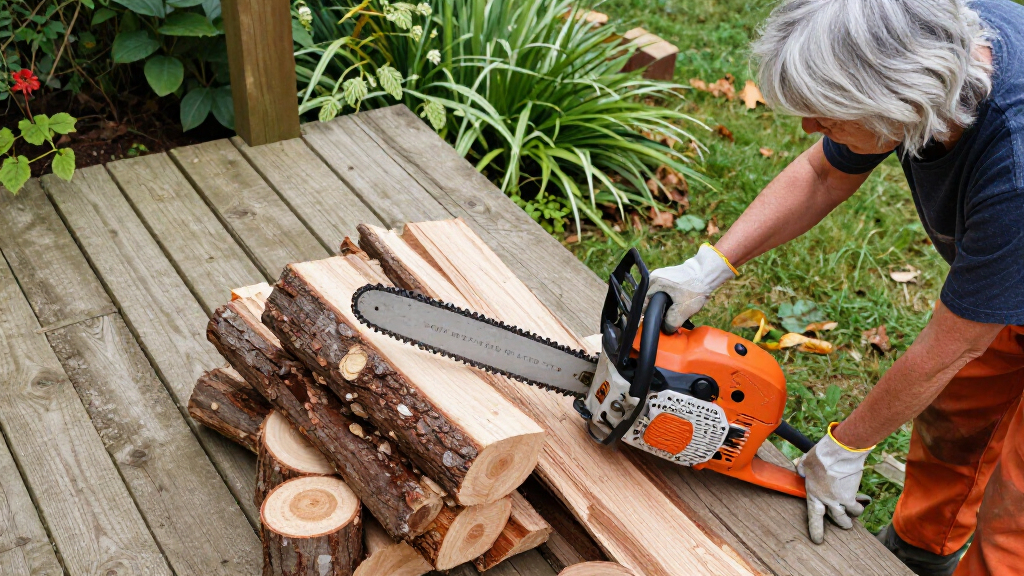
A Family Handyman report says there is no single age at which a person is too old to use a chainsaw. Physical therapist Ron Miller and manual therapist Doug Bertram say the decision should depend on a person’s grip strength, balance, coordination, stamina and mental acuity; people unsure of their ability should hire a professional.
There is no fixed age at which a person must stop using a chainsaw, according to a Family Handyman report featuring physical therapist Dr. Ron Miller and manual therapist Doug Bertram. They say the decision should turn on an individual’s grip strength, balance, coordination, stamina and mental acuity—factors that affect whether the operator can control the saw and respond to hazards.
The report says chainsaw injuries can occur when an operator loses control, and cites the Centers for Disease Control and Prevention as reporting roughly 36,000 chainsaw injuries each year. The source does not specify the period covered by that figure or provide a comparison baseline. Injuries can include severe cuts, traumatic brain injuries, limb loss or death.
Miller says age-related changes in balance, grip strength, reflexes, eyesight and stamina can make safe operation more difficult. The report does not say that every older adult experiences these changes to the same degree; its advice is to evaluate individual ability rather than rely on a birthday as a cutoff.
For people who continue using a saw, the report recommends limiting work to small logs and branches on the ground, avoiding ladders and tree felling, and hiring out larger jobs. It also advises considering a lighter electric saw, checking that the chain is sharp and properly tightened, wearing protective equipment—including chaps—and having another person nearby. Operators should take breaks and stop when tired.
Physical Ability Shapes Chainsaw Risk
The guidance matters because chainsaw work can leave little time to recover from a loss of control. A person’s ability to hold and guide the saw, maintain footing and stay alert can affect the risk of injury. The report frames these as practical safety considerations, not proof that any particular person is fit or unfit to operate a saw.
That distinction can help readers avoid treating age alone as a safety test. Someone who notices reduced strength, vision, balance or endurance may need to choose a lower-risk task or ask another person to handle the cutting. When ability is uncertain, the report’s advice is to hire a professional rather than take on hazardous work.
Products Worth Considering

Dyson V8 Cyclone Cordless Vacuum

Dyson Omni-Glide Cordless Stick Vacuum, Gold/Iron

Dyson Airwrap i.d. Multi-Styler for Straight and Wavy Hair
As an affiliate, we earn on qualifying purchases.
No Age Cutoff for Home Use
Bertram says there is no age that, by itself, makes someone too old to use a chainsaw. He identifies adequate grip strength, balance and mental acuity as relevant abilities. The report also suggests checking functional fitness at home, including grip, balance, leg and back strength, coordination and endurance, but it does not provide a validated test or thresholds that establish whether someone can safely operate a chainsaw.
The report distinguishes private residential use from work settings: it says federal law prohibits people under 18 from operating a chainsaw in a work setting, while it identifies no age limit for private chainsaw use on residential property. Its focus is on evaluating an older adult’s abilities and reducing exposure to risk, not on setting a legal upper age.
““There’s no age that makes you too old to use a chainsaw.””
— Doug Bertram, manual therapist, as quoted by Family Handyman
Individual Fitness Has No Set Test
The report offers no single age threshold, clinical assessment or set of test scores that determines whether a person can safely use a chainsaw. Its suggested at-home checks are described as a way to gauge functional fitness, not as a substitute for a professional evaluation or a guarantee of safe operation.
The source also does not provide details about the CDC’s underlying data for the roughly 36,000 annual injuries, such as the study period or how the injuries were counted. A person’s medical condition, experience, saw type and work environment can also affect risk, but the report does not assess individual cases.
Choose Lower-Risk Work or Hire Help
Anyone considering chainsaw work can use the report’s guidance to review their balance, grip, vision, coordination and stamina, then keep tasks small and on stable ground if they proceed. They should wear protective gear, keep another person nearby, take breaks and stop at signs of fatigue. When ability is in doubt, hire a professional; the report does not set a specific medical or age-based point at which that choice becomes mandatory.
Key Questions
Is there an age limit for using a chainsaw at home?
The Family Handyman report says there is no age limit for private residential use. It says federal law prohibits anyone under 18 from operating a chainsaw in a work setting.
What abilities matter most for older chainsaw users?
The experts cited say grip strength, balance and mental acuity are important. The report also points to vision, reflexes, coordination and stamina as factors that can affect control and alertness.
What chainsaw work does the report recommend avoiding?
It advises against cutting from a ladder or felling trees and recommends hiring out larger jobs. Its lower-risk suggestion is to cut small branches or logs that are safely on the ground.
What precautions should someone take if they use a chainsaw?
The report recommends protective equipment, including eye and hearing protection, gloves, sturdy footwear and chainsaw chaps; checking the chain; and having another person nearby. Operators should take breaks and stop when they feel tired.
Source: rss