
TL;DR
A Hunker report describes a cord organizer made from an empty toothpaste tube, based on a method shared by YouTube creator Graceful DIY. The tube is cleaned, cut to make an opening, wrapped around a bundled cord and secured by threading its dispensing end through the hole and replacing the cap; the method is intended for smaller cords, not large extension cords.
A DIY method shared by YouTube creator Graceful DIY repurposes an empty toothpaste tube as a holder for bundled cords, according to a report by Hunker. The simple reuse idea needs a cleaned tube and scissors, but Hunker says it is meant for smaller cords rather than bulky extension cords.

Get furniture and decor delivered free with Prime
- Fast, free delivery on millions of items
- Prime Video, Amazon Music and more included
- Member-only deals all year
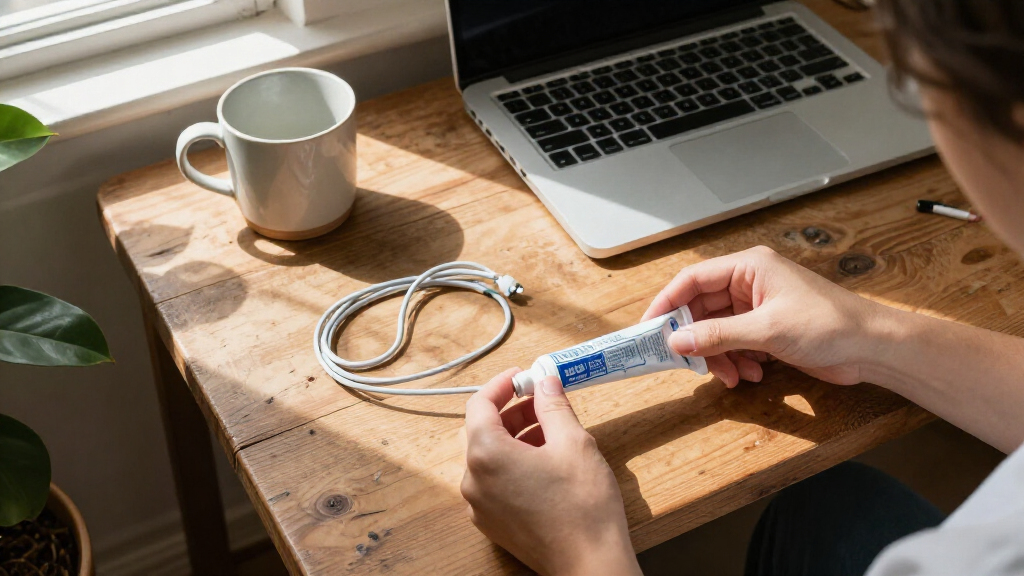
To make the organizer, the report says to cut a small strip from the tube’s sealed end so the inside can be reached, then wash the tube and cap with warm, soapy water and let them dry. The tube is folded inward by about an inch, and two small diagonal cuts are made in the fold. Opening the fold creates a diamond-shaped hole.
After untangling and bundling a cord, the user wraps the tube around it and pushes the tube’s dispensing end through the new hole. The cap is then screwed back on to help hold the tube in place. The cord remains bundled while it stays wrapped, Hunker reports; the source does not describe testing the holder for durability or repeated use.
The report suggests using the method for small appliances, computer cables and game-controller cords. Smaller toothpaste tubes could be tried for phone chargers or wired earphones. It cautions that the hack is not suited to extension cords and other large bundles. Users should also make sure the tube is as empty as possible before cutting it, to avoid wasting remaining toothpaste.
A Second Use for Toothpaste Tubes
The idea offers a way to keep some household cables together while reusing packaging that can be difficult to recycle. Hunker says many toothpaste tubes are hard to recycle and often end up in landfills; it presents this method as a small-scale reuse option, not as a replacement for recycling programs or evidence of a measurable reduction in waste.
For readers, the practical appeal is its simplicity: it uses an item that may already be at home and requires no purchased organizer. The main limitation is scale. The tube’s size and shape make it a possible fit for light, compact cords, while thicker or longer cables may need a purpose-made strap or another storage method. The report does not establish how securely the tube holds different cord types.
Products Worth Considering

Philips Hue Play HDMI Sync Box

Levoit Vital 200S-P Smart Air Purifier for Large Rooms (up to 1875 ft²)

Philips Hue Smart Light Starter Kit with Bridge and 4 White and Color A19 Bulbs
As an affiliate, we earn on qualifying purchases.
How the DIY Method Works
The hack addresses a familiar storage problem: cords can tangle when put away, making them harder to retrieve and leaving loose cables cluttered in drawers or storage areas. Hunker describes the method as one of several cord-organizing ideas circulating online and credits Graceful DIY’s YouTube video as the source of this particular approach.
The tube’s existing cap and dispensing end are part of the fastening method. Rather than using the tube to cover a cord’s full length, the user wraps it around a compact bundle and threads the dispensing end through a cut opening; the cap then helps keep the tube closed around the bundle. The source does not provide measurements for the hole or say whether tube materials or sizes affect the fit, so users may need to adapt the cuts to the tube they have.
“The cord will stay tangle-free for as long as you keep it wrapped.”
— Hunker, describing the method
Fit and Durability Are Unreported
Hunker’s account does not specify when Graceful DIY published the video, how many people have tried the idea or whether the creator tested it over time. It also gives no independent comparison with commercial cord ties and no information about how well the organizer holds up after repeated use.
The report does not identify a particular toothpaste-tube material or size as best. Because the tube’s fit depends on the cord bundle and the cut opening, performance may vary. It is also unclear whether residue could remain after washing; the source advises cleaning the tube and cap but does not provide a hygiene test or recommend the holder for any specific environment.
Try It on Smaller Cables
Readers who want to try the method can start with a thoroughly emptied tube, cut it open at the sealed end, wash and dry it, then make the folded-end opening described by Hunker. They can test the fit on a small, untangled cord bundle before relying on it for storage. Scissors should be handled carefully, particularly when making the small cuts.
The source reports no scheduled follow-up, product launch or formal testing tied to the idea. Any further evidence about durability, material suitability or waste reduction would depend on additional reporting or documented testing; for now, the method is a low-cost household reuse suggestion with a stated limit on cord size.
Key Questions
How does the toothpaste-tube cord holder work?
After the tube is emptied, cleaned and dried, its sealed end is folded and cut to form a small opening. The tube is wrapped around a bundled cord, its dispensing end is pushed through the opening, and the cap is replaced to help hold it in place.
Which cords can the method hold?
Hunker suggests smaller cords, including cables for small appliances, computers and game controllers. It says the method is not suited to extension cords or other large bundles.
What materials and tools are needed?
The method uses an empty toothpaste tube, its cap, scissors, and warm, soapy water for cleaning. Hunker advises using the remaining toothpaste before cutting the tube, as far as practical.
Has the organizer been tested for durability?
The Hunker report does not provide durability testing or details about repeated use. It says the cord stays bundled while it remains wrapped, but does not quantify how long the holder lasts.
Does reusing a tube replace recycling it?
No. Hunker presents reuse as a way to give an otherwise difficult-to-recycle tube another use. The report does not claim the hack replaces local recycling guidance or measure its effect on waste.
Source: hunker.com