
TL;DR

Get furniture and decor delivered free with Prime
- Fast, free delivery on millions of items
- Prime Video, Amazon Music and more included
- Member-only deals all year
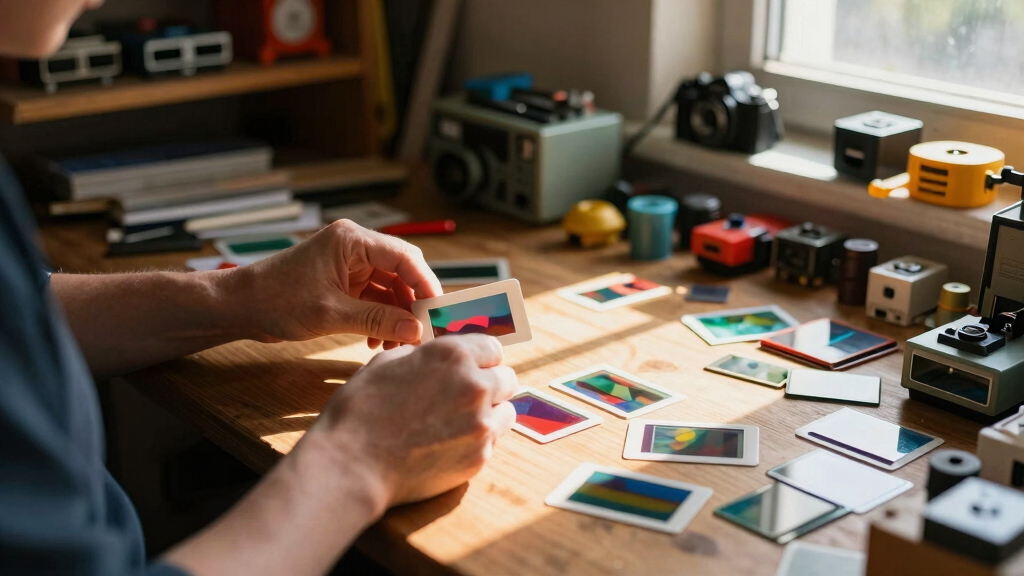
This article explores how View-Master slides, particularly those of fictional scenes, were created. It uncovers historical production methods and recent insights into the craftsmanship behind these iconic stereoscopic images.
Recent investigations into View-Master slide production reveal that creating images of imaginary scenes involved complex diorama work, sculpting, and photography techniques, with key contributions from artists like Florence Thomas. These insights shed light on a craft that has largely been lost over time.
View-Master slides of real places were straightforward to produce using stereophotography, but scenes of imaginary worlds required a different approach. Researchers have found that early efforts involved constructing detailed dioramas, often at miniature scales, to serve as the basis for stereoscopic photography. One notable figure was Florence Thomas, a sculptor who played a crucial role in elevating the quality of fairy tale reels by developing 1/6 scale dioramas that provided more realistic and engaging images. Unfortunately, the original miniatures used in these productions were later discarded when the department was shut down, making it difficult to trace the original techniques.
Historical sources indicate that the process involved photographing carefully crafted three-dimensional models, which could include painted backdrops, miniature figures, and detailed set pieces. For more on traditional craftsmanship, see this related article. Some reels, particularly those depicting TV shows or movies, were made from promotional images or cutouts, resulting in less immersive visuals. The craftsmanship behind the fairy tale reels, however, was highly sophisticated, combining sculpture, painting, and stereoscopic photography to produce convincing 3D scenes. Much of this detailed work has been lost, with limited documentation remaining.
Recent analyses by historians and enthusiasts have begun reconstructing these methods by examining surviving reels and related artifacts, offering new insights into the techniques used to produce these iconic images. Learn more about historical techniques in this article.
Understanding the Craftsmanship Behind Iconic Stereoscopic Scenes
Knowing how View-Master slides, especially those of imaginary scenes, were made offers valuable insights into early stereoscopic photography and miniature modeling techniques. This knowledge highlights a unique intersection of art and technology that shaped childhood entertainment for decades. Preserving these methods and understanding the craftsmanship involved is important for historical preservation and for inspiring modern recreations of stereoscopic imagery.
View-Master slide reproduction kit
As an affiliate, we earn on qualifying purchases.
As an affiliate, we earn on qualifying purchases.
Historical Techniques and Lost Documentation
By the time the View-Master was popular, stereophotography was well-established for capturing real-world scenes. However, producing fictional or fairy tale scenes was more complex, requiring artists and craftsmen to build miniature dioramas. Florence Thomas’s work in scaling up miniature sets was instrumental in creating more realistic and detailed reels. Over time, the original miniatures and detailed production records were discarded, leaving a gap in understanding the full process. Recent efforts by researchers aim to reconstruct these techniques through analysis of surviving reels and related artifacts.
“The craftsmanship involved in creating fairy tale reels was remarkably intricate, combining sculpture, painting, and stereoscopic photography to produce convincing 3D scenes.”
— an anonymous researcher
miniature diorama building supplies
As an affiliate, we earn on qualifying purchases.
As an affiliate, we earn on qualifying purchases.
What Specific Techniques and Materials Were Used?
It is not yet fully confirmed exactly which materials, tools, or step-by-step processes were used in creating the original fairy tale dioramas and slides. Much of the detailed craftsmanship remains undocumented, and researchers are relying on analysis of surviving reels and partial records, which leaves some aspects of the production process still uncertain.
As an affiliate, we earn on qualifying purchases.
Future Research and Potential Re-creations
Ongoing research aims to better understand the original techniques through detailed examination of existing reels and artifacts. There is also interest in digitally reconstructing the process or recreating scenes based on historical methods, which could lead to modern reproductions or educational displays that honor the craftsmanship of the original creators.
As an affiliate, we earn on qualifying purchases.
Key Questions
How did artists create the miniature dioramas for View-Master slides?
Artists like Florence Thomas built detailed 1/6 scale models using sculpting, painting, and miniature set construction techniques, which were then photographed stereoscopically.
Are any of the original miniatures still preserved?
Most of the original miniatures used in fairy tale reels were discarded when the production department was closed, so few, if any, have survived.
How do modern recreations compare to the original slides?
Recreations often rely on historical research, surviving reels, and digital modeling to approximate the original craftsmanship, but exact replication remains challenging due to lost records.
Why was the miniatures department shut down?
Details are not fully clear, but it appears the department was closed as part of broader organizational changes, leading to the loss of original miniatures and detailed documentation.
Could modern technology recreate these scenes more easily?
Yes, digital modeling, 3D printing, and computer graphics could potentially recreate the scenes, but capturing the original craftsmanship and artistic intent remains a challenge.
Source: Hackaday
Fall Picks
fall essentials
As an affiliate, we earn on qualifying purchases.