
TL;DR

Get furniture and decor delivered free — and shop member deals
- Fast, free delivery on millions of items
- Access to Prime Big Deal Days deals on October 6–7
- Prime Video, Amazon Music and more included
Researchers led by Diego Garate are uncovering new, faint cave paintings in northern Spain, challenging previous beliefs about prehistoric art. These discoveries deepen understanding of early human expression and cultural practices.
Researchers in northern Spain, led by Diego Garate, have discovered faint, previously unnoticed prehistoric cave paintings, challenging assumptions about the extent of early human artistic expression. These findings are significant for understanding prehistoric culture and the preservation of ancient art.
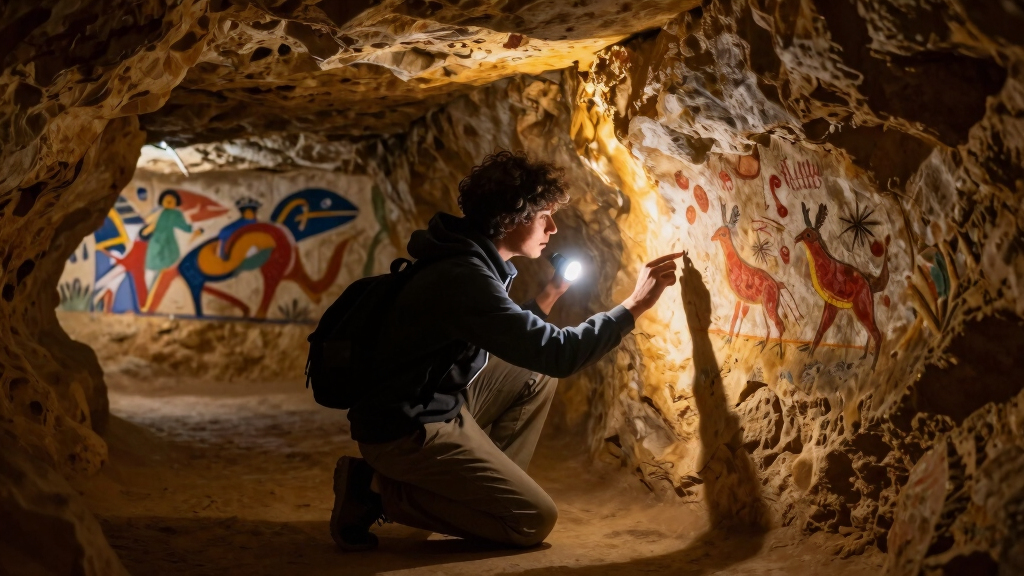
Diego Garate, a prehistory and Paleolithic art expert at the University of Cantabria, has been investigating cave art in the Basque Country for years. His team recently identified faint images of animals, including bison and horses, in caves where art was thought to be absent or long eroded. Using specialized lighting and imaging techniques, they have uncovered these ‘ghost’ images, which are barely visible to the naked eye.
The team’s work focuses on caves in northern Spain, particularly around the Basque Country, where recent field campaigns have aimed to locate and document hidden or faded prehistoric engravings and paintings. Garate emphasizes that these discoveries could significantly expand the known scope of Paleolithic art in the region, which was previously thought to be limited to well-preserved sites like Altamira. The team also uses experimental archaeology to test how such faint images might have been created and preserved over tens of thousands of years.
Access to original caves remains highly restricted, with only a select group of scholars allowed inside, due to concerns about preservation and damage. Garate’s team works in collaboration with local authorities and speleologists to explore caves with minimal disturbance, often using non-invasive imaging methods to detect and analyze faint prehistoric artworks.
Implications for Understanding Prehistoric Artistic Expression
The discovery of faint, previously undetected cave paintings suggests that early humans may have created more extensive and diverse art than previously believed. This challenges existing notions about the scope and sophistication of Paleolithic culture and indicates that much of this art has been lost to natural erosion and human activity. These findings could reshape our understanding of prehistoric human cognition, symbolism, and cultural practices, highlighting a richer and more complex early artistic tradition.
Furthermore, the ability to detect and analyze such faint images demonstrates the importance of advanced imaging technologies in archaeology, potentially leading to new discoveries in other regions and eras. This research underscores the need for careful preservation of these fragile sites, which hold invaluable insights into human origins.
infrared imaging for archaeology
As an affiliate, we earn on qualifying purchases.
As an affiliate, we earn on qualifying purchases.
Recent Advances in Cave Art Detection Techniques
Since the 19th century, discoveries like Altamira have revolutionized understanding of prehistoric art, revealing that early humans possessed sophisticated artistic skills. However, many sites have suffered damage or have been lost entirely due to natural and human factors. Modern technology, including infrared imaging, 3D scanning, and other non-invasive methods, now allows researchers to uncover faint or hidden images that are otherwise invisible.
In recent years, scholars like Garate have led efforts to systematically explore lesser-known caves in northern Spain, motivated by the possibility that many more artworks remain concealed beneath layers of calcite, dirt, or erosion. These efforts are part of a broader movement to reassess the extent of prehistoric art and to understand its role in early human societies.
Previous studies have documented the preservation challenges faced by sites like Altamira, which was closed to the public in 2002 to prevent further damage. The focus has shifted toward remote sensing and careful, minimally invasive exploration to balance discovery with preservation.
“We are uncovering ghost images of prehistoric animals that tell us there is still so much more to learn about our ancestors’ creativity.”
— Diego Garate
3D scanning equipment for cave art
As an affiliate, we earn on qualifying purchases.
As an affiliate, we earn on qualifying purchases.
While new imaging techniques have revealed faint images, it remains unclear how widespread such hidden artwork is across other caves in the region. The long-term preservation of these fragile images is also uncertain, given natural erosion, moisture, and human activity. Further research is needed to confirm the full extent of prehistoric art and to develop methods for its conservation.
non-invasive cave painting detection tools
As an affiliate, we earn on qualifying purchases.
As an affiliate, we earn on qualifying purchases.
Future Exploration and Preservation Strategies
Garate and his team plan to continue their surveys of caves in northern Spain, employing increasingly sophisticated imaging technologies to locate additional faint artworks. They aim to create detailed digital records to aid in conservation efforts and to better understand the scope of prehistoric artistic activity. Collaboration with international experts may also expand the search to other regions, potentially uncovering more hidden images and enriching the narrative of early human creativity.
prehistoric cave art preservation tools
As an affiliate, we earn on qualifying purchases.
As an affiliate, we earn on qualifying purchases.
Key Questions
How do researchers detect faint prehistoric cave paintings?
Researchers use advanced imaging techniques such as infrared reflectography, 3D scanning, and specialized lighting to reveal faint images that are invisible to the naked eye.
Why are many cave paintings in danger of being lost?
Natural erosion, moisture, carbon dioxide from visitors, and human activity have damaged or erased many ancient artworks over thousands of years.
Are these new discoveries in northern Spain unique?
No, similar faint images have been found in other regions, but the recent focus on lesser-known caves suggests there may be many more undiscovered artworks.
Will the public have access to these newly discovered artworks?
Access to original caves remains highly restricted to protect fragile sites, but digital records and replicas may allow broader public engagement.
What does this mean for our understanding of prehistoric humans?
It indicates that early humans may have created more complex and widespread art, shedding new light on their cognitive and cultural development.
Source: Hacker News
Evergreen bestsellers Picks
bestsellers
As an affiliate, we earn on qualifying purchases.