The two-thirds rule for art over furniture really works because it helps you create a balanced, cohesive look that feels natural. When you hang artwork with its midpoint about two-thirds up from the floor, it balances well with furniture and guides the eye smoothly through the space. It’s flexible, so you can tweak it based on your room’s proportions. Stick with this guideline, and you’ll find decorating becomes easier and more polished—trust me, there’s plenty more to discover.
Key Takeaways
- The Two-Thirds Rule creates a natural visual balance by positioning artwork around two-thirds up from the floor.
- It ensures artwork is proportionate to furniture, typically 4-6 inches above sofa or console tables.
- Applying the rule maintains consistency and harmony across multiple pieces or room designs.
- Adjustments can be made based on wall and furniture proportions for a more personalized look.
- Overall, the rule simplifies decorating, making art placement intuitive and visually appealing.
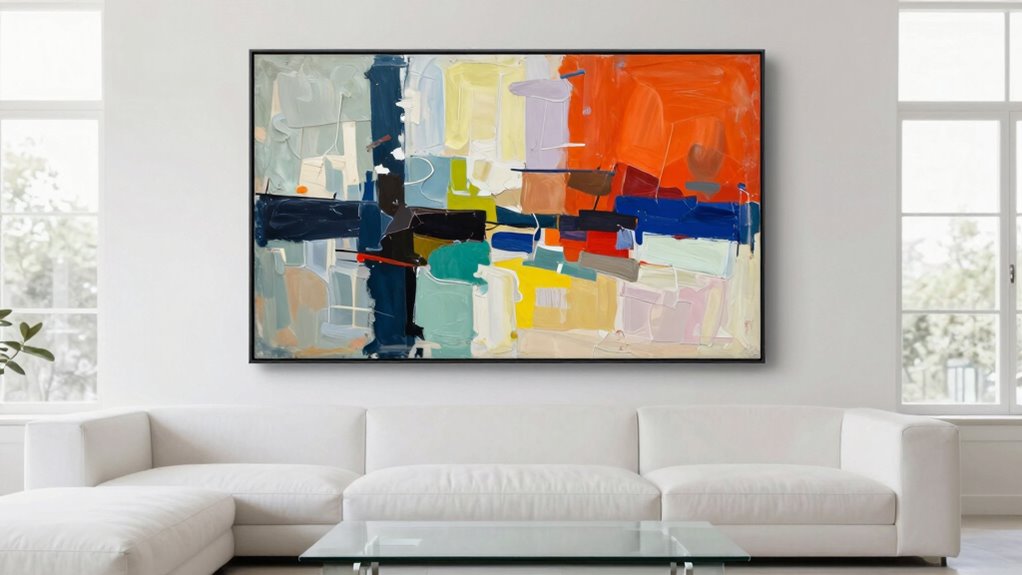
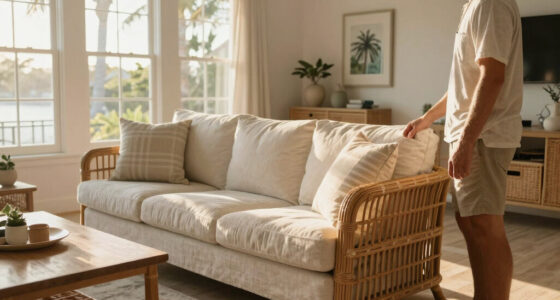
When decorating a room, applying the two-thirds rule can help you create a balanced and visually appealing arrangement of art over furniture. This rule is a simple guideline for determining the ideal height at which to hang your artwork, guaranteeing that your wall spacing feels intentional and harmonious. This straightforward approach can make a significant difference, especially for those new to interior decorating. Instead of guessing where to place your art, this approach provides a clear target: position the center of the piece approximately two-thirds of the way up from the floor or, more specifically, so that the artwork’s midpoint aligns roughly with that two-thirds mark. Doing so creates an intuitive sense of proportion, guiding your eye naturally across the space. Wall spacing plays an essential role in achieving visual balance. When you follow the two-thirds rule, the art feels neither too high nor too low, filling the space comfortably without overwhelming the furniture beneath it. If your furniture is a sofa or a console table, you want the art to sit at a height that complements the piece, typically about 4 to 6 inches above the back of the furniture. This guarantees the art isn’t floating awkwardly or feeling cramped. The rule helps you gauge that ideal height so your wall space looks cohesive and thoughtfully curated. Using the two-thirds rule also enhances the overall visual balance in your room. When artwork is hung at a proportionate height, it creates a sense of harmony, making the entire arrangement feel natural and pleasing to the eye. If your space has multiple pieces, applying this rule to each will help maintain consistency, preventing some artwork from seeming out of place or disconnected. It’s about creating a rhythm—your eye naturally moves from the furniture to the art, then across the wall, without jarring interruptions. This balance helps your room feel unified, inviting, and well-designed. Additionally, this rule offers flexibility, especially when considering different wall and furniture proportions, which can influence the perfect height for hanging art. Adjusting for room proportions can help tailor the placement to fit any space perfectly. For example, art size can also impact the hanging height, as larger or smaller pieces may require slight adjustments to achieve optimal visual balance. If your artwork is particularly large or small, you can adjust the height slightly, but the principle remains the same: aim for the center to be around two-thirds up from the floor. It’s a simple yet effective method that takes the guesswork out of decorating. By understanding furniture and wall proportions, you can better apply the two-thirds rule for a polished look. Recognizing the importance of visual harmony in interior design helps prevent clutter and creates a more inviting atmosphere. Instead of cluttering your space with trial and error, you can confidently hang your art knowing it will look right. Over time, applying the two-thirds rule helps you develop an eye for proportion and balance, making every room you decorate feel polished and thoughtfully curated.
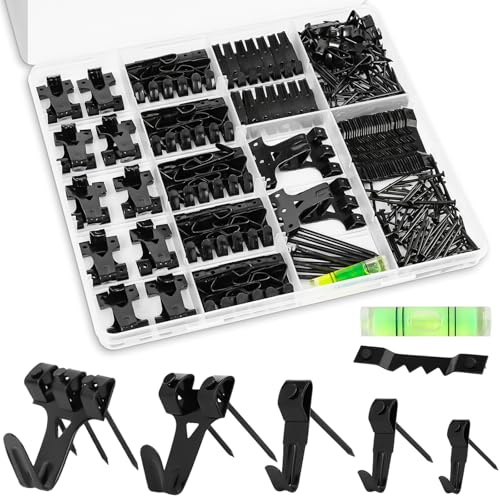
KURUI Picture Hangers, 385Pcs Picture Hanging Kit with Heavy Duty Picture Hanging Hooks, Sawtooth, Hardware Nails and Picture Hanging Tool, Wall Hangers for Frame, Painting, Art, Photo (Black)
- Organized Storage Compartments: Categorized compartments for easy access
- Versatile Weight Options: Supports 10LB to 75LB frames
- Heavy Duty Steel Construction: Durable and secure hanging hardware
As an affiliate, we earn on qualifying purchases.
As an affiliate, we earn on qualifying purchases.
Frequently Asked Questions
How Do I Measure Art and Furniture for the Rule Accurately?
To measure art and furniture for the rule accurately, start by measuring the furniture’s width and height to understand its proportions. Then, for art placement, aim for the artwork’s width to be about two-thirds of the furniture’s width. Keep the art’s center roughly at eye level, around 57-60 inches from the floor. This way, you guarantee balanced furniture proportions and a visually pleasing art placement.
Does the Rule Apply to All Room Sizes and Styles?
You’ll find the rule works well across various room sizes and styles, transforming your space like a magic wand. When it comes to artwork placement, adjusting for room proportions guarantees the rule feels natural rather than forced. Smaller rooms might need smaller artwork or different proportions, but the general guideline still helps create harmony. So, whether your style is modern or traditional, the two-thirds rule adapts, elevating your decor effortlessly.
Can the Rule Be Adjusted for High or Low Ceilings?
Yes, you can adjust the rule based on ceiling height and room proportions. For high ceilings, opt for larger artwork to balance the space, while lower ceilings benefit from smaller pieces that don’t overwhelm the room. Consider the room’s proportions and overall height, and scale your art accordingly. This guarantees your artwork complements the space, creating a harmonious look that feels just right, regardless of ceiling height.
What if My Furniture or Art Pieces Are Irregularly Shaped?
Irregular shapes might seem like a puzzle, but they actually invite creativity. When your art or furniture has irregular shapes, you can’t rely on standard measurements. Instead, embrace custom framing and tailored arrangements, which highlight their unique forms. Use the two-thirds rule as a flexible guideline, adjusting proportions to complement irregular shapes. This approach guarantees your pieces stand out beautifully, turning potential chaos into a curated, harmonious display.
Are There Exceptions to the Two-Thirds Rule?
Yes, there are exceptions to the two-thirds rule, especially with abstract patterns or asymmetrical arrangements. If your artwork has irregular shapes or dynamic designs, sticking strictly to the rule might feel off. Instead, trust your eye to balance these pieces visually. Sometimes, breaking the rule creates a more engaging, unique look. Feel free to experiment, ensuring the overall composition still feels harmonious, even if it’s asymmetrical or abstract.

Wgbon Stainless Steel Picture Hanging Wire, Heavy Duty 100lbs, 2PCS 6.6FT
- Heavy Duty Stainless Steel Wire: Supports up to 100lbs, 6.6FT long
- Adjustable Wire Length: Easy to modify with hooks
- Tool-Free Installation: Auto spring lock prevents slipping
As an affiliate, we earn on qualifying purchases.
As an affiliate, we earn on qualifying purchases.
Conclusion
So, next time you’re faced with that tricky furniture art dilemma, remember the two-thirds rule. Because nothing says “I’ve got taste” quite like hanging that masterpiece just high enough that you’re almost hitting your head. It’s the perfect formula for turning your living room into a gallery—just with more furniture and less actual art. Who knew that a simple rule could make your space look both sophisticated and slightly absurd? Cheers to art that’s just the right height!
As an affiliate, we earn on qualifying purchases.

Vittanly 15 Pack Picture Frames Collage Wall Decor, Wall/Tabletop Display
- Versatile Sizes Included: Includes 8×10, 5×7, and 4×6 frames
- Durable Construction: Made from scratch-resistant MDF and plexiglass
- Gallery Wall Flexibility: Create dynamic displays with multiple sizes
As an affiliate, we earn on qualifying purchases.
As an affiliate, we earn on qualifying purchases.