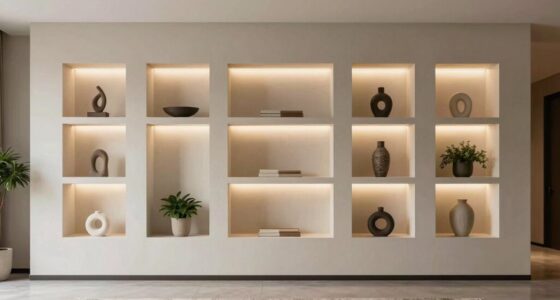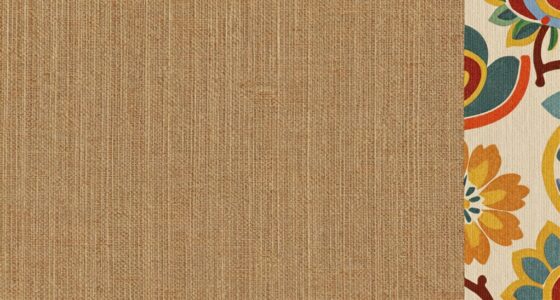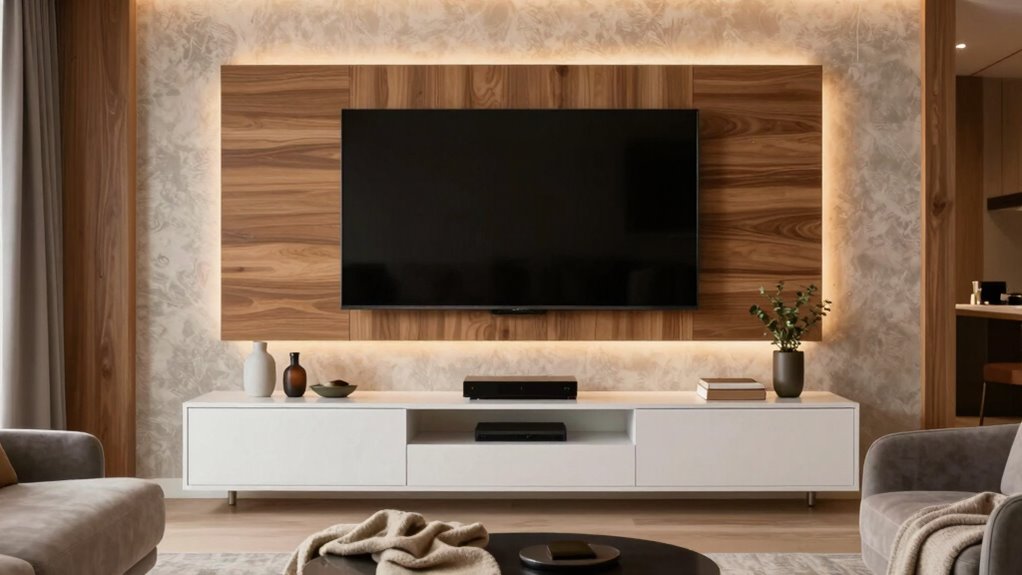
To make your media wall feel like a natural part of the room, focus on balancing textures, colors, and lighting. Use materials like wood, textured wallpaper, or stone to add depth, and choose a color palette that complements your furniture and decor. Incorporate layered lighting to enhance textures and create warmth. Keep proportions in mind so the wall blends seamlessly with the room’s scale. For more tips on creating a cohesive and inviting space, explore the details ahead.

Get furniture and decor delivered free with Prime
- Fast, free delivery on millions of items
- Prime Video, Amazon Music and more included
- Member-only deals all year
Key Takeaways
- Integrate textures and materials that complement the room’s overall design for a seamless, cohesive look.
- Balance scale and proportion to ensure the media wall enhances rather than dominates the space.
- Use layered lighting to highlight textures and create a warm, inviting ambiance.
- Incorporate built-in shelving or cabinetry to blend the media wall with room furnishings.
- Choose colors and finishes that match or complement existing decor for a unified, natural feel.
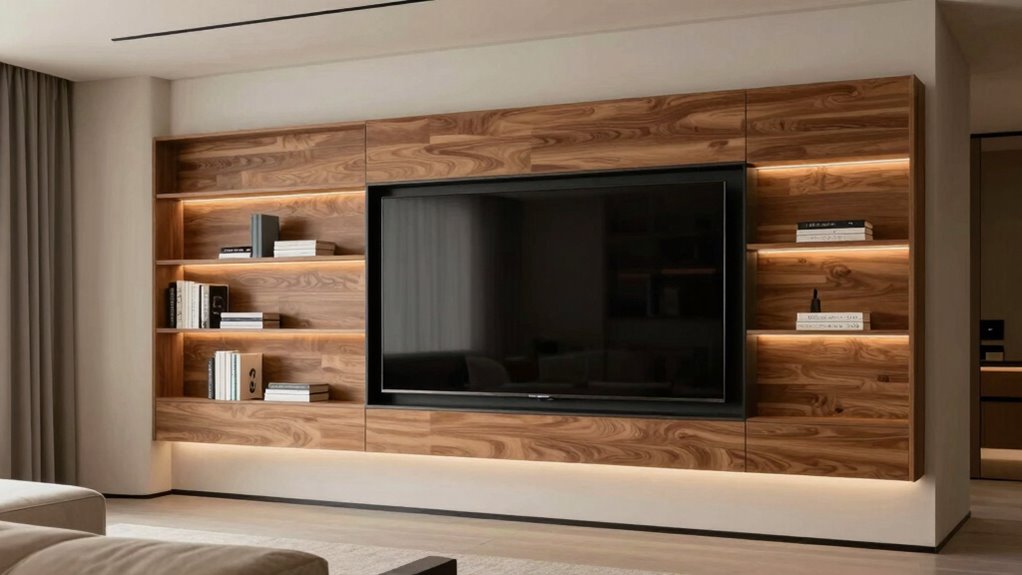
Creating a media wall that feels like a natural extension of your living space can transform your entertainment area into a cozy, inviting room. The key is to blend functionality with style, ensuring your media setup enhances rather than overwhelms the space. Start by considering wall textures; using materials like wood panels, textured wallpaper, or stone veneer adds depth and character. These textures can break up the visual monotony often associated with large screens and media centers, making the wall feel more integrated into the room’s design. If you prefer a modern look, sleek lacquered finishes or smooth painted surfaces work well, but don’t shy away from mixing textures—think combining matte paint with a textured accent panel—to create visual interest.
Transform your space with textured walls and seamless design for a cozy, stylish media area.
Color schemes play a *vital* role in making your media wall feel like part of the room rather than an isolated feature. Choose colors that complement the rest of your living space. Neutral tones like whites, beiges, or soft grays provide a calming backdrop, allowing your media equipment to stand out without clashing. If you want to add personality, incorporate accent colors through decorative shelving, artwork, or lighting. For example, a dark charcoal wall with warm wooden accents can evoke a cozy vibe, while a lighter pastel palette can keep the space feeling airy and relaxed. Keep in mind that the color of the wall should enhance the overall room, tying in furniture, curtains, and other design elements seamlessly. Incorporating appropriate lighting can further enhance the ambiance and highlight textures, contributing to a cohesive look. Considering wall proportions ensures your media wall complements the room’s dimensions, avoiding visual imbalance and creating a harmonious space.
When building your media wall, pay attention to scale and proportion. The size of the wall should match the room’s dimensions—avoid making it so large that it dominates the space or so small that it feels disconnected. Framing your media equipment with built-in shelving or cabinetry helps create a cohesive look, and choosing finishes that match or complement your wall textures and color schemes will unify the design. Incorporate lighting thoughtfully—layered lighting such as sconces, LED strips behind the TV, or spotlights can highlight textures and add warmth, making the wall feel inviting rather than sterile.
Ultimately, your goal is to craft a media wall that feels like a natural part of your room. By thoughtfully selecting wall textures, coordinating color schemes, and paying attention to scale and lighting, you can create a space that’s stylish, functional, and welcoming. Your entertainment area should invite you to relax and enjoy, blending seamlessly into the overall ambiance of your home.
As an affiliate, we earn on qualifying purchases.
Frequently Asked Questions
How Do I Hide Wires and Cables Effectively?
To hide wires and cables effectively, focus on cable management and concealment strategies. Use cable clips and sleeves to organize and route cables along walls or furniture. Install power strips inside furniture or behind the media wall to keep cords out of sight. Consider wall conduits or decorative covers that blend with your decor, ensuring a clean, clutter-free look while maintaining easy access to connections when needed.
What Materials Are Best for a Seamless Media Wall?
For a seamless media wall, you want materials that blend style and functionality. Decorative wall panels work great—they add texture and hide imperfections, while acoustic treatments improve sound quality and conceal wiring behind the wall. Choose lightweight, durable materials like MDF or wood veneer for easy installation. These options create a clean, cohesive look, ensuring your media wall feels integrated and inviting without sacrificing practicality.
How Can I Incorporate Lighting Into the Media Wall?
You can incorporate lighting into your media wall by adding ambient lighting behind or around it to create a warm, inviting glow. Use accent illumination, like LED strip lights or spotlights, to highlight features or artwork on the wall. Position these lights strategically to reduce glare on screens and enhance the overall ambiance. This combination makes your media wall feel integrated into the room, not just a focal point.
What Size TV Is Ideal for a Balanced Look?
The ideal TV size depends on your wall space and viewing distance, but generally, a 55-65 inch TV offers a balanced look. When considering TV placement, make certain it complements your wall color and doesn’t overwhelm the room. Position the TV at eye level for comfortable viewing, and choose a size that harmonizes with other décor elements, creating a cohesive and inviting space without dominating the room.
How Do I Ensure the Media Wall Complements My Decor?
To guarantee your media wall complements your decor, focus on your decorating style and color coordination. Choose a media unit and accessories that match your overall aesthetic—modern, rustic, or eclectic. Use colors that blend seamlessly with your existing palette, whether through paint, artwork, or decorative accents. Incorporate textures and materials that reflect your style, creating a cohesive look that enhances your room without overpowering it.
As an affiliate, we earn on qualifying purchases.
Conclusion
By blending bold backgrounds, balanced beams, and cozy corners, you create a media wall that feels like more than just a feature—it’s a fixture of your space. Embrace the essence of elegance, ease, and expression to guarantee your media wall melds seamlessly with your room’s rhythm. With a little planning and plenty of personality, your media wall will not only entertain but also enhance your environment, making it a magnetic masterpiece you’ll love for years to come.
As an affiliate, we earn on qualifying purchases.
As an affiliate, we earn on qualifying purchases.
Halloween Picks
halloween
As an affiliate, we earn on qualifying purchases.