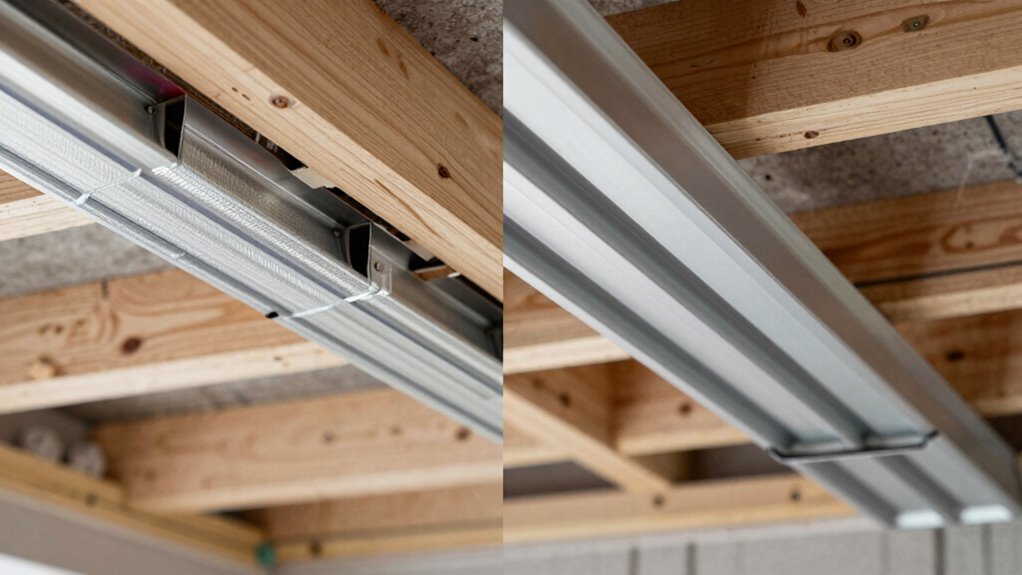

Isolation clips suspend drywall away from studs, creating a decoupled layer that effectively reduces sound transfer, especially when combined with insulation. Resilient channels, on the other hand, are continuous metal strips attached directly to wall framing that absorb vibrations but are generally less effective for high-level soundproofing. Both serve to dampen noise, but the key difference lies in their construction and performance. Keep exploring to see which solution best fits your soundproofing goals.

Get furniture and decor delivered free — and shop member deals
- Fast, free delivery on millions of items
- Access to Prime Big Deal Days deals on October 6–7
- Prime Video, Amazon Music and more included
Key Takeaways
- Isolation clips suspend drywall, creating a decoupled system that significantly reduces sound transmission, whereas resilient channels are attached directly to studs.
- Isolation clips are more effective for high-performance soundproofing, while resilient channels offer a practical, quicker solution.
- Installation of isolation clips involves multiple layered components, unlike resilient channels which are simpler and faster to install.
- Isolation clips create a fully decoupled wall system, providing superior vibration and sound isolation compared to resilient channels.
- Resilient channels serve as vibration absorbers but generally offer less soundproofing than the highly decoupled drywall setup with isolation clips.
When it comes to soundproofing and vibration control in wall assemblies, understanding the difference between isolation clips and resilient channels is essential. Both are popular soundproofing materials used to reduce noise transmission, but they serve different purposes and require distinct installation techniques. Knowing which one to use can considerably impact the effectiveness of your soundproofing project and the overall comfort of your space.
Isolation clips are metal fasteners designed to suspend drywall or other wall finishes away from the structural framing. They act as a buffer, preventing sound vibrations from traveling through the wall studs into adjacent rooms. When installed correctly, isolation clips create a decoupled wall assembly that minimizes sound transfer. Their installation involves attaching the clips to the studs first, then securing a hat channel to the clips, and finally mounting the drywall to the hat channel. This layered approach makes isolation clips highly effective at damping sound vibrations. As a soundproofing material, they are often combined with insulation or acoustic sealants to further enhance soundproofing performance. Additionally, decoupling techniques can significantly improve the overall soundproofing effectiveness of a wall system. Proper selection and installation of these components can make a notable difference in noise reduction. Understanding soundproofing materials and their properties can help you choose the right solution for your specific needs.
Isolation clips suspend drywall away from studs, creating a decoupled wall that significantly reduces sound transfer.
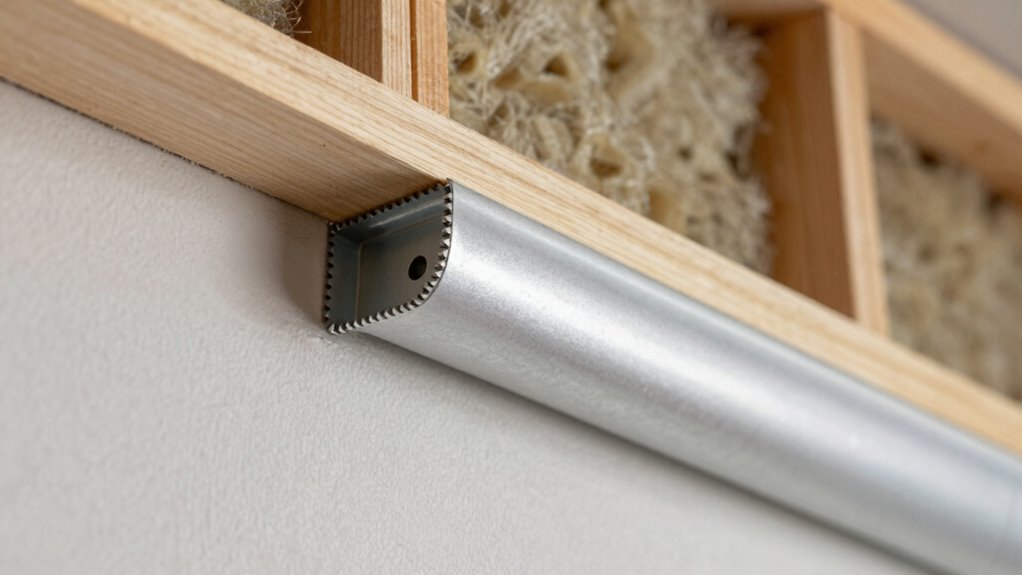
Resilient channels, on the other hand, are continuous metal strips that are attached directly to the wall framing. The drywall is then fastened to these channels, which are designed to absorb and dissipate vibrations. Unlike isolation clips, resilient channels are typically easier and quicker to install, making them a common choice for DIY projects or when working under tight schedules. Their installation technique involves securing the channels to the studs with screws, then attaching the drywall to the channels, ensuring there’s a gap that helps absorb sound vibrations. While resilient channels do reduce noise transmission, they are generally less effective than isolation clips in creating a completely decoupled wall assembly, especially in environments requiring high levels of soundproofing. For many renovation projects, resilient channels offer a practical balance between performance and ease of installation. Considering installation techniques and the specific environment will help you determine the best approach for your project.
In summary, understanding the structural differences between these systems can help you select the most effective solution for your particular needs.
As an affiliate, we earn on qualifying purchases.
Frequently Asked Questions
Are Isolation Clips More Expensive Than Resilient Channels?
Yes, isolation clips tend to be more expensive than resilient channels. When considering material compatibility and cost analysis, you’ll find isolation clips often require higher upfront investment due to their specialized design and material. Resilient channels usually offer a more budget-friendly option while still providing effective soundproofing. Your choice depends on your project’s specific needs, budget, and the level of sound isolation required.
How Do Installation Times Compare for Both Options?
Installation times for isolation clips and resilient channels differ mainly in installation efficiency, affecting your overall labor cost. Isolation clips typically take longer to install because they require more precise placement and additional fasteners. Resilient channels, on the other hand, often go up faster since they are easier to handle and position. Overall, resilient channels can reduce your labor costs by speeding up installation, while isolation clips may require more time and effort.
Can They Be Used Together in the Same Wall?
Yes, you can use isolation clips and resilient channels together in the same wall, but it’s not always necessary. Combining them can enhance vibration reduction and improve soundproofing, but you need to guarantee structural compatibility so the layers don’t compromise each other’s effectiveness. Proper installation is key. Consult a professional to balance performance and structural integrity, making sure both components work harmoniously without adding unnecessary complexity.
Which Option Offers Better Soundproofing for High Frequencies?
Isolation clips generally offer better soundproofing effectiveness for high frequencies compared to resilient channels. They decouple the drywall from the structure more effectively, reducing vibrations that transmit high-frequency noise. You’ll notice less sound leakage with isolation clips, especially for high-pitched sounds, making your space quieter. Resilient channels still improve soundproofing but might not be as effective at blocking high-frequency noise, so for ideal results, choose isolation clips.
Are There Any Building Code Restrictions for Either?
Imagine building a fortress where rules act as invisible guards. You’ll find that both isolation clips and resilient channels must meet strict building code compliance, especially regarding material restrictions. Some materials might be off-limits due to fire safety or structural integrity. Always check local regulations before installation, as deviating could turn your fortress into a liability rather than a sanctuary. Staying compliant guarantees your soundproofing efforts stand strong and safe.
As an affiliate, we earn on qualifying purchases.
Conclusion
In the end, choosing between isolation clips and resilient channels isn’t about one being better than the other—it’s about finding the right fit for your needs. While both can help create a more peaceful space, understanding their subtle differences guarantees you make a wise decision. Think of it as selecting the gentle touch that best suits your home’s harmony, quietly guiding you toward a solution that keeps noise at bay without sacrificing comfort or clarity.
acoustic soundproofing materials
As an affiliate, we earn on qualifying purchases.
As an affiliate, we earn on qualifying purchases.
wall soundproofing decoupling kit
As an affiliate, we earn on qualifying purchases.
As an affiliate, we earn on qualifying purchases.
Fall Picks
fall essentials
As an affiliate, we earn on qualifying purchases.