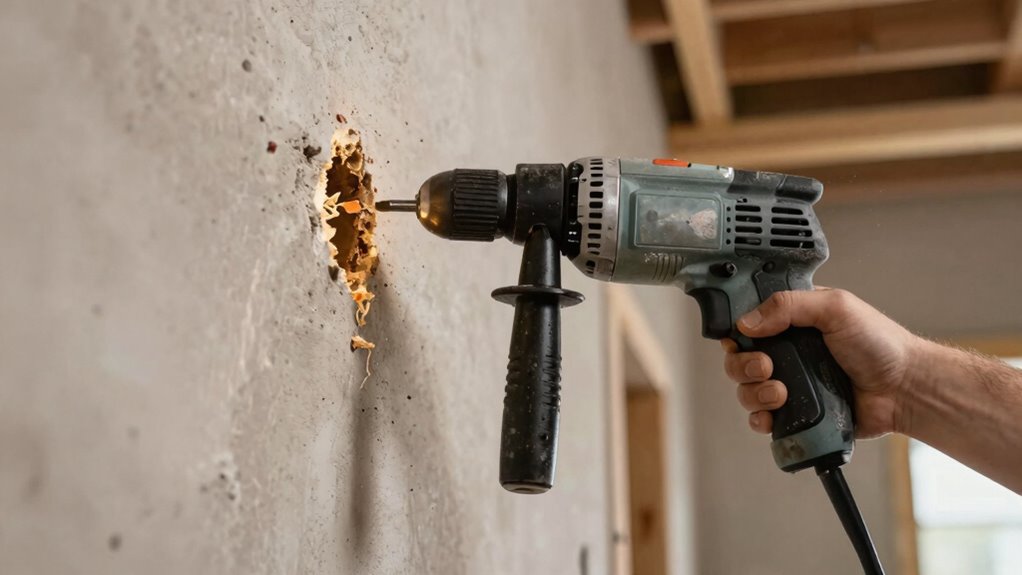
Hammer drills are more versatile for interior wall projects than you might realize. They can handle tasks like drilling precise holes for anchors, installing fixtures, or removing old mortar and stubborn materials. Cordless models offer better maneuverability in tight spaces, while noise reduction features keep your work less disruptive. Whether you’re hanging artwork or upgrading electrical systems, a hammer drill makes your work faster and easier. Keep going to discover how this powerful tool can become your go-to for interior walls.
Key Takeaways
- Hammer drills excel at creating precise holes in drywall and plaster for anchors and fixtures.
- Their pounding action helps remove old mortar or stubborn materials during interior renovations.
- Cordless models offer enhanced maneuverability in tight spaces, expanding project possibilities.
- Noise reduction features make hammer drills suitable for indoor use without disturbing household activities.
- They speed up interior wall projects by combining drilling and breaking functions in one versatile tool.
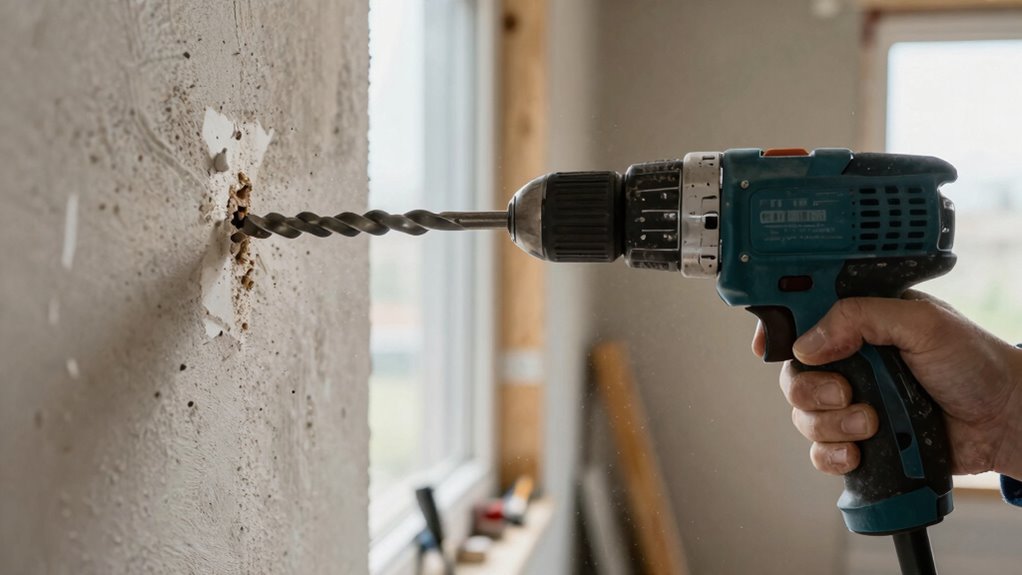
When you’re working on interior walls, a hammer drill can be an essential tool to make your job easier and more efficient. Unlike standard drills, hammer drills combine rotary action with a pounding force, allowing you to drill into tougher materials like concrete, brick, or dense drywall with less effort. Many people overlook the versatility of these tools for interior projects, but their power and adaptability can considerably speed up tasks like installing anchors, running wiring, or mounting heavy fixtures.
Hammer drills make interior wall projects easier by combining rotary action with pounding force for tough materials.
One of the biggest advantages of modern hammer drills is the availability of cordless options. Battery-powered models eliminate the hassle of cords, giving you greater mobility and flexibility, especially when working in tight or awkward spaces. You won’t need to worry about finding power outlets or managing tangled cords, which can slow down your progress and create safety hazards. With advances in battery technology, cordless hammer drills now offer comparable power to their corded counterparts, so you can confidently tackle demanding projects without sacrificing convenience.
However, noise considerations are worth keeping in mind when choosing a hammer drill for indoor use. These tools tend to be louder than standard drills because of their pounding action, which can be disruptive to others in your household or nearby neighbors. If you’re working during quiet hours or in shared living spaces, it’s worth exploring models with noise reduction features or lower decibel ratings. Some cordless options are designed to operate more quietly, making them a better choice for indoor environments. Using ear protection and scheduling work during appropriate times can also help manage noise concerns. Additionally, sound levels are an important factor to consider to ensure comfort and safety during indoor use.
You might be surprised how often a hammer drill is necessary beyond heavy-duty masonry work. For interior walls, they excel at creating precise holes for anchors or bolts, especially when working with dense drywall or plaster. They’re also perfect for removing old mortar or breaking up stubborn materials without needing a sledgehammer. For smaller, detail-oriented projects, lightweight cordless models provide enough power while remaining easy to handle. Cordless technology has significantly improved the usability of these tools in confined spaces, making them even more versatile. So, whether you’re installing shelving, hanging artwork, or upgrading electrical wiring, a hammer drill’s versatility makes it a valuable addition to your toolkit. Additionally, cordless options enhance maneuverability and ease of use in confined spaces. Using a proper technique can also help minimize dust and debris during drilling, which is especially important to maintain a clean workspace and ensure safety.
cordless hammer drill for interior walls
As an affiliate, we earn on qualifying purchases.
As an affiliate, we earn on qualifying purchases.
Frequently Asked Questions
Can Hammer Drills Be Used on Drywall Safely?
Yes, you can use a hammer drill on drywall safely if you’re careful. For drywall installation, it helps make precise holes, but avoid excessive force to prevent damage. When doing wall demolition, a hammer drill can break through drywall efficiently. Always use the correct drill bits and keep the pressure light to protect the drywall, ensuring a smooth process without unnecessary cracks or holes.
What Safety Gear Should I Wear When Using a Hammer Drill?
When using a hammer drill, you should wear protective eyewear and a dust mask. Think of your safety gear as a shield protecting you from flying debris and dust clouds, like a knight’s armor in battle. I remember working on drywall and neglecting my mask—dust got in my eyes and throat. Always gear up to stay safe and comfortable during your project.
How Do I Prevent Damage to Interior Wall Surfaces?
To prevent damage to interior wall surfaces, focus on proper surface preparation and paint protection. Use painter’s tape around the area to shield paint and trim, and place a drop cloth underneath to catch debris. When drilling, start with a lower speed and apply gentle pressure to avoid gouging the wall. This careful approach helps protect your walls and keeps them looking their best during your project.
Are Hammer Drills Suitable for Installing Electrical Wiring?
Yes, hammer drills are suitable for installing electrical wiring, but you should prioritize electrical safety and proper wiring techniques. Use the drill carefully to avoid damaging existing wiring or pipes inside the wall. Make sure to turn off power before drilling, and choose the right bit size for your wiring. This approach helps prevent accidents and guarantees your wiring project is safe and effective.
What Is the Average Cost of a Good Hammer Drill?
Think of a good hammer drill like a reliable friend on a long journey; it costs roughly $100 to $200. For cordless options, expect to pay a little more for convenience and portability. Remember, investing in a quality tool means better drill maintenance and durability. A well-chosen hammer drill saves you money in the long run, making every project smoother and more efficient.
As an affiliate, we earn on qualifying purchases.
Conclusion
Don’t let the name fool you—hammer drills are the unsung heroes hiding in plain sight for your interior projects. Like a trusty sidekick, they’re ready to carve through stubborn materials and turn what seems impossible into a breeze. Think of them as the secret ingredient in your toolkit, transforming ordinary walls into a canvas of your DIY dreams. With a hammer drill in hand, you’re not just building—you’re orchestrating a symphony of craftsmanship that turns your space into a masterpiece.
As an affiliate, we earn on qualifying purchases.
hammer drill for masonry and drywall
As an affiliate, we earn on qualifying purchases.
As an affiliate, we earn on qualifying purchases.