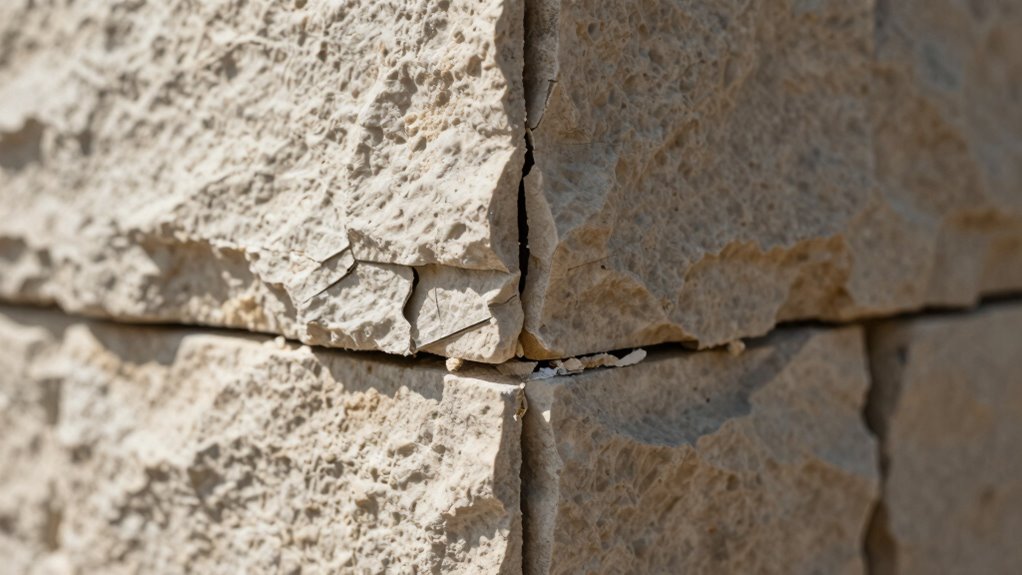

Faux stone panels tend to fail at corners first because they’re designed mainly for flat surfaces, making it hard to fit them seamlessly around irregular edges. You’ll find that their rigid edges lack flexibility, so cutting and installing at corners can break pattern flow and cause gaps. Adhesives also struggle with uneven angles, increasing the chance of panels shifting or falling. If you want to understand how to avoid these issues and improve your installation, keep exploring the specifics here.

Get furniture and decor delivered free — and shop member deals
- Fast, free delivery on millions of items
- Access to Prime Big Deal Days deals on October 6–7
- Prime Video, Amazon Music and more included
Key Takeaways
- Faux stone panels lack flexibility, making it difficult to fit seamlessly around irregular corner angles.
- Manufacturing constraints prevent proper edge shaping, leading to gaps and misalignment at corners.
- Precise measurements and cuts are challenging, increasing installation errors at corners first.
- Pattern matching is compromised after cutting, resulting in visible seams and inconsistent aesthetics.
- Adhesive performance may weaken at corners, causing panels to shift or fall over time.
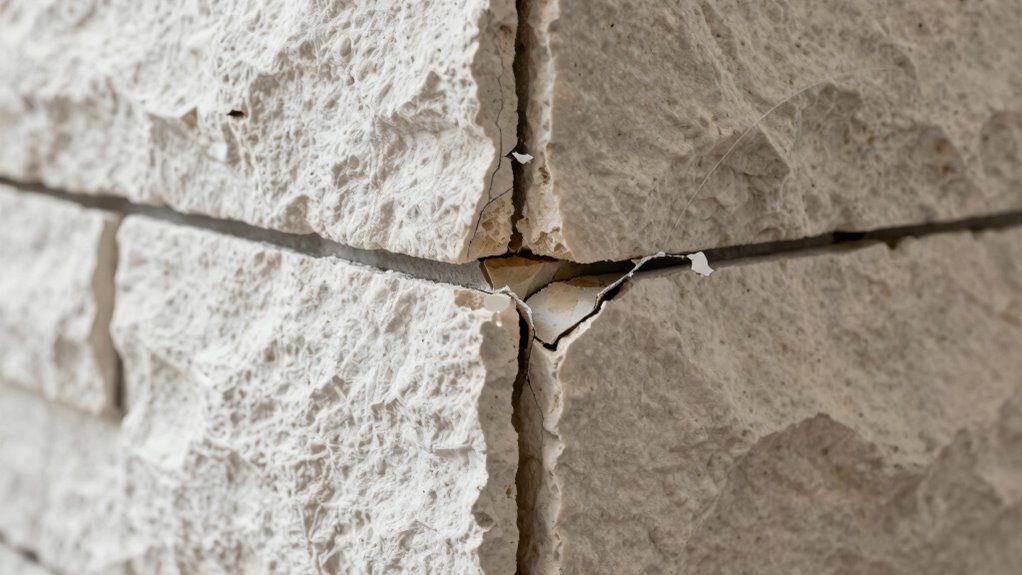
The challenge begins with the way panels are made. Many faux stone products are designed for flat, vertical surfaces, and their edges aren’t always flexible enough to conform to corners. When you attempt to install them, you often have to cut or chip pieces to fit, but these modifications can compromise the integrity of the panel’s appearance. The cuts may not match the pattern perfectly, leading to visible seams or awkward shifts. Furthermore, the adhesive used may not hold as well at irregular angles, making the panels prone to shifting or falling off over time. Manufacturing limitations can also impact how well the panels fit at corners, further complicating the installation process. Additionally, the installation process at corners is more time-consuming and labor-intensive. You need to measure meticulously, make precise cuts, and sometimes use specialized tools or techniques to get the panels to fit snugly. If you’re not experienced, it’s easy to make errors, which can cause gaps or uneven surfaces. This can also be attributed to design constraints that limit the flexibility of the panels at irregular edges. The end result often reflects these challenges in the form of inconsistent aesthetics, with no smooth progression from wall to corner.
As an affiliate, we earn on qualifying purchases.
Frequently Asked Questions
Can Faux Stone Panels Be Customized for Different Corner Designs?
Yes, you can customize faux stone panels for different corner designs. You should incorporate corner reinforcement and custom molding to guarantee a perfect fit and durability. By selecting or creating custom molding, you enhance the aesthetic appeal, while corner reinforcement helps prevent cracking or failure at the corners. This tailored approach allows you to match your design vision and achieve a professional, seamless look, even on unique or complex corner structures.
What Tools Are Best for Installing Faux Stone Panels at Corners?
You should use a high-quality, flexible adhesive like a construction adhesive or mortar mix designed for faux stone. A notched trowel helps guarantee even application, especially at corners. For a seamless look, color match the adhesive to your panels, and consider using corner-specific tools or spacers to maintain consistent gaps. These tools help achieve a professional finish, preventing gaps or misalignment that cause panels to fail at the corners.
How Long Do Faux Stone Panels Typically Last at Corners?
Faux stone panels at corners typically last around 10 to 15 years with proper maintenance. To prolong their lifespan, follow maintenance tips like cleaning with gentle solutions and inspecting for damage regularly. Aesthetic considerations also matter; avoid harsh chemicals that can degrade the panels. Proper installation and upkeep ensure your faux stone corners stay attractive and durable, preventing early failures and maintaining your home’s visual appeal over the years.
Are There Specific Brands That Perform Better on Corners?
Some brands handle installation challenges and material durability better at corners. Look for products like Eldorado Stone or Cultured Stone, known for high-quality materials and strong corner designs. These brands often offer corner-specific pieces that fit well, reducing cracking or separation. Choosing reputable brands minimizes early failure, ensuring your faux stone panels stay durable and look great longer, especially at tricky corner areas prone to stress and movement.
How Can I Prevent Faux Stone Panels From Cracking at Corners?
Think of your faux stone panels as delicate sculptures needing a sturdy foundation. To prevent cracking at corners, you must apply adhesive evenly and generously, ensuring a strong bond. Use corner reinforcement to add extra support, like wrapping a frame around a masterpiece. Proper installation techniques, combined with quality materials, safeguard your panels from stress and movement, keeping your beautiful design intact and resilient for years to come.
flexible adhesive for faux stone panels
As an affiliate, we earn on qualifying purchases.
As an affiliate, we earn on qualifying purchases.
Conclusion
So, next time you enthusiastically install faux stone panels, remember—those corners are your biggest troublemakers. Ironically, it’s the very edges designed to impress that often give way first, exposing the “fakeness” you hoped to hide. Instead of fooling anyone, they’ll just remind you of the cost of shortcuts. Maybe it’s time to accept that some corners are better left uncut, or at least, properly reinforced—lest your perfect facade crumbles before your eyes.
corner reinforcement for faux stone
As an affiliate, we earn on qualifying purchases.
As an affiliate, we earn on qualifying purchases.
As an affiliate, we earn on qualifying purchases.
Fall Picks
fall essentials
As an affiliate, we earn on qualifying purchases.