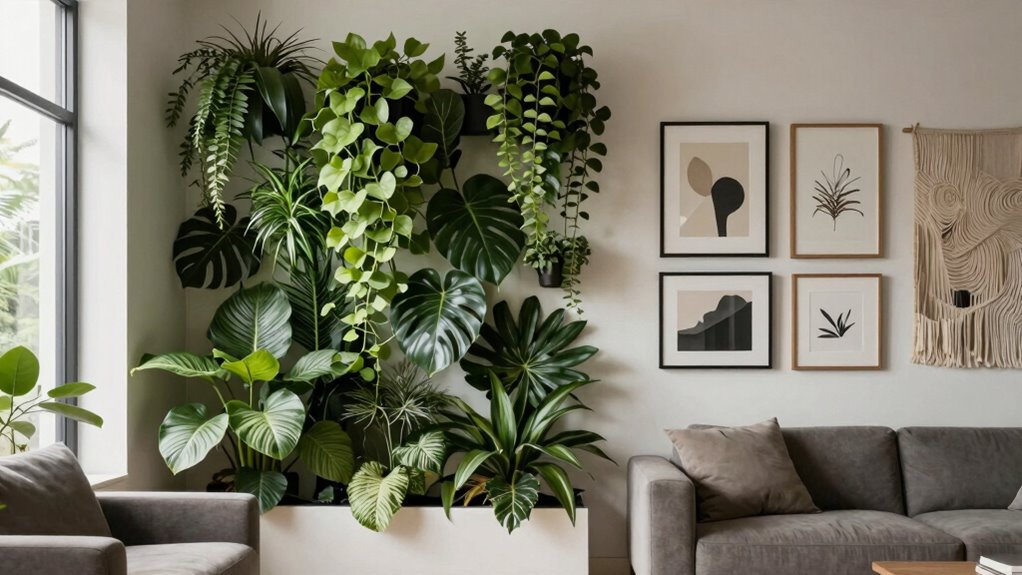

To seamlessly integrate indoor plant walls with other wall decor, start by using the plant wall as a central focal point. Place vintage posters or artwork with bold colors nearby to create visual contrast, and layer different styles for depth. Incorporate small shelves or ledges to display collectibles or photos, keeping some open space for balance. Use directional lighting to highlight textures and details, creating a vibrant, harmonious space. Keep exploring to discover more tips for a stunning, cohesive wall setup.
Key Takeaways
- Use the plant wall as a central anchor, arranging vintage posters or artwork around it for balance and cohesion.
- Incorporate layered decor with contrasting colors and textures to create visual interest without cluttering.
- Highlight both the plant wall and decorative pieces with strategic lighting to enhance textures and focal points.
- Position posters and framed art above or beside the plant wall, maintaining open space for a clean, curated look.
- Mix styles and elements like shelves or collectibles to complement the greenery and achieve an eclectic yet harmonious design.

Have you ever wondered how to transform a plain wall into a vibrant focal point? Incorporating an indoor plant wall is a fantastic way to bring life and freshness into your space. But to truly make it stand out, you can blend it seamlessly with other types of wall decor. Think of combining your lush greenery with vintage posters or even automobile art to create a balanced, eye-catching display. This approach not only adds depth and personality but also reflects your unique style.
Create a striking focal point by blending lush plant walls with vintage posters and artwork for a personalized, vibrant space.
When you start layering your wall decor, consider placing vintage posters or automobile art around the plant wall. These elements provide visual contrast that highlights the natural textures of plants. For example, a vintage poster with bold colors can pop against the green backdrop, drawing attention without overwhelming the space. Positioning these posters strategically—perhaps above or beside the plant wall—creates a cohesive look that feels curated rather than cluttered. The key is to maintain harmony by keeping the colors and themes complementary.
If you want a more eclectic vibe, you can mix different styles of wall art. Combine modern frames with rustic elements or monochrome photographs with colorful vintage posters. The indoor plant wall acts as a central anchor, offering a calming green background that balances the busier, more decorative pieces. When arranging your decor, leave some empty space to avoid overcrowding. This allows each element to breathe and helps the eye move smoothly across the wall. Incorporating visual contrast can enhance the overall aesthetic by making each piece stand out more vividly.
Lighting also plays a vital role. Use directional lighting to highlight both the plant wall and your other decor pieces. Spotlights can accentuate the textures of your plants while also illuminating vintage posters or automobile art, making your entire wall visually dynamic. If you’re feeling creative, consider integrating small shelves or ledges where you can display miniature collectibles or framed photos alongside your plant arrangements.

Bamworld Hanging Planters for Indoor Plants Wall Decor Living Room
- Unique Picture Frame Design: Decorative wall hanging plant shelves
- Space-Saving Vertical Storage: Maximizes wall and window space
- Customizable Plant Display: Easily switch plants for different occasions
As an affiliate, we earn on qualifying purchases.
As an affiliate, we earn on qualifying purchases.
Frequently Asked Questions
How Do I Choose the Best Plants for Indoor Wall Integration?
You should focus on plant selection that thrives indoors and suits your space’s lighting and humidity. Opt for low-maintenance plants like pothos or succulents if you’re busy. Consider a maintenance schedule to keep your wall healthy and vibrant, watering and fertilizing as needed. Match plants’ growth habits with your design, choosing compact or trailing varieties to create a cohesive, attractive look that complements your wall decor effortlessly.
What Lighting Conditions Are Ideal for Indoor Plant Walls?
You should provide your indoor plant wall with bright, indirect light to thrive. Natural sunlight is ideal, so place it near windows that offer plenty of daylight. If natural light is limited, supplement with LED lighting designed for plant growth, ensuring your plants get consistent, adequate illumination. This combination helps your plants stay healthy and vibrant, creating a lush, beautiful wall that complements your decor perfectly.
How Often Should I Water and Maintain Indoor Plant Walls?
You should water your indoor plant wall when the top inch of soil feels dry, typically once a week, but adjust based on your plants’ needs. Follow a consistent watering schedule to prevent over- or underwatering. Maintenance tips include checking for pests, trimming dead leaves, and ensuring proper drainage. Regularly inspect your plants to keep your wall vibrant and healthy, and adapt your care as seasons change.
Can Indoor Plant Walls Improve Indoor Air Quality?
Indoor plant walls can dramatically boost your air quality, making your space feel like a fresh, natural oasis. They excel at air purification and allergen reduction, removing toxins and pollen from the air you breathe. As a result, you’ll notice fewer allergies and cleaner air, creating a healthier environment. By adding these lush walls, you’re transforming your home into a sanctuary filled with oxygen and energy.
Are There Safety Concerns With Installing Plant Walls in Homes?
Yes, there are safety concerns with installing plant walls in homes. You should consider fire safety, ensuring your wall system is made of fire-resistant materials and properly wired. Also, check that the structural support can handle the weight of the plants, soil, and watering systems. Regular maintenance is essential to prevent mold or pests, which could compromise safety. Proper installation and ongoing care keep your plant wall safe and beautiful.

LANCHI95 15 Pcs Vintage Wall Art Decor, Vintage Posters for Room, Vintage Art Prints, Moody gallery wall art, Wall Print for Bedroom, Eclectic French Country Botanical Painting (Unframed)
- French Country Inspired Design: Vintage posters inspired by Provence homes
- Moody Vintage Wall Art: Landscape, flowers, and portrait prints
- Complete Wall Art Set: Includes various sizes and multiple pieces
As an affiliate, we earn on qualifying purchases.
As an affiliate, we earn on qualifying purchases.
Conclusion
Integrating indoor plant walls with other wall decor can truly elevate your space, creating a lush, vibrant atmosphere. When you combine greenery with art, mirrors, or textured panels, you enhance visual interest and make your room feel more inviting. Did you know that incorporating plants can boost mood and productivity by up to 15%? So, don’t hesitate—blend your plant wall with other decor elements to transform your home into a revitalizing sanctuary that energizes and inspires.

Bamworld Floating Shelves for Wall Planters Indoor Hanging Plant Shelves
- Ideal for Plant Display: Showcase plants in any room
- Space-Saving Design: Maximize wall space efficiently
- Versatile Wall Use: Suitable for small spaces and corners
As an affiliate, we earn on qualifying purchases.
As an affiliate, we earn on qualifying purchases.

iThird Battery Operated Wall Sconces Set of 2, 10000mAh, Black
- Wireless, Easy to Install: No wiring needed, simple wall mounting
- Long Battery Life: 20-60 hours illumination per charge
- Rechargeable via Type-C: Convenient charging with included cable
As an affiliate, we earn on qualifying purchases.
As an affiliate, we earn on qualifying purchases.