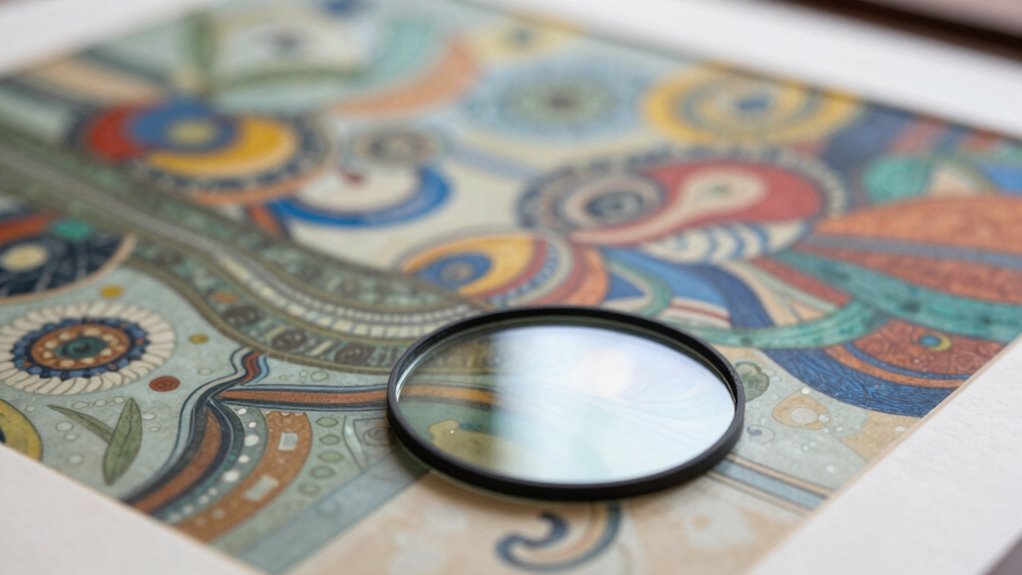

The simplest fix for glare on glass-covered art is to adjust your lighting angles. Keep lights at an angle rather than shining directly on the glass, which helps reduce reflections and glare. Use diffused or indirect lighting, and consider switching to matte or satin frames to minimize reflections from the frame itself. Proper placement—avoiding strong light sources like windows—improves visibility. If you want to learn more tips to perfect your display, keep exploring these effective strategies.
Listen free for 30 days with Audible
Thousands of audiobooks and originals — cancel anytime.
As an affiliate, we earn on qualifying purchases.
Key Takeaways
- Reorient the artwork so light hits at an angle rather than directly facing the glass.
- Use matte or satin frames to reduce reflections from surrounding lights.
- Diffuse overhead or direct lighting with lampshades, diffusers, or sheer curtains.
- Avoid placing art directly opposite windows or bright light sources.
- Adjust lighting angles and environment to minimize glare and enhance glass art visibility.
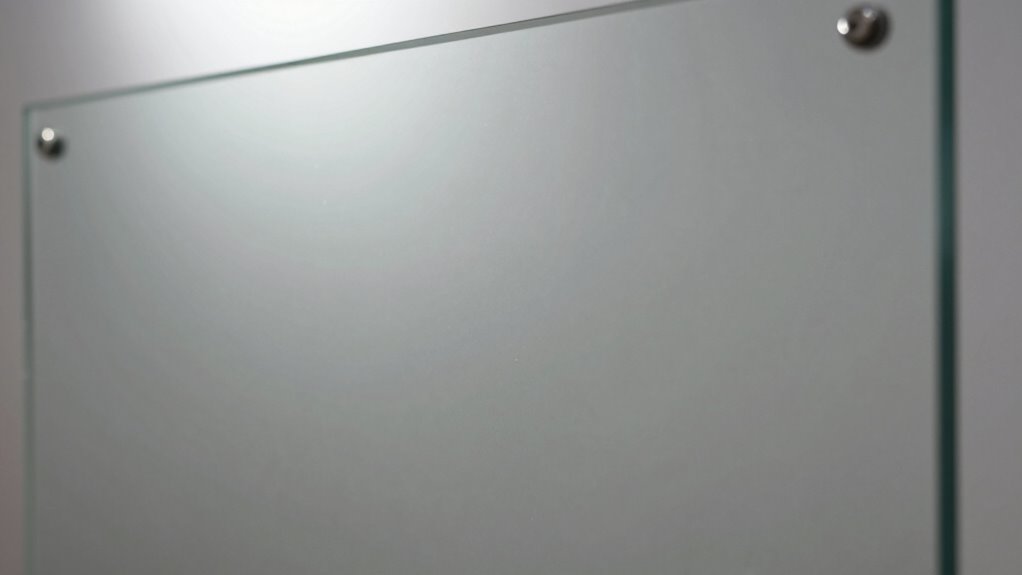
If glare on your glass art is ruining its beauty, don’t worry—there are simple fixes you can try. Glare often comes from the way light hits the glass, creating unwanted reflections that obscure the artwork. One effective way to reduce this is by adjusting the lighting angles around your piece. Instead of placing lights directly in front of the art, position them at an angle. This way, the light will bounce off the glass at less direct angles, minimizing reflections and glare. You might need to experiment with different positions to find the sweet spot where the light enhances rather than detracts from your piece.
Frame reflections also play a considerably role in glare issues. When light hits the glass, it often reflects off the frame behind or around the art. To combat this, consider using a non-reflective or matte finish on your frame. If that’s not an option, reposition the artwork or frame to avoid direct lines of sight from light sources. Sometimes, simply tilting the frame slightly or adjusting its position on the wall can dramatically cut down on reflective glare. Keep in mind that glossy or shiny frames tend to reflect more light, so switching to a matte or satin finish can make a noticeable difference. Additionally, choosing the right lighting environment can significantly reduce glare and improve visibility. Properly controlling ambient lighting is also crucial; bright, direct lights tend to cause more glare than indirect, diffused illumination. Using diffusers, lampshades, or even softening your light with sheer curtains can help spread the light evenly across the room. This creates a softer environment where glare is less likely to form. If you’re using spotlights, aim them away from the glass directly, and instead highlight the wall or space around the artwork. Adjusting the lighting setup with these considerations can help you fine-tune the conditions for optimal viewing. A well-planned lighting arrangement can make your glass art much clearer and more vibrant.
Finally, consider the placement of your art in relation to windows and other large light sources. If possible, avoid positioning your piece directly opposite a window or a bright light source. Instead, try to place it in a spot where natural light hits at an angle that doesn’t create reflections. Rearranging your space might seem minor, but it can substantially improve how your art looks, free of distracting glare. By paying attention to lighting angles, frame reflections, and environmental lighting, you’ll find that your glass art’s beauty shines through without unwanted reflections, revealing its true colors and details.
A beyond the surface approach to lighting and placement can help ensure your artwork remains the focal point, undistracted by glare.
diffused lighting lamps for artwork
As an affiliate, we earn on qualifying purchases.
As an affiliate, we earn on qualifying purchases.
Frequently Asked Questions
Does Glare Affect the Long-Term Preservation of Glass Art?
Glare doesn’t directly harm glass art, but light reflection can accelerate glass aging and cause damage over time. When glare is intense, it indicates high light exposure which can lead to fading and deterioration of the artwork beneath the glass. To preserve your glass-covered art, control light levels, reduce glare, and guarantee minimal direct sunlight, helping slow down aging and maintain its vibrant appearance for years.
Can Lighting Placement Reduce Glare Better Than Glass Coatings?
You can beat two birds with one stone by adjusting your lighting placement, often more effective than relying solely on coating alternatives. Proper lighting techniques, like angling lights away from the glass surface, considerably reduce glare, making your art more visible. While coatings can help, smart lighting is your best bet for glare reduction and preserving the artwork’s clarity, creating a more inviting and unobstructed viewing experience.
Are There Any DIY Solutions to Minimize Glass Glare?
Yes, you can try DIY coatings like anti-glare sprays to reduce glass glare, but results vary. Additionally, adjusting your display positioning is effective—angle the artwork to minimize reflections and avoid direct light sources. Combining these methods can greatly cut glare, making your art more visible. Just be cautious with DIY coatings to ensure they don’t damage the glass or obscure the artwork beneath.
How Does Glass Thickness Influence Glare Intensity?
Imagine looking through a window—thinner glass feels like a clear, crisp view, while thicker glass can distort or block light. Thicker glass reduces glare by lowering glass transparency, which means less light passes through directly. It also diffuses light more effectively, scattering it and diminishing sharp reflections. So, increasing glass thickness can considerably cut down glare intensity, making your art easier to enjoy without unwanted reflections.
What Professional Services Are Available for Glare Removal?
You can turn to professional services that specialize in glare removal, such as custom coatings and professional cleaning. These experts apply anti-reflective coatings tailored to your glass, markedly reducing glare without compromising clarity. They also offer thorough cleaning to remove fingerprints and smudges that contribute to glare. By choosing experienced professionals, you guarantee your glass-covered art remains vibrant and visible, free from distracting reflections.
As an affiliate, we earn on qualifying purchases.
Conclusion
Now that you know the simple fix for glare on glass-covered art, you can enjoy your masterpieces without straining your eyes or missing out on the details. Just remember, a little adjustment can make a big difference in how you experience your artwork. Isn’t it worth trying a quick fix to see your art in its full glory? So go ahead, give it a shot, and bask in the beauty without the unwanted reflections.
anti-glare glass for art display
As an affiliate, we earn on qualifying purchases.
As an affiliate, we earn on qualifying purchases.
As an affiliate, we earn on qualifying purchases.
Fall Picks
fall essentials
As an affiliate, we earn on qualifying purchases.