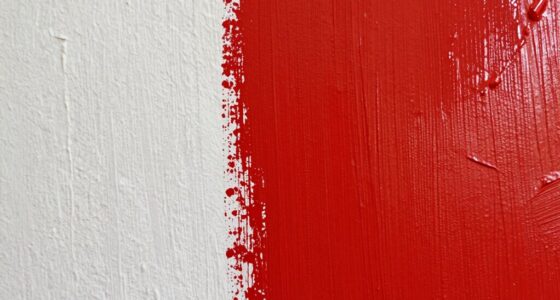
Applying thick paint coats on interior walls often backfires because it causes uneven drying, trapping moisture that leads to peeling, bubbling, or blistering. Heavy layers don’t bond well, which increases the risk of cracking and chipping over time. Rushing the application or skipping proper surface prep makes things worse. Using thin coats allows for even drying and better adhesion, ensuring a smoother, longer-lasting finish. Keep exploring to learn how to achieve perfect results.

Get furniture and decor delivered free — and shop member deals
- Fast, free delivery on millions of items
- Access to Prime Big Deal Days deals on October 6–7
- Prime Video, Amazon Music and more included
Key Takeaways
- Thick coats prevent proper drying, trapping moisture that can cause bubbling and peeling.
- They reduce paint adhesion, increasing the risk of cracking, chipping, and uneven surface finish.
- Excessive paint thickness leads to uneven drying, resulting in streaks and lap marks.
- Thick layers are more prone to cracking as they don’t flex with surface movement over time.
- Applying thin coats allows for better adhesion, even drying, and a durable, smooth finish.
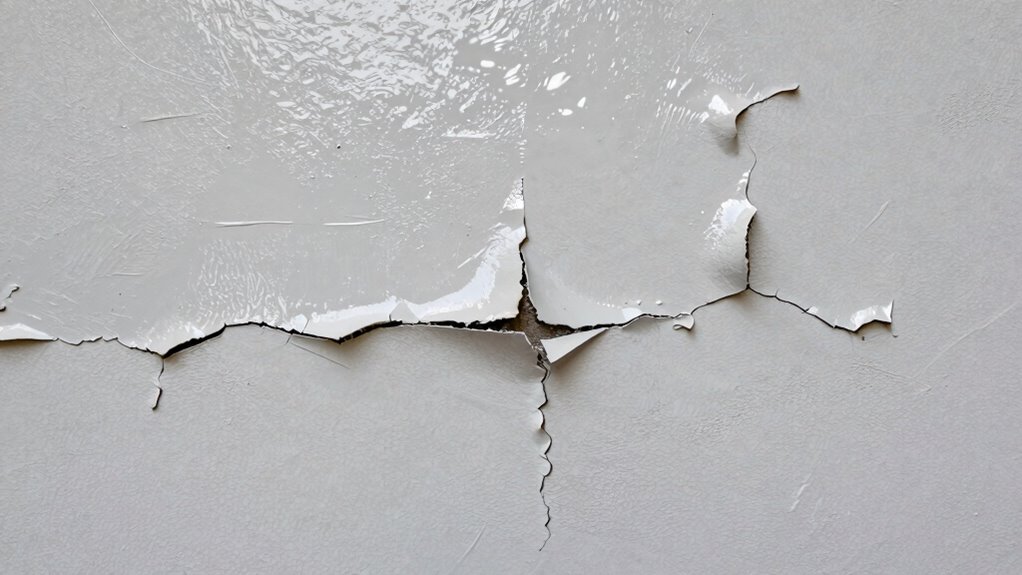
Applying thick coats of paint on interior walls may seem like a quick way to achieve a vibrant finish, but in reality, it often leads to more problems than benefits. One of the main issues with heavy paint layers is poor paint adhesion. When you apply paint too thickly, it can create a surface that doesn’t bond properly to the wall underneath. This lack of adhesion makes the paint more prone to peeling, cracking, or bubbling over time. To avoid this, you need to focus on proper surface preparation before painting. Surface preparation involves cleaning the wall thoroughly, repairing any cracks or holes, and sanding rough areas. Skipping or rushing this step can cause the paint to stick unevenly, especially when applying thick coats. Instead, you should prepare the surface meticulously, ensuring it’s smooth and clean, which allows the paint to adhere better and last longer.
Another reason thick coats backfire is that they dry unevenly. When you pile on paint in thick layers, the outer surface dries faster than the inner layers. This can trap moisture inside, leading to issues like blistering or bubbling as the trapped moisture tries to escape. It also increases the risk of streaks or lap marks because the paint doesn’t level out properly. Applying multiple thin coats is a better approach to achieve a consistent, vibrant finish. Thin coats dry more evenly, and you can build up the color and opacity gradually without risking the problems associated with thick layers.
Thick paint layers also tend to crack or chip over time, especially if the underlying surface shifts or if the paint isn’t given enough time to cure properly. When you rush the process, you may be tempted to apply another coat before the previous one is fully dry, which exacerbates the problem. Patience is key—allow each coat to dry completely before adding another. This ensures the layers bond well and reduces the chance of future cracks or peeling.
As an affiliate, we earn on qualifying purchases.
Frequently Asked Questions
How Can I Fix Thick Paint Drips on Walls?
You can fix thick paint drips by carefully scraping or sanding them down once dried. Start with gentle surface preparation, using a putty knife or sandpaper to smooth the area. Then, apply thin, even coats using proper painting techniques to prevent future drips. Always make certain the wall is clean and dry before repainting. This approach helps achieve a smooth finish and avoids the problems caused by thick paint layers.
What Are the Best Tools for Applying Thin Coats?
For applying thin coats, you should choose a high-quality roller suited for smooth finishes and use brush techniques like light, even strokes to control the paint. Opt for a roller with a fine nap to avoid excess paint buildup. Keep your brush or roller loaded with just enough paint, and work steadily to prevent drips or uneven layers. Proper tool selection and technique guarantee a smooth, professional-looking finish.
Does Primer Help With Thick Paint Layers?
Yes, primer helps with thick paint layers. Studies show proper surface preparation can reduce paint issues by 60%, making primer essential. It creates a uniform paint texture, improves adhesion, and prevents peeling. When applying thick coats, primer guarantees the surface is prepared, reducing the risk of uneven drying or cracking. Always use a quality primer to help your paint layers bond better and last longer.
Can Thick Paint Coats Be Repaired After Drying?
Yes, you can repair thick paint coats after drying, but it’s tricky. To improve paint texture and guarantee a smooth finish, lightly sand the area first. Be patient with the drying time, allowing the paint to cure fully before applying a fresh coat or touch-up. Applying thinner layers in the future helps avoid uneven textures and reduces the risk of peeling or cracking, making repairs easier and more effective.
Are There Specific Paint Types Better for Thick Coats?
You should choose paints with a thinner, more fluid consistency for thick coats, as they spread more evenly and reduce issues like cracking or peeling. Look for paints formulated for thicker application or that have a higher viscosity designed for heavy coverage. Use proper application techniques, such as applying in multiple thin layers rather than one thick coat, to guarantee durability and a smooth finish. This approach prevents problems associated with overly thick paint layers.
As an affiliate, we earn on qualifying purchases.
Conclusion
So, next time you’re tempted to slap on a thick coat of paint, think twice. It might seem like a quick fix, but it often leads to drips, uneven textures, and future peeling. Believe me, your walls will thank you if you take your time with multiple thin layers instead. Sometimes, patience truly pays off—saving you time, money, and frustration in the long run. Trust me, your walls deserve the best care.
As an affiliate, we earn on qualifying purchases.
As an affiliate, we earn on qualifying purchases.
Fall Picks
fall essentials
As an affiliate, we earn on qualifying purchases.