
TL;DR

Get furniture and decor delivered free with Prime
- Fast, free delivery on millions of items
- Prime Video, Amazon Music and more included
- Member-only deals all year
Skirted furniture is reappearing in home design, from sofas and dining chairs to sinks and cabinets, according to a House Beautiful report featuring interior designers. Their advice is to use it selectively, match the skirt’s shape and fabric to the room, and prioritize crisp tailoring. The report does not provide sales figures or other data measuring how widely the trend has spread.
Skirted furniture is reappearing in home design, with designers applying fabric coverings to pieces such as sofas, dining chairs, bed frames and sinks, according to a House Beautiful report. The designers interviewed describe the detail as a way to add softness and pattern, while cautioning that careful placement and tailoring help it look intentional rather than like a cover-up.
The report describes skirted furniture as a familiar feature of 1980s and 1990s interiors and traditional English country-house style that is now being adapted for a range of rooms and design approaches. The examples include a pleated skirt in a Victorian-era scullery, a gingham-covered breakfast nook, and a sink skirt in a laundry room. These are individual design projects, not evidence of measured sales or a quantified increase in popularity.
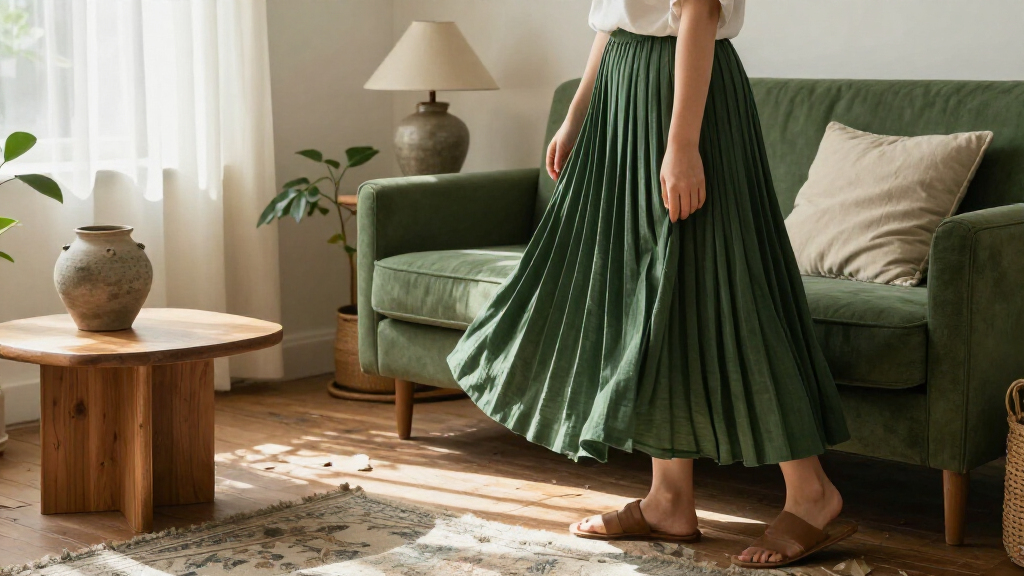
Designers say the shape of the skirt should suit the room. Claire Staszak of Centered by Design distinguishes between straight, pleated, gathered and ruffled styles, saying a straight skirt can suit a contemporary interior while a ruffle is more fitting for a country or French-inspired room. Interior designer Heather French likewise says a crisp box pleat and a relaxed gathered skirt create different effects, even when used in varied styles of home.
Several designers advise restraint. Bridget Tiek, principal designer at Louisiana-based TIEK BYDAY, says one skirted item per room is generally enough, especially when the fabric has a bold pattern. Staszak notes that skirts can provide an opportunity to use smaller-scale, all-over textile patterns. French recommends professional work on the skirt and its hardware when a homeowner cannot achieve clean seams and a well-fitted finish themselves.
A Softer Detail for Modern Rooms
The renewed interest in skirts points to a practical, visible design choice: adding fabric to an existing furniture piece or architectural feature can change how a room feels without replacing the item. Tiek says skirts can be added to existing furniture and even to sinks or cabinets. That makes the idea relevant to homeowners looking to refresh a space through textiles and workmanship, rather than treating it solely as a furniture-purchasing trend.
The designers connect the look with a desire for rooms that feel less stark. French says fabric can soften a space and make it feel more welcoming, while Staszak describes the appeal as a sense of authenticity and charm. Those are the designers’ interpretations, not findings from consumer research cited in the report. For readers, the key takeaway is that the effect depends on the item, fabric and room around it—a skirt is not automatically suited to every interior.
Products Worth Considering

Ring Battery Doorbell (1st Gen), 2-Pack, Satin Nickel

Dyson Cyclone V10 Origin Cordless Vacuum

Bose TV Speaker (2nd Gen) Compact Soundbar with Bluetooth and HDMI-ARC, Black
As an affiliate, we earn on qualifying purchases.
From Country Style to New Uses
Furniture skirts have associations with traditional interiors, including English country-house decor, and were also a recognizable feature of home design in the 1980s and 1990s. The report says the detail is now appearing on a broader range of objects, from sofas and settees to bed frames, breakfast banquettes and sinks. It presents this as a design trend observed by the interviewed designers, rather than as a trend supported by market data.
The designers frame the comeback as part of a move away from minimalist rooms and toward more softness, pattern and decorative detail. The report’s project examples show how application changes the result: a pleated skirt is used in a Victorian scullery, while gingham brings contrast to a breakfast nook and laundry room. The relevant background is not that all skirted furniture looks alike, but that fabric, gathering and tailoring can make the same basic detail read as traditional, playful or relatively contemporary.
“With the rise of traditional design becoming more widely accepted, especially by younger generations, details like skirted sinks, skirted dining chairs, and sofas can be seen everywhere.”
— Claire Staszak, founder of Centered by Design
How Broad Is the Resurgence?
The report offers designer observations and project examples, but no data on furniture sales, search activity, consumer surveys or how many homes now use skirted pieces. The description of the trend as appearing widely reflects the designers’ experience and the publication’s reporting; its scale and pace cannot be established from the supplied material. It is also unclear whether the renewed interest will last or remain a design preference concentrated among particular styles and projects.
The source does not set out prices, maintenance requirements or a standard method for fitting skirts to different furniture. Those details can vary by item, fabric and construction. The article’s recommendations are design guidance from its interviewees, not technical specifications for every piece.
Choosing the Right Skirt
For homeowners considering the look, the designers’ advice is to start with one piece in a room, then select a fabric and skirt shape that fit the surrounding decor. Small-scale or all-over patterns may work well on gathered fabric, Staszak says, while a straight skirt can appear cleaner in a contemporary room. Homeowners should also consider whether the fabric’s color, pattern and finish work with the room’s existing materials.
Before making or ordering a skirt, French recommends considering the quality of the seams and hardware and hiring a professional if the work would otherwise look untidy. The report does not identify a next industry milestone or provide a forecast; its immediate guidance is practical rather than predictive. Whether skirted furniture becomes a lasting fixture will depend on how homeowners and designers continue to use it beyond the projects described.
Key Questions
What is skirted furniture?
Skirted furniture has fabric attached around its base or lower portion, covering some or all of the legs. The detail can be used on pieces such as sofas, chairs, beds, sinks and cabinets.
How many skirted pieces should go in one room?
Designer Bridget Tiek recommends about one skirted item per room, particularly if its fabric has a bold pattern. This is design advice, not a fixed rule for every interior.
Which skirt style suits a contemporary room?
Claire Staszak says a straight skirt can look chic in a contemporary setting. She contrasts it with ruffled styles, which she considers more suitable to French or country aesthetics.
Should a furniture skirt be a DIY project?
It depends on the maker’s skills and the desired finish. Heather French warns that an untidy DIY skirt can look sloppy and recommends professional tailoring and hardware work when a homeowner cannot produce a crisp result.
Source: housebeautiful.com