TL;DR

Get furniture and decor delivered free with Prime
- Fast, free delivery on millions of items
- Prime Video, Amazon Music and more included
- Member-only deals all year
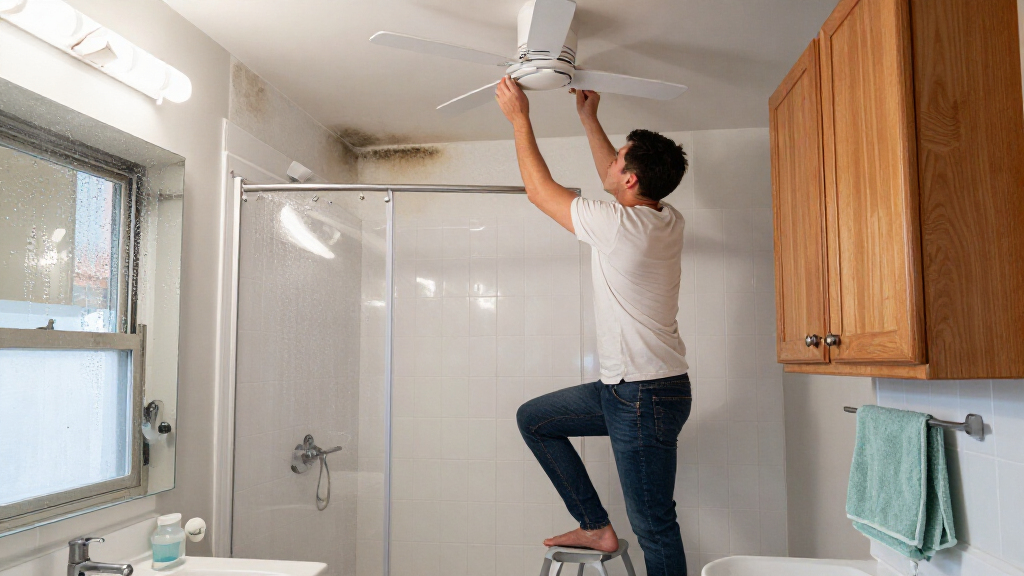
A Hunker home-improvement report identifies a common bathroom ventilation mistake: turning off the exhaust fan soon after showering, while moisture remains in the room. It recommends running a properly sized fan before and during a shower and for 30 to 50 minutes afterward; the report does not provide new testing or evidence that this timing will prevent mold in every bathroom.
A Hunker report says a common bathroom exhaust-fan mistake is switching it off shortly after a shower, before lingering moisture has been cleared. The article recommends running a properly sized fan before and during showering and for 30 to 50 minutes afterward, while noting that ventilation can help reduce moisture rather than guarantee mold prevention.
Bathrooms are prone to dampness because showers release moisture into spaces that may have limited airflow. Hunker says steam can condense on cooler surfaces, including areas around tile grout and drywall, leaving moisture that may support mold growth. The report describes running an exhaust fan during a shower as helpful, but says stopping it only a few minutes after the water is turned off may leave moisture in the room.
The suggested correction is to keep the fan running after showering: Hunker recommends 30 to 50 minutes, in addition to running it before and during the shower. It also says the fan should be sized appropriately for the bathroom. The report offers no measurements, testing results, or details about fan capacity, so its timing guidance is not a guarantee that every bathroom will dry fully in that period.
To make extended operation easier, the article points to programmable timers and moisture-sensing fans. It also advises keeping the bathroom door closed while the fan is operating, while saying air should be drawn through the gap beneath the door. These are recommendations in the report, not findings from a cited study or an inspection of any particular home.
How Fan Timing Affects Bathroom Moisture
The practical issue is that a fan running during a shower may still leave damp air and wet surfaces afterward. If moisture remains around grout, walls, or other surfaces, it can contribute to conditions associated with mold. Extending fan operation is a relatively simple step homeowners can try, but it does not establish the cause of mold in a specific bathroom or replace addressing an existing leak or other source of water.
The advice also matters because a fan’s effectiveness depends on whether it can move air out of the room and is suitable for the space. A timer may help prevent someone from turning the fan off too soon, but the supplied report does not quantify how much moisture a particular fan removes or demonstrate that its recommended run time works in all homes.
Products Worth Considering

Dyson V8 Cordless Vacuum

Ring Outdoor Cam 4K Plus Battery Security Camera, 3-Pack, White

Bose S1 Pro+ Portable PA Speaker
As an affiliate, we earn on qualifying purchases.
The Report’s Ventilation Advice
Hunker’s article focuses on how long the fan runs, rather than on a newly announced product, regulation, or scientific study. Its basic explanation is that shower steam can condense on cooler surfaces and that an exhaust fan is intended to move moist air outdoors. The supplied material does not cite research for its statement that trapped moisture may lead to mold within 24 hours, so that timing should be treated as a claim in the report, not a universal threshold.
The article adds that airflow matters: while the bathroom door is closed during fan operation, air should be able to enter beneath it. It mentions mechanical timers and moisture-sensing fans as ways to keep ventilation running after a shower. It does not specify a model, installation method, code requirement, or fan-sizing calculation.
““Run your exhaust fan before, during, and after showering.””
— Hunker report
What the Timing Guidance Cannot Establish
The supplied report does not identify a study behind its recommendations or state how the 30-to-50-minute interval was determined. It also does not give a fan’s required capacity, account for different bathroom sizes and layouts, or show that running a fan for that period will prevent mold in all circumstances.
It is not clear from the article whether a reader’s fan is vented outdoors, functioning properly, or powerful enough for the room. The report also does not diagnose existing mold or distinguish condensation from leaks or other sources of dampness. Its advice is general; the cause of persistent moisture or mold in an individual home remains a separate question.
Practical Checks for Homeowners
Homeowners following the report can try leaving the fan on after showering and check whether the room and surfaces dry, while confirming that the fan is appropriate for the bathroom. A timer or moisture-sensing control may make extended operation easier, according to Hunker. The article does not provide installation instructions; electrical work or changes to ventilation should be handled by a qualified professional where required.
If dampness or mold persists despite ventilation, the report’s timing suggestion alone may not address the problem. The next step is to identify the source of moisture and assess whether the fan and its exhaust route are working as intended. No further testing or official guidance is included in the supplied source material.
Key Questions
How long does Hunker recommend running the fan after a shower?
The report suggests keeping it on for 30 to 50 minutes after showering, as well as before and during the shower. It does not establish that this duration is right for every bathroom.
Why might turning the fan off quickly matter?
Hunker says moisture can remain in the room after the shower ends. If it condenses on cooler surfaces, lingering dampness may contribute to mold growth.
Will a longer fan run prevent all bathroom mold?
No guarantee is provided. The report presents longer operation as a way to help remove moisture, but it does not rule out other causes such as leaks or show that the advice prevents mold in every home.
What can help keep the fan running long enough?
Hunker suggests a programmable timer or a moisture-sensing fan. It also says to keep the door closed while the fan runs and allow air to enter through the gap beneath it.
Source: rss