
TL;DR

Get furniture and decor delivered free with Prime
- Fast, free delivery on millions of items
- Prime Video, Amazon Music and more included
- Member-only deals all year
The current memory market favors buying the DDR5 capacity users actually need now, rather than waiting for cheaper prices or DDR6. Source material points to price pressure lasting into 2028 and DDR6 desktop adoption around 2027, with early parts expected to cost more.
PC buyers facing high memory prices are being advised to buy the DDR5 they need now instead of waiting for DDR6, according to a late-June 2026 buyer guide from Thorsten Meyer AI. The guidance matters because forecasts cited in the source put meaningful price relief no earlier than 2028, while DDR6 is expected to arrive first in servers before reaching mainstream desktops.
The guide’s core recommendation is direct: build on DDR5, avoid starting a new system on DDR4, and do not delay a needed purchase for DDR6 unless the workload is unusually bandwidth-bound. It describes DDR5-6000 with CL30 timings as the current value point for mainstream AMD and Intel systems.
For capacity, the source recommends 32GB for gaming and general desktops, and 64GB for content creation or heavier multitasking. It warns that buying 128GB “to be safe” can lock in high prices for memory that may sit unused through the shortage.
The guide also flags a platform split. CUDIMM modules may help stabilize higher-speed DDR5 on newer boards, while workstation buyers are told to check motherboard QVL support before filling multiple memory slots, especially as more high-end platforms favor registered memory.
DDR5 now, DDR6 soon
A buyer’s field guide. The 20-year instinct — wait for prices to drop, or wait for the next generation — is broken this cycle. Buy the DDR5 you actually need now; don’t wait for DDR6. Here’s the reasoning.
Driven to end-of-life, production slashed. Same money, dead-end socket. Leave a working DDR4 box alone — but never start a new build on DDR4 to “save.”
A framework, not a gamble. Buy the DDR5 you need now, at the sweet spot, in the capacity you’ll actually use — don’t buy DDR4, don’t wait for DDR6. The two costliest mistakes in this market are the ones that feel prudent: waiting for a price drop that isn’t coming, and waiting for a next-gen part that launches dearer than what’s on the shelf. Next: The SSD Squeeze.
DDR5 Becomes The Practical Buy
The advice runs against the pattern many PC buyers followed for years: wait for prices to fall or for the next memory generation to offer better value. In this cycle, the source says waiting may cost more because near-term DDR5 prices are more likely to rise than fall.
That matters for gaming PCs, creator systems, workstations and company hardware budgets. A buyer who delays a needed build could miss CPU and GPU gains while still facing a higher entry price when DDR6 platforms become available.
As an affiliate, we earn on qualifying purchases.
DDR6 Arrives First In Servers
The source places DDR6 server availability around 2026 to 2027, with mainstream desktop adoption expected around 2027. It says DDR6 will use new platforms and is expected to launch at roughly two to three times DDR5’s price per gigabyte.
Technical details cited in the source describe DDR6 as moving from DDR5’s two 32-bit sub-channels to four 24-bit sub-channels, with speeds listed from 8,800 MT/s to 17,600 MT/s. The guide says the bandwidth gain may matter most for AI, machine learning and scientific computing, not ordinary gaming PCs.
“Buy the DDR5 you actually need now; don’t wait for DDR6.”
— Thorsten Meyer AI buyer guide
As an affiliate, we earn on qualifying purchases.
Pricing Relief Remains Unsettled
The exact path of DDR5 pricing is still uncertain. The source cites forecasts for relief no earlier than 2028, but memory markets can change with factory output, AI demand, OEM contracts and platform adoption.
It is also not yet clear how fast DDR6 desktop boards will reach ordinary buyers, how broad early compatibility will be, or whether launch pricing will match the source’s cited two-to-three-times premium. Those points remain market expectations, not settled retail facts.
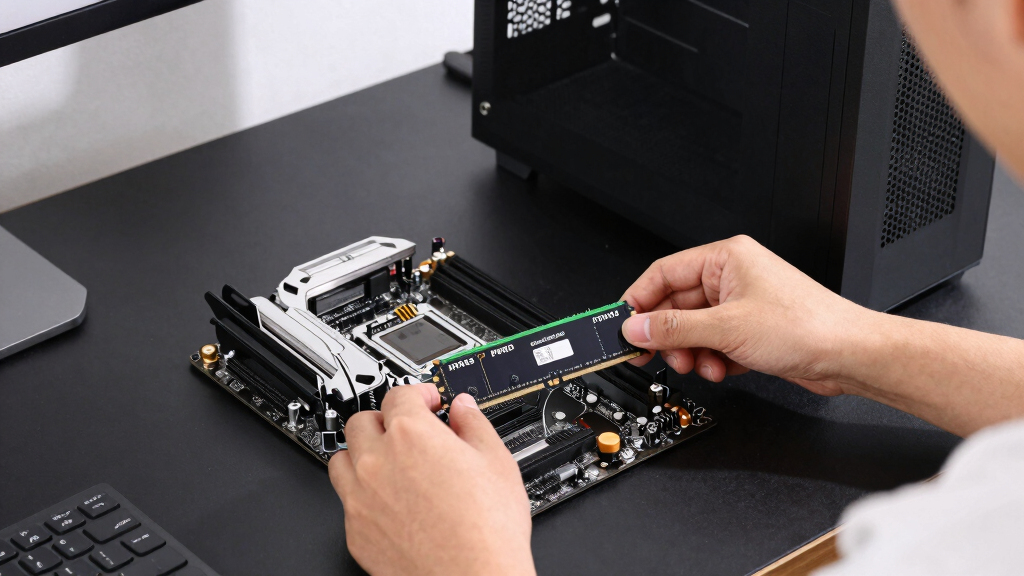
high performance DDR5 memory for gaming
As an affiliate, we earn on qualifying purchases.
As an affiliate, we earn on qualifying purchases.
Buyers Face Near-Term Decisions
The next step for buyers is workload-based sizing: choose 32GB, 64GB or more based on current use, confirm motherboard support, and avoid paying extra for speed tiers that bring little real-world gain. The guide says the main exceptions are bandwidth-bound AI or scientific workloads and long-life workstation builds that can absorb early DDR6 costs.
As an affiliate, we earn on qualifying purchases.
Key Questions
Should most PC buyers wait for DDR6?
No. Based on the source, most buyers should not wait because DDR6 is expected to reach desktops later and launch on new, higher-cost platforms.
What DDR5 kit is recommended now?
The guide points to DDR5-6000 CL30 as the value point for mainstream AMD and Intel systems, with faster kits offering limited gains for many users.
Is DDR4 still a good budget option?
The source says DDR4 is a poor new-build choice because prices can be close to or higher than DDR5 per gigabyte, while the platform path is more limited.
Who may benefit from waiting for DDR6?
The likely exceptions are AI, machine-learning and scientific-compute users whose workloads are limited by memory bandwidth, plus long-life workstation buyers with room for early-adopter costs.
Source: Thorsten Meyer AI
Halloween Picks
halloween
As an affiliate, we earn on qualifying purchases.