
By applying the 3-sample rule, you test three small paint samples of different shades or finishes in your space to see how they look under various lighting. This process helps you avoid costly mistakes, reveals how colors change in different environments, and guarantees the final result matches your expectations. Pay attention to application techniques and environmental effects to make sure you choose the best option. Keep exploring to learn more about making confident paint choices.
Key Takeaways
- Test three different shades or finishes to see how each looks in your space before committing.
- Observe how colors appear under various lighting conditions, including natural and artificial light.
- Pay attention to application details like brush strokes and drying times to ensure accurate results.
- Assess long-term durability, including fading, staining, and environmental resistance.
- Choose eco-friendly, lightfast paints to ensure sustainability and lasting vibrancy.
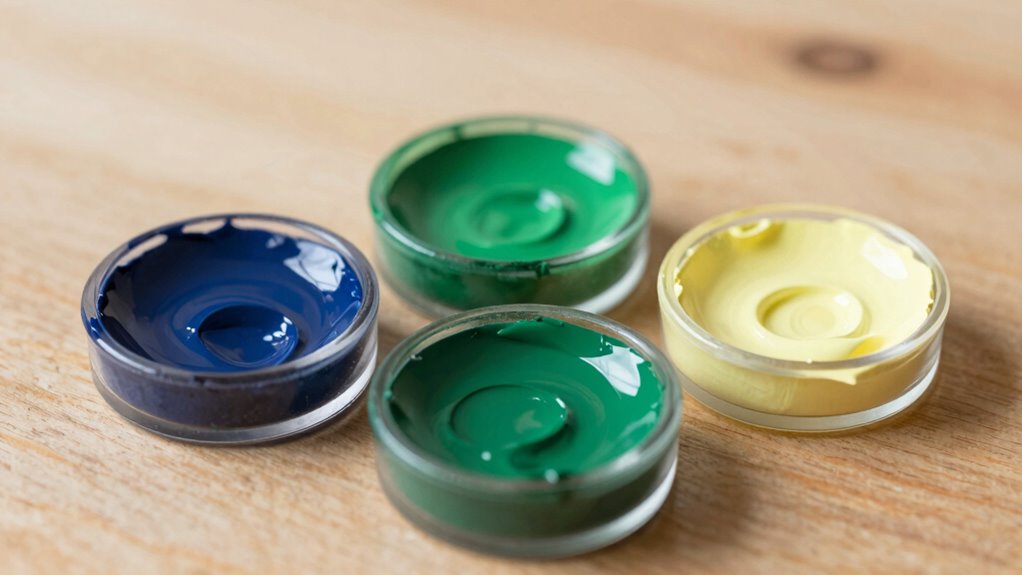
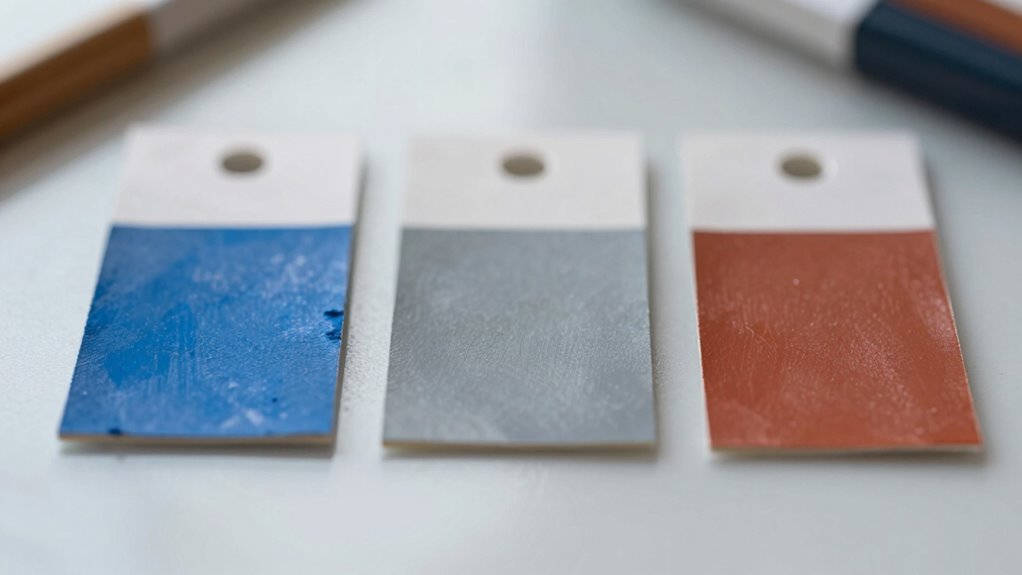
When testing paint to verify it matches your expectations or suits your project, applying the 3-Sample Rule can save you time and prevent costly mistakes. This simple approach involves trying out three small samples of different shades or finishes before committing to a full application. By doing so, you get a clearer idea of how the paint will look in your space, under your lighting conditions, and over your chosen surface. It’s a smart way to avoid surprises once you’ve painted an entire wall or piece of furniture.
One of the key benefits of using the 3-Sample Rule is gaining insight into color durability. While a color might look perfect in the store or on a paint chip, it can change once applied and exposed to sunlight, moisture, or everyday wear. Testing multiple samples allows you to observe how each color holds up over time and under different environmental conditions. You can also assess how well the paint resists fading or staining, which is especially important for high-traffic areas or rooms with a lot of natural light. This proactive step guarantees you’re choosing a hue that remains vibrant and true for years to come.
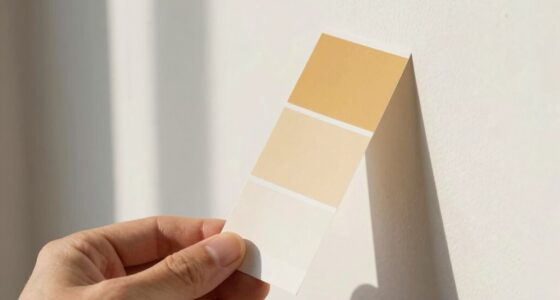
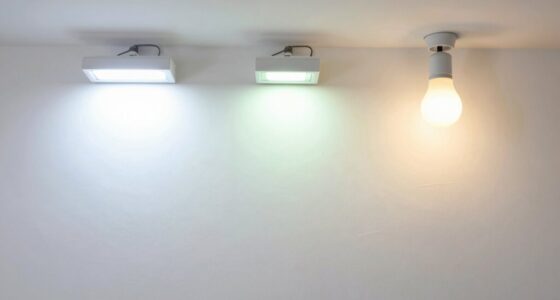
Application techniques are equally essential during this testing phase. When applying your samples, pay attention to your brush or roller strokes, the thickness of the coats, and drying times. These factors influence the final appearance and can reveal how well the paint adheres and levels out on your surface. Proper application techniques ensure that your samples truly reflect the finished look, helping you decide whether the paint’s texture and finish meet your standards. It’s also wise to test in different lighting conditions—natural daylight, evening light, and artificial lighting—to see how the color shifts throughout the day. This thorough testing prevents unpleasant surprises after the entire project is complete. Additionally, understanding paint durability can help you select colors that maintain their vibrancy and integrity over time, especially in environments exposed to sunlight or moisture. Being aware of environmental effects emphasizes the importance of lightfastness in your selection process to ensure longevity. Furthermore, considering the environmental impact of your chosen paint can contribute to sustainable living by opting for eco-friendly options that reduce harmful emissions.

YGAOHF 36 Pcs Empty Paint Pots, Small Paint Containers with Lids, Easy Open Acrylic Paint Cups with Lid Paint Strips for Kids Classroom School Painting Art Supplies
5 ML LARGE PAINT POTS WITH LIDS: You will get 6 strips of large empty paint pots, total…
As an affiliate, we earn on qualifying purchases.
As an affiliate, we earn on qualifying purchases.
Frequently Asked Questions
How Long Should I Wait Between Testing Each Paint Sample?
You should wait at least 24 hours between testing each paint sample to guarantee proper drying time and accurate assessment of color consistency. Rushing the process can lead to misleading results because the paint needs time to fully cure. By giving each sample enough time to dry, you can compare the true colors and finishes without interference from residual moisture, making your final choice more confident.
Can I Use the 3-Sample Rule on All Types of Paint?
Sure, you can use the 3-sample rule on all types of paint, but don’t expect it to resolve every mystery of paint durability or color consistency. Some paints, like specialty or industrial types, demand more rigorous testing. This rule is your trusty sidekick, ensuring you’re not blindsided by poor coverage or fading. Just remember, not all paints play by the same rules—so test wisely, and keep your expectations realistic.
What Tools Are Best for Collecting Paint Samples?
You should use a clean, sharp utility knife or a sample puller to collect paint samples, guaranteeing minimal disturbance to the surface. Sampling techniques like scraping or using a paint key help gather sufficient material for accurate color matching. Make sure your tools are sanitized to avoid contamination. Accurate sampling ensures you get true color matches, so select your tools carefully for the best results in color matching and testing.
How Do Lighting Conditions Affect Paint Testing Accuracy?
Softly illuminating your space, lighting conditions subtly influence your perception of color consistency, making it essential to take into account lighting calibration. Poor lighting can lead to misjudging paint shades, resulting in less accurate test results. To guarantee true color matching, test samples under consistent, natural light or calibrated lighting setups. This way, you avoid surprises and make confident decisions, knowing your paint choices align perfectly with your expectations.
Is There a Specific Order to Test Different Paint Colors?
You should test your paint colors in a specific order, starting with the lightest shade and progressing to darker ones. This helps maintain color consistency and prevents darker colors from muddying lighter samples. Also, test different finish variations separately, as finishes can alter how colors appear. By following this sequence, you guarantee accurate comparisons and avoid confusion caused by finish differences or accidental color transfer, leading to better overall results.

Mighty Board Minis Polystyrene Paint Color Test Panels, 12" x 9", Set of 5, White
PERFECT SAMPLES: These 12" x 9" white, styrene panels provide a smooth, warp-free surface for testing up to…
As an affiliate, we earn on qualifying purchases.
As an affiliate, we earn on qualifying purchases.
Conclusion
Remember, the 3-sample rule isn’t just a guess — it’s backed by science. Testing three samples helps you confirm color accuracy, durability, and finish, reducing the risk of surprises later. Think of it as a small investment for big peace of mind. By applying this simple rule, you’re more likely to choose paint that truly matches your expectations. Trust the process, test thoroughly, and paint with confidence — it’s the smartest way to avoid regret.

EVOLVE Interior Paint & Primer, Eggshell (Cloud White), 1 Gallon – One-Coat Coverage, Excellent Hide, Low VOC, Low Odor, Washable Paint for Walls, Doors & Trim
PAINT + PRIMER IN ONE: Evolve’s paint-and-primer formula helps you get great coverage from the start, sealing your…
As an affiliate, we earn on qualifying purchases.
As an affiliate, we earn on qualifying purchases.
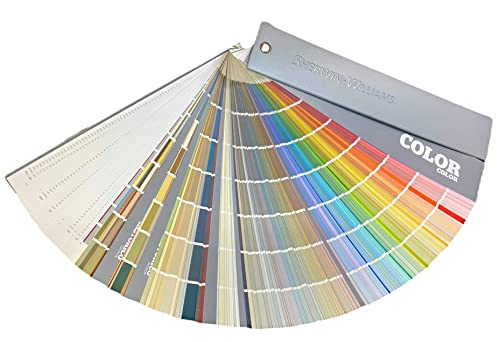
Sherwin Williams Colors collection Deck Complete Paint Colors
As an affiliate, we earn on qualifying purchases.
As an affiliate, we earn on qualifying purchases.