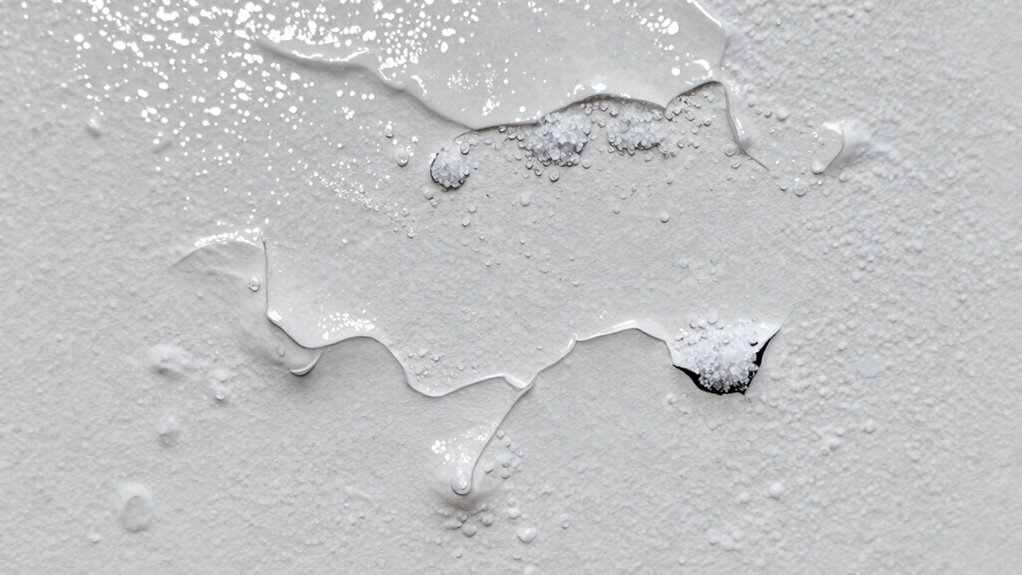

Blistering interior paint often hides a salt migration problem, where salts from building materials or the environment move through walls with moisture. When water dissolves these salts, they travel to the surface, crystallize, and push the paint away. This process can weaken adhesion and cause peeling, even if it looks like just moisture issues. To fix it, you need to understand how salt movement affects your walls—stay tuned for more details on how to address this hidden problem.
Key Takeaways
- Salt deposits beneath paint weaken adhesion and cause blistering through crystal growth and pressure buildup.
- Salt migration involves moisture dissolving salts and transporting them to the surface during evaporation.
- Fluctuating humidity and leaks facilitate moisture movement, exacerbating salt migration and blister formation.
- Proper surface cleaning, drying, and salt-resistant primers are essential to prevent blistering caused by salts.
- Addressing underlying moisture and salt issues is crucial to prevent recurrent blistering of interior paint.
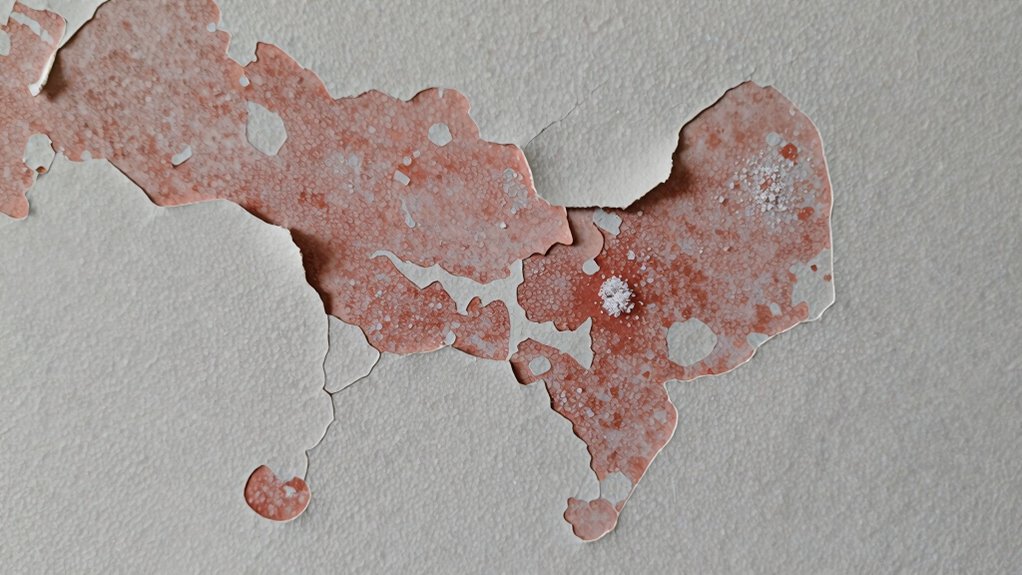
Blistering interior paint often points to a hidden culprit: salt deposits beneath the surface. When you notice bubbles or blisters forming on your walls, it’s easy to assume moisture is the sole issue. However, salt migration plays a key role in this damage. Salt deposits can move through the wall’s surface, carrying moisture with them and disrupting the paint’s ability to stick properly. This process weakens paint adhesion, causing it to lift and peel away over time. Understanding how salt migration works helps you identify the root cause rather than just treating the surface symptoms.
Blistering paint often signals hidden salt deposits beneath the surface, weakening adhesion and causing peeling over time.
Salt migration occurs when salts present in the building materials or absorbed from the environment are drawn to the surface by moisture. When humidity levels fluctuate or leaks occur, water moves through the wall, dissolving salts and transporting them upward or outward. As the water evaporates, it leaves behind salt crystals that accumulate beneath the paint layer. These crystals exert pressure on the paint, pushing it away from the wall and creating blisters or bubbles. The ongoing movement of salts and moisture prevents the paint from establishing a solid bond with the wall, which directly impacts paint adhesion. Recognizing these building material properties can help in diagnosing and preventing blistering issues more effectively. Additionally, understanding the migration process can help you develop more effective strategies for long-term prevention, especially when considering moisture control methods.
Your best defense against this problem is to control moisture and reduce salt migration. First, identify and fix any leaks, especially in areas prone to high humidity like bathrooms or kitchens. Use dehumidifiers or fans to keep indoor air dry, preventing excess moisture from seeping into the walls. When repainting, make certain the surface is thoroughly cleaned and dried before applying primer and paint. Applying a high-quality, salt-resistant primer can considerably improve paint adhesion and create a barrier against salt migration. Additionally, selecting appropriate paint types designed for high-moisture environments can further minimize the risk of blistering. This is especially important because material composition influences how well paint adheres and resists salt-related damage. Avoid painting over areas with visible salt deposits, as this can trap salts beneath the new paint layer and perpetuate blistering issues.
If you’re dealing with existing blistering paint caused by salt deposits, removing the affected paint and cleaning the surface is vital. Use a stiff brush or pressure washer to eliminate loose paint and salt residues. Then, treat the wall with a solution designed to neutralize salts before repainting. This process reduces the risk of future blistering and helps guarantee your new coat sticks firmly. Remember, the key to preventing blistering isn’t just applying fresh paint but addressing the underlying issues of salt migration and moisture control. When you manage these factors effectively, you’ll protect your walls from further damage and keep your interior looking smooth and durable.
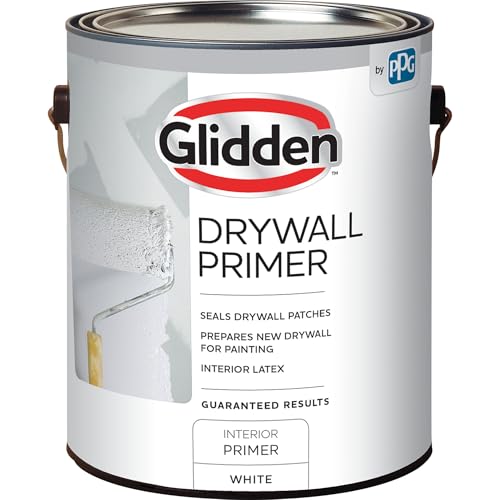
Glidden Interior Drywall Primer Flat, White, 1 Gallon
Seals drywall patches
As an affiliate, we earn on qualifying purchases.
As an affiliate, we earn on qualifying purchases.
Frequently Asked Questions
Can Salt-Related Blisters Be Repaired Without Repainting?
Yes, you can repair salt-related blisters without repainting entirely. Start with salt mitigation by thoroughly cleaning the affected area with a damp cloth to remove salt deposits. Once dry, apply a high-quality paint sealing primer to lock in residual salts and prevent further damage. After sealing, you can touch up the blistered spots with matching paint. This process helps stabilize the surface without the need for a full repaint.
How Long Does It Take for Salt Damage to Appear?
About 6 to 12 months, salt penetration can cause visible damage to your walls. You might notice blistering or bubbling paint within this timeframe if salt particles seep through unsealed surfaces. Proper paint sealing can slow this process, but salt’s corrosive nature means damage may still occur over time. Regular inspections help catch issues early, preventing extensive repairs and maintaining your wall’s integrity.
Are Certain Paint Types More Resistant to Salt Problems?
You’ll find that paint formulation substantially impacts resistance to salt problems, with some types being more resistant than others. Look for paints with low salt permeability, as they prevent salt from penetrating and causing blistering. Latex and acrylic paints generally offer better resistance, while oil-based paints can be more vulnerable. Choosing the right formulation helps protect your walls from salt damage, especially in moisture-prone environments.
What Are the Signs That Salt Is Causing Blistering?
You notice tiny bubbles or blistering patches on your painted walls, likely caused by salt corrosion. These signs indicate that salt has infiltrated the surface, disrupting paint adhesion. As salt particles push through the paint layer, they create pressure that makes the paint lift or peel. If you see these symptoms, it’s a clear sign that salt issues are compromising your wall’s surface, demanding immediate attention to prevent further damage.
Does Climate Influence Salt-Related Paint Issues?
Yes, climate impact considerably influences salt-related paint issues. In areas with high humidity or frequent moisture, salt penetration worsens, causing blistering and peeling. Warm, coastal climates expose walls to salt-laden air, accelerating deterioration. You should monitor how climate affects your interior surfaces because salt penetrates more easily in damp conditions, making it harder for paint to adhere properly. Proper ventilation and moisture control can help mitigate these climate-driven problems.

DGUAM 5000 Sq. Ft Dehumidifier, Max 95 Pint/Day Dehumidifier for Basement & Home, Compressor Dehumidifier with Drain Hose, Smart Humidity Control, Energy Efficient & Quiet for Bedroom, Large Rooms
【From Damp to Comfortable – 95 Pints/day Powerful Dehumidifier for Basement, Home & Large Rooms】: This dehumidifier for…
As an affiliate, we earn on qualifying purchases.
As an affiliate, we earn on qualifying purchases.
Conclusion
Imagine painting your walls, only to discover unsightly blisters forming like bubbles in a soda. That’s the hidden salt problem at work—silently causing damage from within. Just like a tiny leak can sink a ship, small salt deposits can ruin your paint over time. Staying vigilant and choosing quality paints can protect your home’s interior. Remember, addressing these hidden salts now is like patching a leak before it floods—saving you headaches and costly repairs later.

Zinsser 02774 PERMA-WHITE Mold & Mildew Proof Interior Paint, Quart, Eggshell White
Self-Priming formula – requires no sanding
As an affiliate, we earn on qualifying purchases.
As an affiliate, we earn on qualifying purchases.

Wall Cleaner Triangle Mop with 82'' Long Handle – Wall Scrubber, Cleaning Washer Tool with 4 Microfiber Chenille Duster Pads for Clean Walls, Ceiling, Windows, Baseboards, Floors (Green, 4 Pads)
3-In-1 Design: This mop combines microfiber and chenille pads on one side for efficient dusting, sweeping, and mopping….
As an affiliate, we earn on qualifying purchases.
As an affiliate, we earn on qualifying purchases.