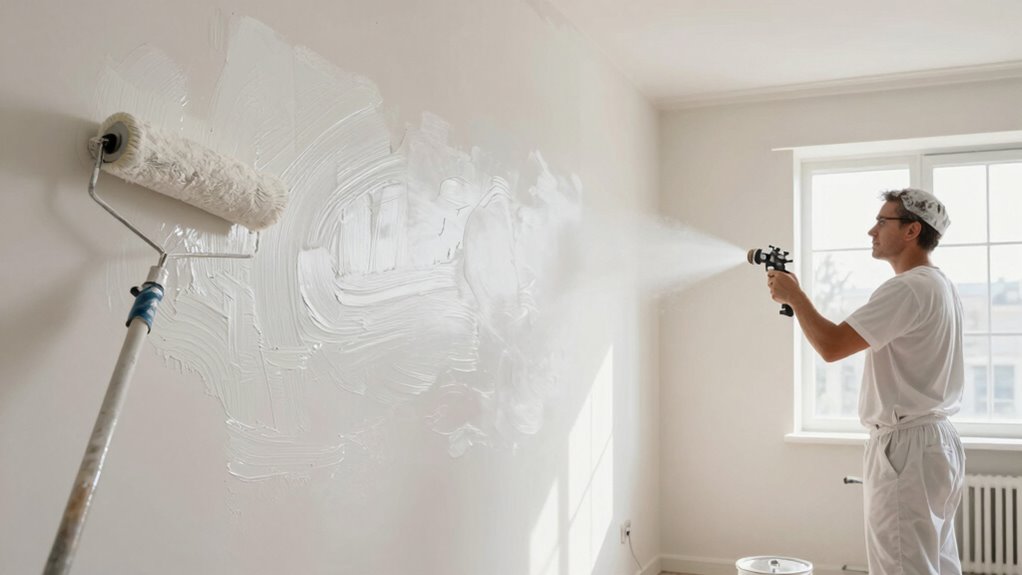

To decide between rolling and spraying interior walls, consider your project size, surface condition, and desired finish. Rolling works well for smaller spaces, detailed areas, and surfaces with imperfections, offering control and easier cleanup. Spraying is best for large, open areas, providing a smooth, professional look faster but requiring more prep and equipment. Your experience level also matters—if you want seamless coverage with less fuss, spraying is ideal, but mastering technique is key. Keep exploring for more tips.

Get furniture and decor delivered free — and shop member deals
- Fast, free delivery on millions of items
- Access to Prime Big Deal Days deals on October 6–7
- Prime Video, Amazon Music and more included
Key Takeaways
- Assess surface texture and imperfections; rolling handles uneven surfaces better, while spraying delivers a smooth finish on large, flat walls.
- Consider project size; spraying is faster for large areas, whereas rolling is suitable for smaller, detailed spaces.
- Evaluate desired finish; spraying provides a seamless, professional look, while rolling offers more control for textured or imperfect surfaces.
- Factor in surface preparation; both methods require thorough prep, but spraying demands more masking and ventilation.
- Match your skill level and equipment availability; rolling is simpler with less setup, while spraying needs specialized tools and experience.
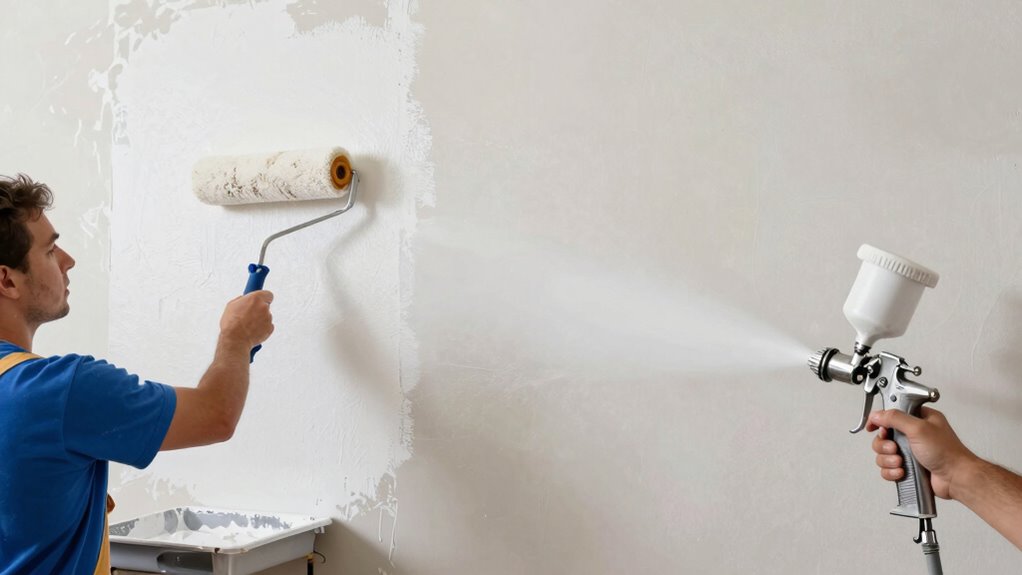
When it comes to painting walls, choosing between rolling and spraying can considerably impact your results and project efficiency. Your decision depends on several factors, including the type of surface you’re working with, the finish you desire, and how much time you want to spend. To start, consider the importance of surface preparation. Properly preparing your walls is crucial regardless of your method. This involves cleaning the surface, patching holes or cracks, and sanding rough areas. Well-prepared surfaces ensure smooth, even paint application and better color matching, whether you’re rolling or spraying. Additionally, understanding the paint application process can help you choose the right method for achieving a professional look. If you’re leaning toward rolling, keep in mind that it’s often more forgiving when it comes to surface imperfections. Rollers work well on textured or moderately uneven surfaces because they can push paint into crevices and provide a consistent coat. For smaller projects or when you want precision around edges and corners, rollers are straightforward and less messy. They also give you better control over paint thickness, which is advantageous if you’re trying to match specific colors or achieve a uniform finish. However, for larger areas, rolling can be more labor-intensive and may require multiple coats to achieve the desired color matching, especially if you’re using darker or more vibrant hues. Proper technique is essential to get the best results with either method and can influence how much paint you use and how smooth the final surface appears.
Proper surface prep is key for smooth, even paint application, regardless of your chosen method.
Furthermore, the choice of tools can also influence application efficiency, making some methods more suitable for specific projects. Spraying, on the other hand, is a faster method for covering large surfaces and can produce a smooth, professional-looking finish. It’s especially effective when you want a seamless, even coat without brush or roller marks. But spraying isn’t ideal for detailed areas or tight corners unless you’re experienced or have specialized equipment. It also demands thorough surface preparation to prevent overspray from settling on unwanted areas. Masking and covering furniture or trim become essential. Additionally, spraying can be more wasteful with paint and requires proper ventilation, so it’s best suited for well-ventilated spaces or outdoor projects. If you’re considering environmental impact, spraying might generate more overspray and paint waste, which is worth considering.
Ultimately, your choice hinges on balancing project scope, desired finish, and your willingness to prep and clean up. For detailed work, small spaces, or when you need precise color matching, rolling might be your best bet. If speed, smoothness, and covering large expanses are priorities, spraying can save time and produce a sleek look—provided your surface is well-prepared, and you’re comfortable with the setup. Understanding these differences helps you make an informed decision that results in a beautifully painted wall with minimal hassle.
As an affiliate, we earn on qualifying purchases.
Frequently Asked Questions
How Long Does Each Method Typically Take to Complete?
Rolling walls with a brush technique usually takes about 2-4 hours, depending on your room size, because it’s slower but offers control. Spraying walls can be faster, often done in 1-2 hours, but it requires careful preparation. The paint’s consistency affects both methods; thinning paint improves spray flow, while thicker paint gives better coverage with a roller. Choose based on your timeline and desired finish.
Which Method Is More Environmentally Friendly?
Think of choosing your painting method as planting a tree—you want to do it right for the environment. Spraying often produces more waste and overspray, making it less eco-friendly, especially if you use eco-friendly paints. Rolling tends to be neater, reducing waste and promoting waste reduction. If your goal is to minimize environmental impact, opt for rolling, especially with eco-friendly paints, to better protect our planet.
Can I Switch Between Rolling and Spraying Midway?
Yes, you can switch between rolling and spraying midway, but you should consider tool compatibility and paint wastage. Make certain your tools are compatible with the paint type you’re using, and clean equipment thoroughly before switching methods. Switching can lead to increased paint wastage if not done carefully, so plan your approach to minimize leftover paint. Proper preparation helps guarantee a smooth changeover and a professional finish.
How Do I Prepare Walls for Spraying Versus Rolling?
You’d think preparing walls for spraying is easier, but ironically, it demands more attention to surface texture and paint adhesion. You need to clean walls thoroughly, remove any bumps or rough patches, and sand glossy areas to guarantee even coverage. For rolling, a smooth, clean surface is still key, but spraying requires extra prep to avoid uneven application. Properly prepping ensures your finish looks flawless, regardless of your technique.
What Are the Safety Considerations for Each Method?
When spraying or rolling, prioritize safety by guaranteeing proper ventilation to avoid inhaling fumes or overspray. Always wear protective gear like masks, goggles, and gloves to shield your skin and eyes from paint particles. For spraying, work in well-ventilated spaces or use exhaust fans. For rolling, ensure the area is ventilated to help paint dry faster and reduce lingering fumes. Taking these precautions keeps you safe during your project.
As an affiliate, we earn on qualifying purchases.
Conclusion
Ultimately, choosing between rolling and spraying your walls comes down to understanding the true nature of each method. While spraying offers speed and a smooth finish, rolling provides control and texture. Think of it this way: sometimes, rushing to get the job done can compromise quality, but patience and attention to detail lead to lasting results. Trust that your choice reflects not just your project’s needs but also your commitment to craftsmanship.
wall preparation tools for painting
As an affiliate, we earn on qualifying purchases.
As an affiliate, we earn on qualifying purchases.
As an affiliate, we earn on qualifying purchases.
Halloween Picks
halloween
As an affiliate, we earn on qualifying purchases.