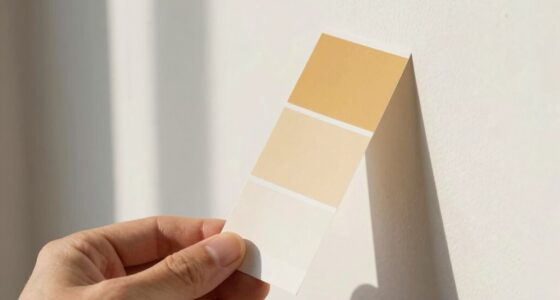

Artificial light can change how white paint appears more than you might expect, altering brightness, undertones, and overall tone. Different types of bulbs, especially those with varying color temperatures, can make white look warm, yellowish, cool, or bluish. The way light reflects off surfaces also impacts perception, especially in spaces with strong or diffuse lighting. Understanding these effects can help you better control your space’s look—if you keep exploring, you’ll discover how to master the impact of artificial lighting on white paint.
Key Takeaways
- Artificial light alters white paint’s brightness and undertones, making it appear different under various lighting conditions.
- The color temperature of artificial light (warm or cool) impacts whether white looks creamy, bluish, or neutral.
- Light reflection from white surfaces amplifies color shifts, especially with different light temperatures and angles.
- Lighting setup, including fixture placement and diffusion, significantly influences the perceived color and ambiance of white paint.
- Small adjustments in artificial lighting can unexpectedly change white paint’s appearance, affecting room aesthetics.

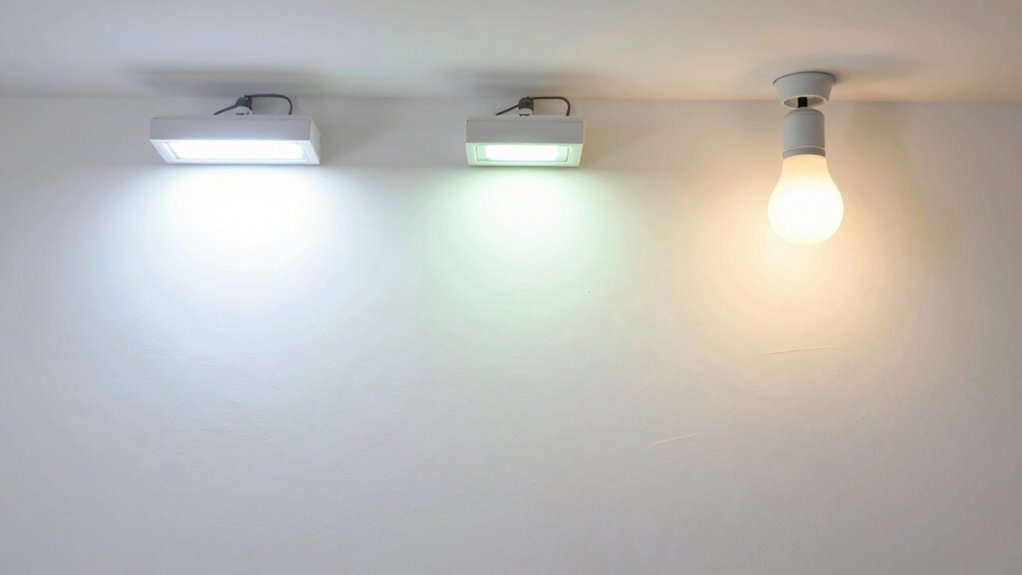
Artificial light plays a crucial role in how white paint appears in your space, as it can dramatically alter its brightness and undertones. When you switch on a light, you’re not just illuminating the room—you’re actively changing how the white paint looks to your eye. The key factors influencing this are the color temperature of the light and how it interacts with surfaces through light reflection. Understanding these elements helps you pick the right lighting to enhance your space and prevent surprises once the lights are on. Additionally, the color temperature of the light determines whether the environment feels warm and cozy or cool and clinical. Color temperature, measured in Kelvin, determines the warmth or coolness of the light. A lower Kelvin temperature (around 2700K) emits a warm, yellowish glow, which can make white paint appear softer, creamier, or even slightly yellow. Conversely, higher Kelvin temperatures (above 4000K) produce a cooler, bluish light, often giving white paint a crisper, more sterile look. When you’re choosing light bulbs or fixtures, paying attention to color temperature helps you control the undertones that your white paint displays. Without considering this, you might end up with a space that looks very different from what you envisioned under natural light.
Light reflection further influences how white paint appears. White surfaces are highly reflective, bouncing light around the room and amplifying the effects of artificial lighting. If your lighting has a high color temperature, the reflection will cast a bluish hue on the walls, emphasizing cool tones. On the other hand, warmer light enhances yellow or beige undertones, making the space feel cozy and inviting. The angle and intensity of the light also matter—direct, harsh lighting can create stark contrasts and highlight imperfections, while softer, diffused lighting produces a more even, flattering glow. By understanding how light reflection works, you can strategically position fixtures to achieve your desired ambiance and guarantee the white paint maintains the look you want.
In essence, how your white paint appears is a combination of the light’s color temperature and how that light reflects within your space. Small adjustments to bulbs or fixtures can make a noticeable difference in the overall feel and color tone of your walls. If you’re aiming for a bright, airy atmosphere, opt for higher Kelvin lighting with plenty of diffuse reflection. For a warmer, cozy vibe, choose lower Kelvin bulbs that foster light reflection with yellowish tones. Paying attention to these factors gives you more control over your space’s appearance and helps you avoid unexpected surprises once the lights are on.

evelor 6-Pack A19 LED Light Bulbs,60 Watt Equivalent Soft White 2700K with E26 Base,Efficient 9W,800 Lumens Non-Dimmable Warm White LED Bulbs,15000 Hours, Ideal for Bedroom Living Room
【Energy Efficiency】: EVELOR A19 LED light bulb is an energy-saving 9W (60W equivalent) bulb, saving up to 90%…
As an affiliate, we earn on qualifying purchases.
As an affiliate, we earn on qualifying purchases.
Frequently Asked Questions
Does Artificial Light Affect the Durability of White Paint Over Time?
Yes, artificial light can affect the durability of white paint over time. When exposed to certain light spectra, especially those with high UV or blue light, paint undergoes oxidation, which can cause fading, discoloration, and deterioration. You might notice that white paint exposed to artificial lighting looks dull faster. To protect your surfaces, choose paints with UV-resistant properties or limit exposure to harsh artificial light sources.
Can Specific Light Types Make White Paint Appear Warmer or Cooler?
Yes, specific light types can make white paint appear warmer or cooler. The key factor is the color temperature, measured in Kelvin, which influences how we perceive the paint’s hue. Lights with a warm color temperature (around 2700K) emit a yellowish light, making white seem warmer. Cooler lights (around 5000K) have a broader light spectrum, giving white a cooler, bluish appearance. Your lighting choices directly impact the paint’s visual tone.
How Does Artificial Lighting Influence White Paint’s Reflectivity?
Artificial lighting influences white paint’s reflectivity by altering how you perceive its brightness and tone. A higher color temperature, like cool LED lights, makes the white appear more reflective and crisp, while warmer lights with a different light spectrum can soften its look. You’ll notice these changes because the light spectrum affects how the paint reflects light, impacting the overall brightness and color perception in your space.
Are Certain White Paints More Resistant to Color Shifts Under Artificial Light?
Some white paints are more resistant to color shifts under artificial light, thanks to specific paint formulation choices. You might worry all whites react similarly, but paints with stable pigments and high-quality additives offer better color consistency. These formulations help guarantee your space looks the same regardless of lighting, reducing surprises and maintaining a clean, uniform appearance. Choosing the right paint can make a significant difference in how your walls look over time.
What Lighting Conditions Best Preserve the True Color of White Paint?
To best preserve the true color of white paint, choose lighting with a high color temperature, around 5000K to 6500K, which mimics natural daylight. Opt for lights with a full light spectrum to minimize color shifts. This guarantees the white paint’s hue remains consistent, as a balanced light spectrum prevents artificial light from altering its appearance, helping your space look true to its original color.

zemty LED Flat Panel Light with Remote 31.4×9.8 Inch, 36W 3800LM 3000K-6000K Adjustable Color Temperature, Dimmable Flush Mount Ceiling Light Fixture for Kitchen Bedroom Garage
【Dimmable Remote Control】With the included remote, freely adjust the color temperature between 3000K-6000K and dim the brightness from…
As an affiliate, we earn on qualifying purchases.
As an affiliate, we earn on qualifying purchases.
Conclusion
So, next time you choose white paint for your space, remember that artificial lighting can subtly shift its tone more than you realize. It’s funny how a simple bulb can make your perfect shade look entirely different, almost like a coincidence waiting to happen. Keep this in mind when decorating—you might just find that the light you never thought twice about is the hidden artist behind your room’s new look. Small details can truly change everything.

GyroVu 65" Floor Lamp for Living Room, Color Temperature Adjustable Standing Lamp for Bedroom, Corner Floor Lamp for Office& Living Room Tall lamp for Home Decor(Bulbs Included)
【Color Temperature Adjustable】This standling floor lamp offer a 2700K/3500K/6000K warm, warm white and white light so as to…
As an affiliate, we earn on qualifying purchases.
As an affiliate, we earn on qualifying purchases.

Bioluz LED 60 Watt Replacement A19 LED Light Bulbs, 4000K Cool White, Non-Dimmable, Uses 9 Watts, 750 Lumens, Indoor/Outdoor Standard E26 Base, UL Listed, 6 Pack
60 Watt Replacement Uses Only 9 Watts: This energy saving light bulbs is a reliable and efficient alternative…
As an affiliate, we earn on qualifying purchases.
As an affiliate, we earn on qualifying purchases.