
This checklist is for anyone planning an indoor plant display and comparing planters, stands, and propagation pieces. It can help you think through how each item fits your room and your plant-care routine.

Get furniture and decor delivered free with Prime
- Fast, free delivery on millions of items
- Prime Video, Amazon Music and more included
- Member-only deals all year
The sections follow the listed categories, from ceramic and hanging planters to stands, self-watering pots, propagation vases, and wall-mounted options. Each product name is treated as a starting point, with advice focused on fit and compatibility.
Before choosing, measure the intended spot and check the product’s dimensions and use details. Match the container to your plant and display plan, and verify any care or installation requirements in the product listing.
Ceramic Planters
A ceramic planter can give a plant a defined place in a room while making the container part of the display. The listed pick is the LE TAUCI Ceramic Planter, 12 Inch, Large Plant Pot, Reactive Glaze Bei. Its name identifies a 12-inch planter, but you should confirm the listed dimensions and what the measurement refers to before choosing it. Measure the plant and placement so the pot’s footprint and opening suit both.
A common mistake is choosing by appearance alone and overlooking how the pot works with the plant’s existing container or care routine. Check whether the planter has drainage, whether a saucer is included or needed, and whether the listing describes it as an inner pot or a container for direct planting. For fit, compare the plant’s current pot dimensions with the stated opening and interior dimensions, if provided. Also check the finished product details and color in the listing, since the product name alone cannot establish the exact look or construction. Confirm the practical details before making it part of your display.
What to look for:
- Verify the 12-inch measurement and overall dimensions.
- Check opening and interior dimensions against the plant’s current pot.
- Confirm drainage and saucer details in the listing.
- Review the listed finish and color for your room.
- Check whether it is intended for direct planting or use as a cover pot.
LE TAUCI Ceramic Planter, 12 Inch, Large Plant Pot, Reactive Glaze Beige

This 12-inch ceramic planter features a stylish truncated cone shape with a reactive glaze finish, providing stability and ample space for plant roots. Made from durable ceramic, it includes a drainage hole with a mesh screen and an integrated tray for mess-free watering, making it ideal for indoor plant displays and gifting.
Pros:
- Stylish and modern design enhances home décor
- Durable ceramic construction resists fading and weathering
- Includes drainage hole and tray for easy plant care
- Ideal as a gift with upgraded packaging
Cons:
- May be heavy to move once filled with soil
- Limited color options
Best for: A display that calls for a large ceramic planter.
Not ideal for: Plants needing a different pot size or confirmed drainage details.
Bottom line: Check its dimensions and drainage details against your plant and placement before choosing.
Hanging Planters
The listed pick is a Hanging Suet Feeder Basket for Outdoor Birds. Its name describes an outdoor bird feeder, so it does not establish that it is intended to hold an indoor plant. For this checklist, treat it as a compatibility question: inspect the listing carefully before using it as a planter. Confirm the intended use and whether it can safely support a plant and its growing medium.
A common mistake is assuming that any hanging basket can serve as a hanging planter. Check the basket’s dimensions, hanging hardware, weight guidance, and material details, if the listing provides them. Consider the combined weight of the plant and its contents, and verify that the ceiling, hook, or other support is suitable. Also look for information about drainage and water containment, since those details affect indoor placement. If the product remains an outdoor bird feeder by design, choose a purpose-made indoor hanging planter instead. Use listing details to judge compatibility, and make sure installation and care needs fit your room before hanging anything overhead.
What to look for:
- Confirm whether the listing supports planter use.
- Check basket dimensions against the plant and pot.
- Review hanging hardware and any weight guidance.
- Check drainage and water-containment details.
- Verify that the mounting point suits the combined load.
Hanging Suet Feeder Basket for Outdoor Birds
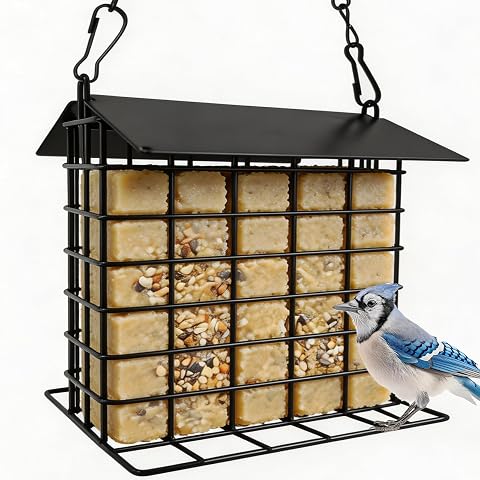
This powder-coated steel basket feeder holds one suet cake and lets birds perch and feed from all sides. It has an easy-open lid for refilling and cleaning, and can also hold seed blocks, fruit, or nesting material.
Pros:
- Birds can perch and feed from all sides
- Powder-coated steel is rust-resistant and designed for outdoor weather
- Easy-open lid allows convenient refilling and cleaning
- Can hold suet cakes, seed blocks, fruit, or nesting material
Cons:
- Suet is not included
- Holds only one suet cake
Best for: Shoppers who can confirm the basket suits their intended use.
Not ideal for: Indoor plant displays when planter compatibility is unconfirmed.
Bottom line: The product name indicates an outdoor bird feeder, so confirm its intended use before considering it for plants.
Plant Stands
The JOLLYMER Teak Wood Plant Stand and Round Side Table, 30-Inch, is listed as both a plant stand and a round side table. That dual description makes placement and intended use especially important: decide whether the piece is meant to display a plant, serve as a table, or do both in your room. Check the 30-inch measurement against the location, and verify what that dimension refers to in the listing.
A common mistake is focusing on the tabletop footprint while overlooking height, base dimensions, or the space needed around it. Confirm the stated dimensions and any load guidance, then compare them with the plant and its container together. Check the listing for material and care details, and consider whether the surface and surrounding floor are suitable for your planned use. If you intend to use it as a side table as well, verify that its shape and available surface work for that purpose. Match the full setup—stand, planter, and placement—rather than assessing the table alone.
What to look for:
- Verify which dimension is listed as 30 inches.
- Check overall height, top size, and base dimensions.
- Review any load guidance for plant and container together.
- Confirm material and care details in the listing.
- Make sure the footprint and surface suit the planned placement.
JOLLYMER Teak Wood Plant Stand and Round Side Table, 30-Inch

This 30-inch plant stand and side table is made from solid teak wood with natural grain and warm brown tones. Its round top and three-leg design provide an elevated surface for potted plants, lamps, or decorative accents indoors; assembly is required.
Pros:
- Solid teak wood with natural grain
- Versatile as a plant stand, side table, or display stand
- 30-inch height adds vertical dimension to displays
- Compact footprint fits beside furniture or in corners
Cons:
- Assembly is required
- Indoor use only
Best for: A room where a plant stand can also serve as a side table.
Not ideal for: Spaces where the stated footprint or height will not fit.
Bottom line: Confirm the dimensions and load guidance for the complete plant-and-container setup.
Self-Watering Pots
The listed pick is a 30-Gallon Self-Watering Rolling Tree Planter, 24-Inch Round, Olive Gre. The name indicates a large-capacity rolling planter, so first check that its scale suits the plant and the intended indoor location. Confirm the listed dimensions, especially what “24-inch round” measures, and review how the self-watering feature is described. Check capacity and footprint before planning around it.
A common mistake is treating “self-watering” as a substitute for understanding the watering setup. Review the product details for how the reservoir works, what components are included, and any care instructions; the name alone does not answer those questions. Check the planter’s height and total footprint against doorways, corners, and the space needed around the plant. Since the name also says “rolling,” verify wheel details and whether the intended floor and location suit a rolling planter. Confirm drainage and water-management information before indoor use. Fit the planter to the room and routine, and make sure the product listing supports the setup you have in mind.
What to look for:
- Verify the 30-gallon capacity and 24-inch measurement.
- Check full dimensions and available floor space.
- Review reservoir operation and included components.
- Confirm wheel and floor-suitability details.
- Check drainage and indoor water-management information.
30-Gallon Self-Watering Rolling Tree Planter, 24-Inch Round, Olive Green

This 30-gallon planter has an integrated water reservoir, wicking system, refill tube, and water gauge to help keep roots consistently hydrated. Locking caster wheels make it easier to move, and its coated steel construction with stainless steel hardware is designed for outdoor use.
Pros:
- Large capacity supports deep root growth
- Reservoir, refill tube, and water gauge simplify watering
- Locking wheels make the planter easier to move
- Corrosion-resistant construction is designed for outdoor use
Cons:
- Large planter may take up considerable patio space
- The description provides no customer review feedback
Best for: A space and plant suited to the listed planter’s scale.
Not ideal for: Small placements or setups needing unverified watering details.
Bottom line: Confirm the dimensions, reservoir details, and indoor water management before choosing.
Propagation Vases
The Plant Propagation Station with 15 Glass Tubes and Wooden Stand is the listed pick for this category. Its name specifies 15 glass tubes and a wooden stand, making tube count and the stand’s footprint useful starting points for planning a display. Check the product listing for the overall dimensions and how the tubes sit in the stand. Measure the display area before deciding where it belongs.
A common mistake is assuming the product name tells you how easy the tubes are to remove, clean, or refill. Look for listing details or images that clarify those points, along with the materials and assembly requirements. Consider how much room the stand needs and whether its arrangement works with the number and type of cuttings you plan to display. Verify care guidance for the glass tubes and wooden stand, and check whether any components beyond those named are included. Plan around the full setup, including access for routine care, rather than choosing only by the number of tubes.
What to look for:
- Confirm the 15-tube count and overall dimensions.
- Check how tubes are held and whether they can be removed.
- Review material, cleaning, and care details.
- Verify assembly and included-component information.
- Choose a surface with enough room for the stand and access.
Plant Propagation Station with 15 Glass Tubes and Wooden Stand
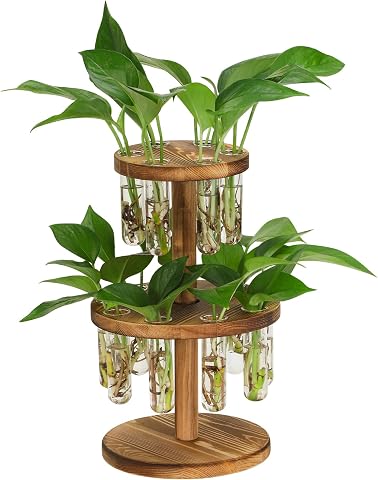
A three-tier wooden propagation stand holds 15 borosilicate glass tubes for rooting plant cuttings and displaying indoor plants. Its 360-degree rotating base makes the tubes easy to view, and its compact design suits desks, windowsills, and other indoor spaces.
Pros:
- Holds 15 tubes for propagating multiple cuttings
- Rotates 360 degrees for easier viewing
- Wooden stand and glass tubes combine function with decorative display
- Includes a spare test tube
Cons:
- Designed for indoor use
- Compact tubes may limit the size of cuttings they can hold
Best for: A propagation setup that suits a 15-tube station.
Not ideal for: Displays needing a different capacity or unconfirmed care features.
Bottom line: Check dimensions, tube handling, and care details for the full station.
Wall-Mounted Planters
No product is listed for the wall-mounted planter category, so use this section as a planning guide. Begin with the wall and the display you want: note the available width and height, the plant’s expected placement, and how the arrangement will relate to nearby furniture. Measure before shopping so you can compare products against a real location rather than a general idea.
A frequent buying mistake is choosing a wall planter without checking how it attaches or what support the installation requires. Read the product listing for mounting hardware, installation instructions, dimensions, and any stated load guidance. Consider the container’s watering and drainage arrangements for an indoor wall, and check whether the plant and planter will be easy to reach for care. Confirm that your wall surface and chosen mounting point are compatible with the specified installation method. Verify the mounting plan before purchasing, and make sure the finished arrangement leaves enough room for nearby doors, shelves, or walkways.
What to look for:
- Measure the available wall area and desired spacing.
- Check mounting hardware and installation instructions.
- Review dimensions and any stated load guidance.
- Confirm drainage and water-containment details.
- Make sure the planter remains accessible for routine care.
Set your buying order by starting with the plant and placement: measure the location, confirm the container’s fit, and check mounting, drainage, and care details. Prioritize items whose listing supports the setup you need, then compare appearance and finishing details.
A thoughtful display comes together one suitable piece at a time. Use this checklist to confirm the practical details, trust the measurements, and choose products that make sense for your plants and your room.