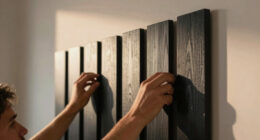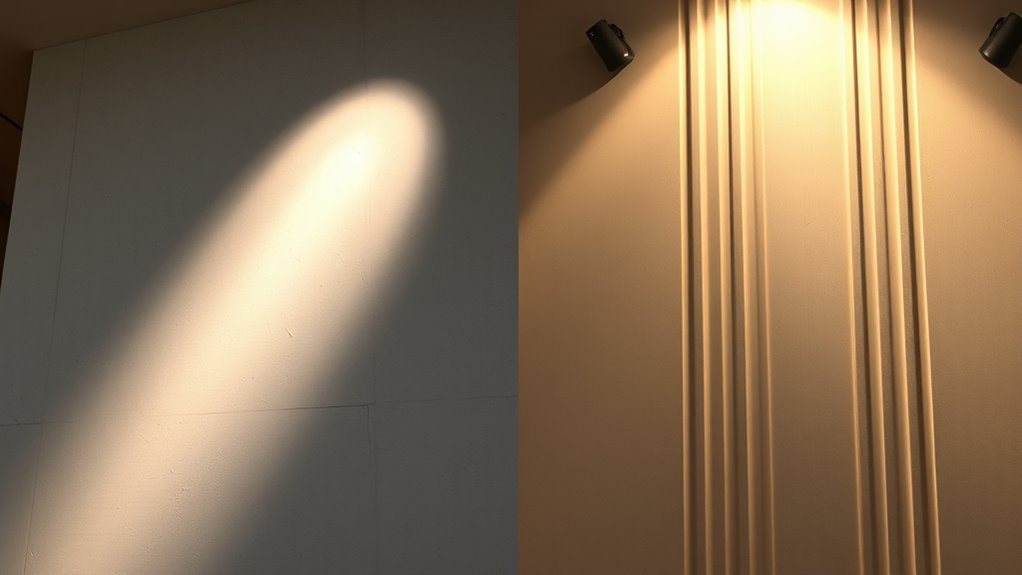

Wall washers evenly illuminate entire walls, producing a soft, uniform glow that emphasizes space without highlighting surface textures, perfect for creating a broad, calming atmosphere. Grazers, on the other hand, cast light at shallow angles to highlight textures and architectural details, creating dramatic shadows and visual interest. Your choice depends on whether you want smooth, diffuse lighting or textured, contrast-rich effects. Keep exploring, and you’ll discover how to make the most of each for your lighting design.
Key Takeaways
- Wall washers create even, diffuse light across entire walls, while grazers highlight textures with shadows and depth.
- Choose wall washers for uniform illumination; opt for grazers to emphasize surface details or architectural features.
- Both lighting types support customizable LED colors, allowing mood and atmosphere adjustments.
- Proper installation and positioning are crucial: wall washers are mounted close for broad coverage, grazers at shallow angles for texture highlighting.
- Final selection depends on desired aesthetic—softer, uniform light or dramatic, textured effects—based on style and space needs.

Are you trying to decide between wall washers and grazers for your lighting needs? Both options can dramatically enhance your space, but understanding their differences is key to making the right choice. Wall washers are designed to bathe entire walls in a smooth, even light, creating a broad, uniform glow that emphasizes the wall’s surface without emphasizing any particular texture. Grazers, on the other hand, cast light at a shallow angle, highlighting surface textures and creating dramatic shadows and depth. Your decision depends on the mood you want to achieve and the architectural features you wish to emphasize.
Wall washers provide even illumination, while grazers highlight textures and shadows for dramatic effects.
When considering wall washers, one important factor is LED color options. Modern LED wall washers come with a wide range of color choices, allowing you to customize the ambiance with everything from warm whites to vibrant hues. This versatility makes wall washers suitable for various settings, whether you want a cozy, inviting space or a lively, energetic atmosphere. The installation techniques for wall washers are straightforward but require careful planning. Typically, you mount them close to the wall, ensuring the fixture directs light evenly across the surface. Proper placement and angling are vital to avoid uneven light distribution or glare. Some wall washers are adjustable, giving you control over the spread and intensity of light, which can be especially helpful if you’re trying to highlight specific areas or features.
Grazers, meanwhile, are designed to be installed at a shallow angle, often close to the wall’s surface, to cast light across textures and surfaces. This technique brings out the details in textured walls, artwork, or architectural features, adding visual interest. Installing grazers involves precise positioning—placing the fixtures just right to create the desired shadows and highlights. They often require more careful alignment compared to wall washers. LED color options for grazers are equally diverse; selecting different colors can dramatically change the visual impact and mood of the space. For example, using cool tones can make a textured wall appear more dramatic, while warm tones soften the look and create intimacy.
Both lighting options benefit from thoughtful installation techniques. With wall washers, aim for even coverage and avoid hotspots by adjusting the angle and distance from the wall. For grazers, focus on positioning to accentuate textures and create the desired shadow effects. In either case, choosing high-quality LED fixtures with adjustable settings can give you greater control and flexibility. Additionally, understanding the lighting techniques suitable for each fixture can optimize their effectiveness and ensure your desired aesthetic is achieved. Ultimately, your choice hinges on the style and atmosphere you want to create, along with your capacity to install and adjust the fixtures effectively. Whether you pick wall washers or grazers, understanding these key distinctions will help you light your walls beautifully and purposefully.

MEIKEE 25W RGB Wall Wash Lights, RGBW Color Changing Washer Strip Lights Outdoor, IP66 Waterproof LED Stage Light Bar for Christmas Halloween Party Landscape (4 Pack)
【COLOR CHANGING WALL WASHER LIGHTS】The wall washer light kit is equipped with 29 keys remote control, you can…
As an affiliate, we earn on qualifying purchases.
As an affiliate, we earn on qualifying purchases.
Frequently Asked Questions
Can Wall Washers Be Used Outdoors Effectively?
Yes, wall washers can be used outdoors effectively if they have proper outdoor durability and weather resistance. Make sure you select fixtures designed for exterior use, which can withstand rain, humidity, and temperature changes. By choosing weather-resistant wall washers, you guarantee your lighting remains vibrant and functional over time, enhancing your outdoor space without worrying about damage from the elements. Always verify the product specifications for outdoor suitability.
Which Lighting Option Is More Energy-Efficient?
You’ll find grazers tend to be more energy-efficient because they use less energy for targeted lighting, making them a smarter choice for conserving power. While wall washers illuminate broader areas, they often consume more energy, which might lead to higher costs over time. By choosing grazers, you’re subtly prioritizing power efficiency and reducing energy consumption, ensuring your lighting is both effective and environmentally considerate without sacrificing style or function.
Are Wall Washers Suitable for Accentuating Textured Walls?
Yes, wall washers are suitable for accentuating textured walls. They evenly distribute light across large surfaces, enhancing texture and creating a sense of wall depth. By spreading light softly, wall washers highlight subtle details and shadows, making your textured walls stand out beautifully. They’re perfect for adding depth and dimension, giving your space a more dynamic and inviting atmosphere. Use wall washers to bring out the full beauty of your textured walls effortlessly.
How Do Maintenance Needs Compare Between Washers and Grazers?
You’ll find that maintenance for wall washers tends to be easier, thanks to their simpler design and less frequent bulb replacements. Grazers, with their more intricate fixtures, often require more regular upkeep, including more frequent bulb replacements and cleaning. Overall, the maintenance comparison favors wall washers for lower effort and cost, making them a practical choice if you want less hassle and more durability in your lighting setup.
Can These Lights Be Integrated With Smart Home Systems?
Yes, you can integrate these lights with smart home systems for seamless wireless control. Many modern wall washers and grazers are compatible with popular smart home platforms, allowing you to adjust brightness, color, and schedules via apps or voice commands. This integration makes managing your lighting effortless, giving you personalized ambiance and energy efficiency. Just guarantee you choose models designed for smart home compatibility to enjoy smooth, wireless control.

KICAAO Modern Wall Sconces Set of Two, Led Wall Light 10w, 6000k White Light Up Downlight, Hardwired Acrylic Wall Light Lighting, Suitable for Living Room Corridor Bedside (Cool White 6000K 2Pack)
[Quality production]:Made of high-quality aluminum materials and acrylic, no rust, durable, long LED life.Perfect for wall and bedside…
As an affiliate, we earn on qualifying purchases.
As an affiliate, we earn on qualifying purchases.
Conclusion
When choosing between wall washers and grazers, consider how each highlights your walls’ features. Wall washers provide a smooth, even glow, perfect for creating ambiance, while grazers emphasize textures and details. Did you know that 67% of interior designers prefer wall washers for general illumination? Ultimately, your choice depends on the mood and effect you want to achieve. So, experiment with both to find the perfect lighting style that transforms your space.

MEIKEE 25W RGBW LED Wall Washer Light, RGB Color Changing LED Strip Lights with Plug, IP66 Waterproof Outdoor RGBW Wall Strip Light Bar Outdoor Lighting for Christmas Halloween Stage 1 Pack
【29 KEYS RF REMOTE CONTROLLER】This 29-key wireless RF remote controller can control the color at any time within…
As an affiliate, we earn on qualifying purchases.
As an affiliate, we earn on qualifying purchases.

Jabbatek Smart Wall Washer Light 6CCT Adjustable Color Temperature & Dimmable 1%-100%, Super Bright LED Bar Light with Smart APP Control, Waterproof IP65, Timer & Remote for Indoor/Outdoor Decor
Customizable Ambiance:Adjust color temperature (2700K-6500K) and dim from 1% to 100% via remote or APP—perfect for movie nights…
As an affiliate, we earn on qualifying purchases.
As an affiliate, we earn on qualifying purchases.